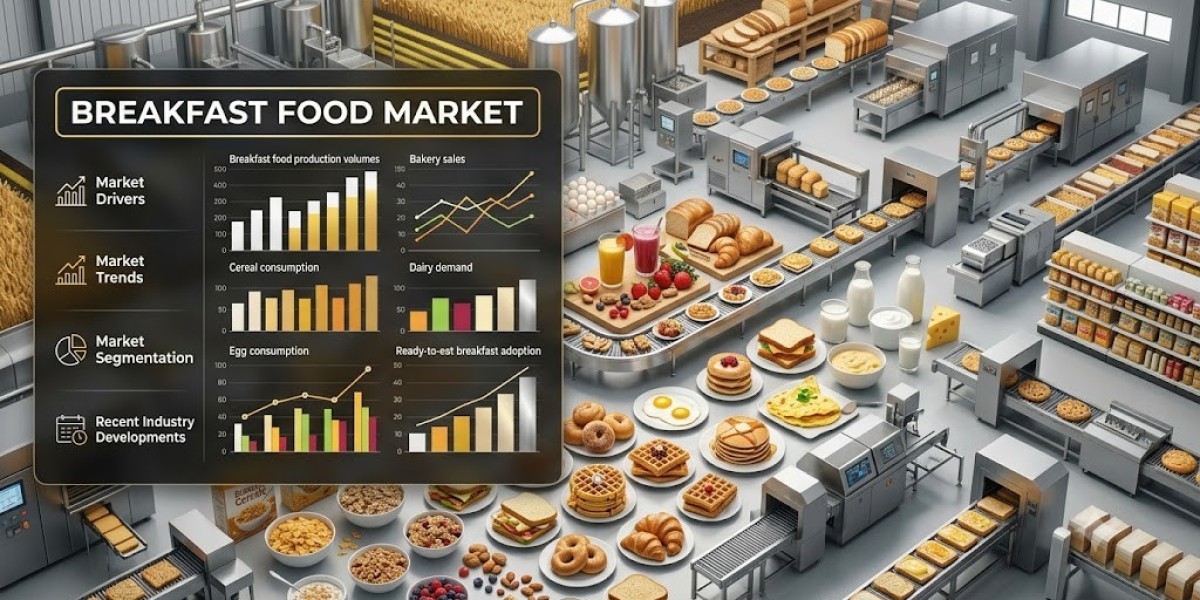


Market Overview:
According to IMARC Group's latest research publication, "Breakfast Food Market: Global Industry Trends, Share, Size, Growth, Opportunity and Forecast 2026-2034", The global breakfast food market size reached USD 480.8 Billion in 2025. Looking forward, IMARC Group expects the market to reach USD 645.0 Billion by 2034, exhibiting a growth rate (CAGR) of 3.22% during 2026-2034.
This detailed analysis primarily encompasses industry size, business trends, market share, key growth factors, and regional forecasts. The report offers a comprehensive overview and integrates research findings, market assessments, and data from different sources. It also includes pivotal market dynamics like drivers and challenges, while also highlighting growth opportunities, financial insights, technological improvements, emerging trends, and innovations. Besides this, the report provides regional market evaluation, along with a competitive landscape analysis.
How Protein Innovation and Convenience Are Reshaping the Breakfast Food Market
- Protein has become the defining battleground for breakfast brands, with legacy cereal makers reformulating flagship products to carry higher protein counts rather than launching entirely new lines, a strategy aimed at retaining brand loyalty while capturing health-conscious shoppers who might otherwise switch categories altogether.
- Collaborations between mainstream food companies and performance-nutrition brands are accelerating, allowing established cereal names to borrow credibility in the fitness space while performance brands gain shelf space and mass-market distribution they could not build alone.
- Private label retailers are closing the gap with national brands by rolling out their own high-protein cereal and granola lines, signaling that the protein trend has moved from a niche premium play to a mainstream expectation across price tiers.
- On-the-go formats such as bars, pouches, and ready-to-drink options are gaining share as time-pressed consumers increasingly treat breakfast as something to be consumed during a commute or between morning tasks rather than at a table.
- Clean-label and functional ingredient claims are being layered onto protein positioning, with brands combining high protein counts with reduced sugar, added fiber, or recognizable ingredients to appeal to consumers scrutinizing labels more closely than before.
- In February 2026, General Mills expanded its partnership with a performance-nutrition brand to launch two new high-protein cereal collaborations built on existing chocolate-flavored brand names, each delivering a significantly higher protein count per serving than the standard versions.
Download a sample PDF of this report: https://www.imarcgroup.com/breakfast-food-market/requestsample
Key Trends in the Breakfast Food Market
- Rising Adoption of Health-Conscious and High-Protein Options: Consumers are steadily moving away from sugar-heavy breakfast staples toward products marketed on protein content, fiber, and whole-grain sourcing, pushing manufacturers to treat nutritional reformulation as a core growth lever rather than a seasonal marketing push. This shift is being reinforced by broader dietary trends around satiety and weight management, which have made protein grams per serving a leading purchase driver even for shoppers who are not following structured diets. In February 2026, Nestlé expanded its breakfast cereal portfolio with two new protein-enriched variants of its established chocolate-flavored cereal brands, each fortified with additional vitamins and minerals while retaining the flavor profile that built the original brands' loyal customer base.
- Growing Popularity of Convenient and On-the-Go Formats: Busy morning routines across dual-income households and urban commuter populations continue to fuel demand for breakfast formats that require little to no preparation, including ready-to-eat bowls, portable pouches, bars, and shelf-stable smoothies. Retailers are responding by expanding shelf space dedicated to grab-and-go breakfast items, while manufacturers are investing in packaging formats designed for eating during a commute rather than at home, further blurring the line between breakfast and snacking occasions.
- Increasing Importance of Protein-Enriched and Functional Breakfast Foods: Beyond cereal, protein enrichment is spreading into granola, waffles, and yogurt-based breakfast products as brands look to extend the same positioning across their wider portfolios. In December 2025, a major cereal manufacturer introduced two new protein-focused varieties of one of its best-selling brands, each carrying a meaningfully higher protein count per serving, with nationwide retail rollout following in January 2026 to capture New Year resolution-driven demand.
- Expansion of Private Label and Value-Tier Protein Products: Retail chains are increasingly launching their own store-brand high-protein cereals and bars, narrowing the price gap with national brands and giving budget-conscious consumers access to the same nutritional positioning without paying a premium, a trend that is gradually reshaping competitive dynamics across the category.
- Sustainability and Clean-Label Packaging Gaining Ground in Mature Markets: In regions with well-established breakfast food categories, brands are increasingly pairing nutritional claims with recyclable or reduced-plastic packaging, responding to consumer and regulatory pressure around environmental impact alongside health positioning.
We explore the factors driving the growth of the market, including technological advancements, consumer behaviors, and regulatory changes, along with emerging breakfast food market trends.
Growth Factors in the Breakfast Food Market
- Busy Lifestyles and Changing Eating Patterns: The expanding share of the working population juggling demanding schedules is fundamentally altering how, when, and what people eat in the morning, driving sustained demand for breakfast formats that prioritize speed and portability over traditional sit-down meals. This shift is particularly pronounced among younger working professionals and students, who increasingly treat breakfast as a mobile occasion rather than a fixed part of the daily routine, encouraging manufacturers to design products around consumption speed as much as taste.
- Rising Consumer Health Awareness Amid Chronic Lifestyle Disorders: Growing public awareness of obesity, diabetes, and other diet-related health conditions is pushing consumers to scrutinize breakfast choices more closely than other meals, since it is often viewed as the easiest meal to reformulate around health goals. This has translated into sustained demand for lower-sugar, higher-fiber, and protein-forward products, giving manufacturers a durable incentive to keep reformulating legacy products rather than relying solely on new launches.
- Expansion of Online Retail and Direct-to-Consumer Channels: E-commerce platforms are giving breakfast food brands, including smaller and newer entrants, a lower-cost route to reach health-conscious consumers directly, bypassing the shelf-space constraints of traditional retail and enabling faster testing of new flavors and formats.
- Extensive Promotional and Brand Collaboration Activity: Manufacturers are increasingly relying on cross-brand collaborations and influencer-driven marketing to keep legacy breakfast brands culturally relevant, particularly among younger consumers who might otherwise gravitate toward newer, smaller challenger brands in the space.
- Diverging Regional Consumption Patterns Creating New Opportunities: Rising disposable incomes in Asia Pacific are driving greater adoption of Western-style breakfast formats, while Latin America and the Middle East and Africa are seeing growing demand for fortified and packaged breakfast goods amid urbanization, giving multinational manufacturers multiple avenues for regional expansion beyond mature Western markets.
Leading Companies Operating in the Global Breakfast Food Industry:
- Britannia Inc.
- Campbell Soup Company
- General Mills Inc.
- Healthy Choice
- Kellogg's Company
- The Kraft Heinz Company
- McVitie's (The United Biscuits Private Limited)
- Nestlé S.A.
- Starbucks Coffee Company
- Unilever Limited
Breakfast Food Market Report Segmentation:
Breakup By Source:
- Wheat
- Rice
- Oat
- Corn
- Barley
- Others
Wheat leads the segment given its wide use in cereals and bread, while oats are gaining ground on their fiber content and health positioning.
Breakup By Packaging Type:
- Boxes
- Pouches
- Others
Boxes remain the standard for cereals and dry goods due to durability, while pouches are gaining popularity for their portability and resealability in on-the-go formats.
Breakup By Distribution Channel:
- Hypermarkets and Supermarkets
- Independent Retailers
- Specialist Retailers
- Convenience Stores
- Others
Hypermarkets and supermarkets dominate due to their broad product assortment and accessibility, while convenience stores are gaining share among on-the-go consumers.
Breakup By Region:
- North America (United States, Canada)
- Asia Pacific (China, Japan, India, South Korea, Australia, Indonesia, Others)
- Europe (Germany, France, United Kingdom, Italy, Spain, Russia, Others)
- Latin America (Brazil, Mexico, Others)
- Middle East and Africa
North America leads on rising demand for high-protein and plant-based breakfast items, while Asia Pacific is seeing traditional breakfast foods increasingly blended with modern, quick-prep options.
Recent News and Developments in the Breakfast Food Market
- February 2026: Nestlé expanded its breakfast cereal portfolio with two new protein-enriched variants of its long-running chocolate-flavored cereal brands, fortified with additional vitamins and minerals while keeping the original flavor profile intact.
- February 2026: General Mills partnered with a performance-nutrition brand to launch two new high-protein cereal collaborations built on two of its best-known chocolate-flavored brands, each delivering a significantly higher protein count per serving.
- December 2025: A major cereal manufacturer introduced two new protein-focused varieties of one of its top-selling breakfast brands, with nationwide retail availability following in January 2026 to capture New Year health-driven demand.
Note: If you require specific details, data, or insights that are not currently included in the scope of this report, we are happy to accommodate your request. As part of our customization service, we will gather and provide the additional information you need, tailored to your specific requirements. Please let us know your exact needs, and we will ensure the report is updated accordingly to meet your expectations.
About Us:
IMARC Group is a global management consulting firm that helps the world's most ambitious changemakers to create a lasting impact. The company provides a comprehensive suite of market entry and expansion services. IMARC offerings include thorough market assessment, feasibility studies, company incorporation assistance, factory setup support, regulatory approvals and licensing navigation, branding, marketing and sales strategies, competitive landscape and benchmarking analyses, pricing and cost research, and procurement research.
Contact Us:
IMARC Group
134 N 4th St. Brooklyn, NY 11249, USA
Email: sales@imarcgroup.com
Tel No: (D) +91 120 433 0800
United States: +1-201-971-6302









