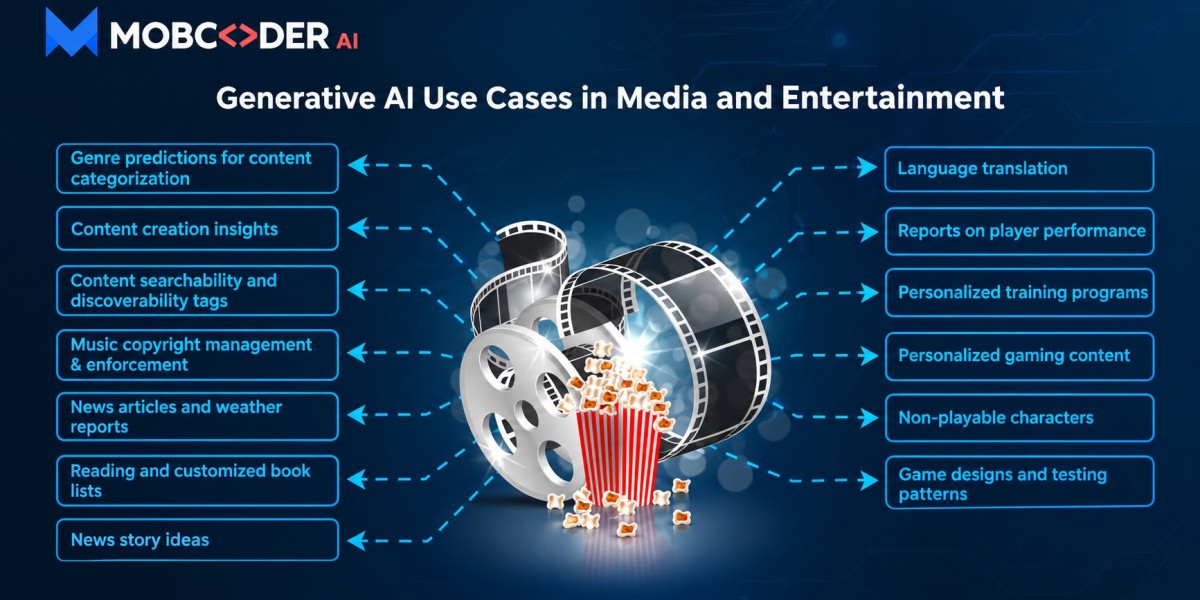


New York's media and publishing industry has spent the last two years running a fairly public experiment on generative AI, with mixed and sometimes messy results. Some publishers rushed AI-written content to production and walked it back after quality complaints. Others quietly built generative tools into their editorial workflow and never made an announcement, because the tools were doing supporting work rather than replacing writers. The second group is generally the one seeing durable value.
The useful distinction is between generative AI that produces the final product and generative AI that accelerates the people producing it. The first approach has a poor track record in publishing. The second has a strong one.
Where Generative AI Is Actually Earning Its Keep
Research and drafting support. Reporters and editors are using generative tools to summarize source documents, draft interview questions, and produce first-pass outlines that a human then rewrites and fact-checks. This shaves hours off research-heavy pieces without touching editorial judgment.
Content repurposing. A single long-form article can be turned into a newsletter blurb, a set of social posts, and a video script outline automatically, with an editor reviewing rather than starting from scratch each time. This is one of the highest-ROI applications because the underlying facts are already verified.
Personalized content delivery. Recommendation engines built on generative and predictive models are helping publishers surface the right article to the right reader, increasing engagement without changing the editorial content itself.
Translation and localization. Media companies with international audiences are using generative models to produce first-pass translations that human editors then refine, cutting localization time significantly while keeping a human in the loop for accuracy and tone.
Audience insight synthesis. Generative models can summarize large volumes of reader comments, survey responses, or engagement data into digestible themes for editorial teams, work that used to require a research analyst several days to compile manually.
Where It Still Falls Short
Fully automated article generation for anything requiring original reporting, verified facts, or editorial voice remains unreliable. Generative models can produce plausible-sounding but factually wrong content, a serious liability for a publisher whose credibility is the entire product. The publishers who got burned publicly in the last two years were almost always the ones that skipped the human review step to save time, not the ones using AI as a drafting aid.
There is also a legal dimension specific to media companies: sourcing, licensing, and attribution questions around training data and AI-assisted content are still being worked out in courts and legislation. Publishers building generative AI into their workflow need editorial policies that address disclosure and sourcing, not just technical implementation.
Building It Right
The media companies seeing the best results tend to follow a similar pattern. They start with internal workflow tools, research support, drafting assistance, repurposing, rather than reader-facing content generation. They keep a human editor as the final checkpoint on anything published under the brand's name. And they measure success in editor hours saved rather than in headline counts produced.
Generative AI systems built specifically for editorial workflows, rather than generic writing tools bolted onto a CMS, tend to integrate more cleanly with existing style guides, fact-checking processes, and publishing schedules. That customization is often the difference between a tool the newsroom actually adopts and one that gets abandoned after a few weeks.
Media and publishing sit inside a broader shift happening across New York's AI technology ecosystem, where companies across finance, retail, and content are all working through the same core question: how to use generative AI to remove friction from human work without compromising the judgment that made the work valuable in the first place.
FAQs
1: Can generative AI write publishable articles without human editing?
Not reliably for anything requiring factual accuracy or original reporting. Generative models can produce confident-sounding text that contains factual errors, which is why most credible publishers keep a human editor as the final checkpoint before publication.
2: What generative AI use cases have the best ROI for media companies?
Content repurposing (turning one article into multiple formats) and research summarization tend to show the fastest, most measurable time savings, since they support existing editorial work rather than replacing it.
3: Are there legal risks to using generative AI in publishing?
Yes. Questions around training data sourcing, copyright, and disclosure requirements are still evolving. Publishers should have clear editorial policies on AI use and disclosure before deploying these tools at scale.
4: How do publishers keep AI-assisted content from sounding generic?
By using AI for structural and research support rather than final prose, and by having human editors responsible for voice, tone, and factual accuracy on anything reader-facing.
5: Is it expensive for a mid-size publisher to build generative AI tools?
Costs vary widely based on scope. A focused internal tool, such as a research summarizer or repurposing assistant, is considerably more affordable than a full personalization or recommendation engine, and can often be piloted within a modest budget.
Conclusion
Generative AI has earned a real place in newsrooms and publishing houses, but not the place most people assumed it would take two years ago. It works best as an amplifier for editorial judgment, not a replacement for it. Media companies that build with that principle in mind are seeing genuine efficiency gains, while the ones chasing full automation are mostly learning expensive lessons in public.









