

Field operations have become increasingly complex. Organizations must coordinate technicians, manage service requests, maintain customer relationships, monitor assets, and respond to issues across geographically distributed locations. At the same time, customers expect faster response times, greater transparency, and convenient digital service experiences.
This changing environment is driving organizations toward modern Field Service Management solutions that connect people, processes, assets, and customers through a unified digital platform.
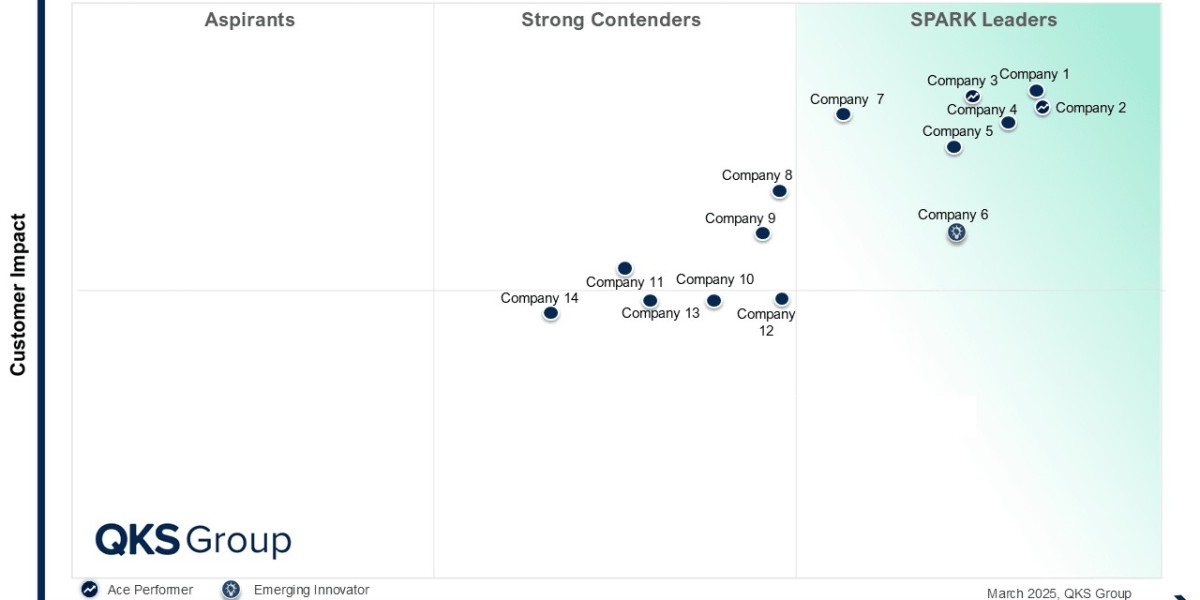
QKS Group’s Field Service Management market research provides a comprehensive assessment of the global landscape, including emerging technology trends, market trends, future outlook, competitive dynamics, and vendor capabilities. The research also includes detailed competition analysis and vendor evaluation using the proprietary SPARK Matrix analysis.
Click Here For More Information: https://qksgroup.com/market-research/spark-matrix-field-service-management-q1-2025-8567
Why Field Service Management Is Becoming Essential
Traditional field service processes often depend on manual scheduling, disconnected systems, spreadsheets, phone calls, and paper-based reporting. These approaches can make it difficult for service organizations to respond quickly when priorities change.
Modern FSM platforms help address these challenges by bringing scheduling, dispatch, contract management, reporting, technician workflows, and customer interactions into an integrated environment.
The result is greater visibility across field operations. Managers can understand technician availability, prioritize service requests, assign the right resources, and track work progress. Technicians can access relevant information from mobile devices while working at customer locations.
This connected approach helps organizations improve service efficiency while creating more consistent customer experiences.
The Role of AI in Field Service Operations
Artificial intelligence is becoming one of the most important technologies influencing FSM software. AI can support scheduling, troubleshooting, work-order management, knowledge retrieval, and decision-making.
Generative AI is particularly relevant because it enables technicians and customers to interact with service systems using natural language. AI-powered chatbots can help users troubleshoot common issues, answer service-related questions, and automate work-order creation.
For technicians, AI can summarize asset history, maintenance records, previous service activities, and relevant documentation. Instead of spending valuable time searching through multiple systems, technicians can receive contextual information when they need it.
This can improve first-time fix rates, reduce service delays, and help technicians make more informed decisions in the field.
Connecting Field Service with Asset Management
Field service and asset management are closely connected. Technicians need accurate information about the equipment they maintain, including service history, previous failures, warranties, parts, and maintenance schedules.
Integration with asset management software provides this visibility and creates a stronger connection between field operations and asset performance.
For example, before visiting a customer site, a technician can review an asset’s maintenance history and identify recurring issues. During the service visit, the technician can update asset records, document repairs, and capture new information that can support future maintenance activities.
This continuous flow of information helps organizations move from isolated service events toward a more complete asset lifecycle strategy.
Improving Customer Service Management
The modern service experience extends beyond the technician visit. Customers increasingly want to schedule appointments, track requests, receive updates, and communicate with service teams through digital channels.
This makes customer service management an important component of the broader field service strategy.
Customer self-service portals can allow users to book appointments and monitor service requests without contacting a call center. Service teams can also use centralized information to provide more consistent responses across customer interactions.
Organizations researching customer service management software can therefore benefit from understanding how customer-facing capabilities connect with field service workflows.
Similarly, organizations looking for customer service management examples can examine how appointment scheduling, automated notifications, self-service, remote assistance, and intelligent work-order management work together to create a seamless service journey.
AR Brings Remote Assistance to the Field
Augmented reality is another technology helping transform field service delivery. AR-based remote assistance allows technicians or customers to receive real-time guidance from remote experts.
A technician working on complex equipment can share a visual view of the problem while an expert provides instructions remotely. This can reduce the need for specialist travel and help resolve difficult service issues more quickly.
AR can also support technician training. Interactive AR-based training modules can provide practical learning experiences and help technicians understand equipment, procedures, and maintenance tasks in a more engaging way.
Customer Service Management and Service Platforms
The convergence of field service and customer service platforms is creating new opportunities for organizations to build connected service ecosystems.
Organizations evaluating customer service management ServiceNow capabilities, for example, may consider how customer workflows, service operations, asset information, and field activities can be integrated.
Similarly, businesses researching customer service management Atlassian solutions or Jira customer service management may be evaluating how service requests and support workflows can connect with broader enterprise processes.
Other stakeholders may search for customer service management PDF resources to understand frameworks, capabilities, or implementation approaches, while professionals preparing for service roles may look for customer service management interview questions and customer service management jobs to understand the skills increasingly required in modern service organizations.
These different perspectives demonstrate how service management is becoming a multidisciplinary function spanning technology, operations, customer experience, and workforce capabilities.
Check SPARK Plus Study Here: https://qksgroup.com/sparkplus?market-id=83&market-name=field-service-management
Key FSM Capabilities to Evaluate
When evaluating Field Service Management platforms, organizations should consider capabilities such as:
- Intelligent scheduling and dispatch
- Mobile workforce management
- Work-order automation
- Asset and service history management
- Contract and entitlement management
- Customer self-service
- Predictive and AI-powered insights
- Remote assistance and augmented reality
- Reporting and analytics
- Integration with CRM, ERP, EAM, and other enterprise systems
The importance of each capability depends on an organization’s operating model, workforce structure, asset complexity, and customer expectations.
Competitive Landscape of Field Service Management
The FSM market includes a broad range of technology providers with different strengths and areas of specialization. QKS Group’s proprietary SPARK Matrix evaluates leading vendors based on their technological capabilities and market impact, helping organizations understand competitive positioning and differentiation.
The SPARK Matrix includes vendors such as IFS, KloudGin, Microsoft, Nomadia, Nuvolo, Oracle, OverIT, Praxedo, PTC, Salesforce, SAP, ServiceNow, ServicePower, and Syncron.
A structured vendor evaluation can help technology buyers move beyond feature checklists and assess factors such as product capabilities, innovation, integration, scalability, usability, and overall market positioning.
The Future of Field Service Management
The future of FSM is moving toward increasingly intelligent and connected service operations. AI will continue to automate routine activities, while connected assets will provide richer operational data. Digital workflows will help organizations coordinate technicians and resources more effectively, and AR can make remote support and training more accessible.
At the same time, customer expectations will continue pushing organizations toward self-service, real-time communication, and personalized experiences.
According to Nithin A K, Analyst at QKS Group, FSM software helps organizations streamline scheduling, dispatch, contract management, and reporting while integrating advanced technologies to improve service delivery. The technology can provide technicians with asset work history summaries, while generative AI-powered chatbots can support troubleshooting and automate work-order creation. Customer self-service portals and AR-based remote assistance further enhance the overall service experience.
Download Sample Report Here: https://qksgroup.com/download-sample-form/spark-matrix-field-service-management-q1-2025-8567
Conclusion
Field Service Management is evolving from a scheduling and dispatch function into a connected intelligence layer for modern service organizations. The integration of AI, asset information, automation, customer self-service, analytics, and augmented reality is changing how businesses manage field operations.
For organizations seeking better productivity and customer experiences, the ability to connect technicians, assets, service teams, and customers will become increasingly important.
QKS Group’s Field Service Management research and SPARK Matrix analysis provide a structured view of the competitive landscape, helping technology buyers evaluate vendor capabilities, understand differentiation, and make informed decisions as field service operations continue to evolve.









