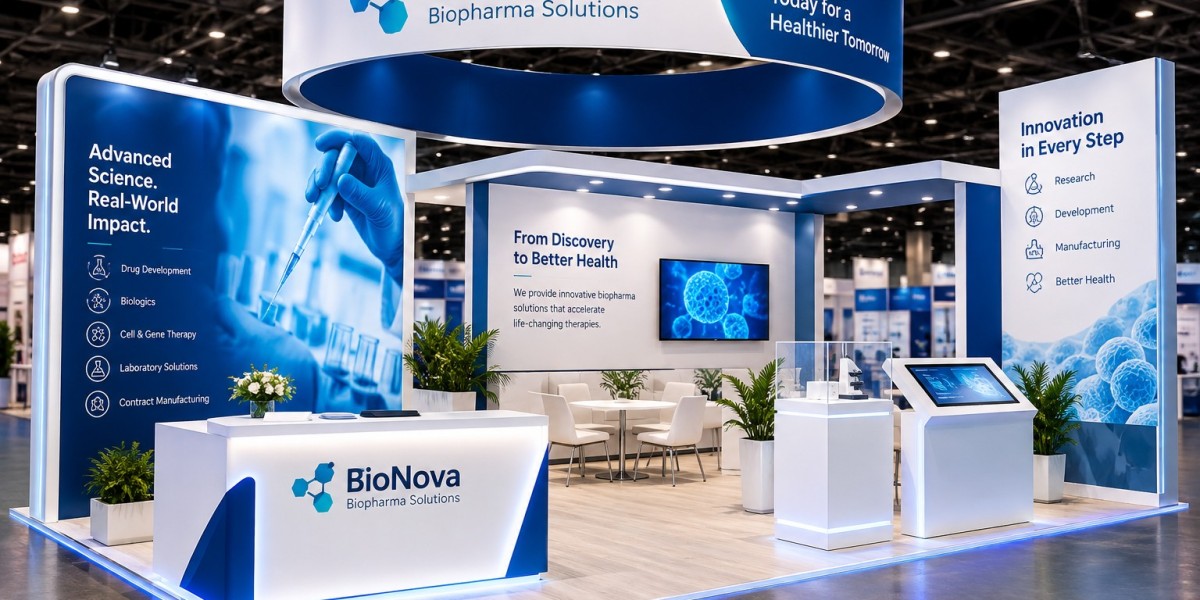


An effective Biopharma trade show booth design can do much more than display a company logo and product information. In a competitive biopharma exhibition environment, interactive elements can encourage visitors to stop, explore, ask questions, and engage with scientific solutions. From digital demonstrations and touchscreens to product experiences and educational presentations, interactive booth design can transform a static exhibition space into an environment that supports meaningful conversations and stronger brand recall.
Why Visitor Engagement Matters at Biopharma Trade Shows
Biopharma exhibitions attract professionals with different interests and levels of technical expertise. Researchers may want to understand a technology's scientific applications, while business leaders may focus on commercial opportunities, scalability, partnerships, and operational efficiency.
Because visitors have limited time, exhibitors need to make every interaction valuable.
A visually attractive booth may attract attention, but an interactive experience can encourage visitors to spend more time learning about the company.
Engagement can help exhibitors:
Start meaningful conversations
Demonstrate complex technologies
Explain product applications
Capture qualified leads
Build stronger brand awareness
Create memorable experiences
Support product launches
Generate follow-up opportunities
The goal should not be interaction for entertainment alone. Every interactive element should have a clear business or communication purpose.
Start With a Clear Engagement Strategy
Before adding technology or interactive features, determine what you want visitors to do.
For example, your goal may be to encourage visitors to:
Explore a new product
Watch a technical demonstration
Complete a product assessment
Speak with a specialist
Schedule a meeting
Scan a QR code
Download technical information
Participate in a presentation
This objective should influence the design of the entire booth.
If the goal is product education, the booth may need demonstration stations. If the goal is lead generation, interactive forms and appointment scheduling may be more important.
Create Interactive Product Demonstrations
Product demonstrations are one of the most effective ways to make a biopharma booth engaging.
A demonstration can show visitors how a product, instrument, software platform, process, or laboratory solution works.
Instead of simply displaying technical specifications, the booth can allow visitors to see the solution in action.
A demonstration area may include:
Laboratory equipment
Software interfaces
Product samples
Digital simulations
Process models
Touchscreen controls
Technical presentation screens
The demonstration should be concise and easy to understand.
Visitors should quickly see the connection between the technology and the problem it solves.
Use Touchscreen Displays for Self-Guided Exploration
Touchscreens can allow visitors to explore information at their own pace.
A single touchscreen can contain multiple layers of content, including:
Product specifications
Applications
Case studies
Research information
Product videos
Technical documentation
Company capabilities
Frequently asked questions
This approach reduces the need to cover every wall with printed text.
It also allows the booth team to customize conversations.
For example, if a visitor is interested in a specific application, the representative can immediately navigate to relevant information rather than searching through printed materials.
Develop Interactive Scientific Visualizations
Biopharma companies often deal with complex processes that are difficult to explain through conventional graphics.
Interactive visualizations can make these concepts easier to understand.
Consider using:
Process diagrams
3D models
Interactive workflows
Molecular illustrations
Manufacturing process maps
Research timelines
Data visualizations
Visitors can explore different stages or components instead of looking at a static image.
This can be particularly useful when explaining complicated workflows.
Use Large Digital Displays Strategically
Large LED screens can create a strong visual focal point within an exhibition booth.
However, the screen should communicate a clear message rather than simply playing a promotional video on a continuous loop.
Effective content could include:
Product demonstrations
Short scientific animations
Customer application stories
Manufacturing processes
Research highlights
Company milestones
Expert presentations
Keep important messages short and visually clear so visitors can understand them even when they are walking past the booth.
Introduce Augmented Reality Experiences
Augmented reality can provide another way to explain products and scientific processes.
For example, visitors could use a tablet or compatible device to explore a digital layer over a physical product.
AR experiences might demonstrate:
Internal equipment components
Manufacturing workflows
Product functionality
Laboratory applications
Scientific processes
Technical specifications
The benefit is that a relatively small physical display can provide a much richer educational experience.
However, the AR experience should remain simple. Visitors should not need extensive instructions before they can begin.
Use QR Codes for Deeper Information
QR codes provide a practical bridge between physical exhibitions and digital resources.
A visitor can scan a code to access:
Product brochures
Technical papers
Product videos
Case studies
Company websites
Meeting booking forms
Product catalogs
Contact information
Instead of placing one QR code everywhere, consider assigning QR codes to specific content areas.
For example, a product display can have a QR code leading directly to its technical information.
This makes the digital experience more relevant.
Build Interactive Lead-Capture Experiences
Lead capture does not have to feel like a traditional form-filling exercise.
Interactive lead-generation systems can make the process more useful for visitors.
For example, visitors could answer a few questions about their interests and receive relevant resources based on their responses.
A system could ask:
What type of technology are you exploring?
What application are you interested in?
What is your primary business challenge?
Would you like technical information?
Would you like to speak with a specialist?
This information can help exhibitors understand visitor needs while providing a more personalized experience.
Design Interactive Education Zones
Not every visitor is ready for a sales conversation.
Some may simply want to learn.
An educational zone can provide:
Short technical presentations
Expert talks
Scientific demonstrations
Product tutorials
Industry discussions
Interactive learning modules
This approach positions the booth as a useful destination rather than simply a promotional space.
A small presentation area can also attract additional visitors when a relevant session begins.
Create Scheduled Micro-Presentations
Long presentations may not suit the fast-moving exhibition environment.
Instead, consider short presentations lasting approximately five to ten minutes.
Topics might include:
New technology developments
Product applications
Research findings
Process improvements
Industry challenges
Laboratory efficiency
Manufacturing innovations
A visible schedule can encourage visitors to return to the booth at a specific time.
This creates repeated opportunities for engagement throughout the exhibition.
Make the Booth Physically Interactive
Interactive design does not always require advanced technology.
Physical experiences can also encourage engagement.
Examples include:
Product handling stations
Demonstration counters
Sample displays
Interactive models
Consultation tables
Hands-on equipment demonstrations
Educational displays
Physical interaction can make technical products easier to understand because visitors can see and experience them directly.
Use Gamification Carefully
Gamification can attract attention, but it needs to remain relevant to a professional biopharma audience.
Instead of using unrelated games, create activities connected to your industry.
For example:
Scientific knowledge challenges
Product-matching activities
Process optimization scenarios
Technology quizzes
Interactive problem-solving exercises
A well-designed activity can create a memorable experience while communicating useful information.
The reward does not need to be the primary attraction. The educational experience should remain central.
Personalize Visitor Experiences
Different visitors have different requirements.
An interactive booth can provide personalized content based on visitor interests.
For example, visitors can select categories such as:
Research | Manufacturing | Quality | Laboratory | Technology | Partnerships
The system can then display relevant information.
Personalization reduces information overload and makes the visitor experience more efficient.
Combine Digital and Human Interaction
Technology should not replace booth staff.
The strongest exhibition experiences often combine digital tools with human expertise.
For example, a touchscreen might introduce a product, while a technical specialist explains questions in greater depth.
This creates a natural progression:
Attract → Explore → Discuss → Qualify → Follow up
Technology gets the conversation started, while knowledgeable staff provide the expertise needed to move the interaction forward.
Design Comfortable Conversation Areas
After an interactive experience, visitors may want to speak privately with a representative.
The booth should therefore provide comfortable spaces for discussion.
Depending on the available footprint, consider:
Open discussion tables
Lounge seating
Semi-private meeting areas
Small conference rooms
Technical consultation areas
The transition from interactive content to personal conversation should feel natural.
For example, a visitor who finishes a product demonstration could immediately sit with a specialist to discuss their specific requirements.
Use Data Visualization to Communicate Scientific Value
Biopharma audiences often appreciate evidence-based information.
Data visualization can help present complex information more effectively.
Instead of displaying large tables of numbers, consider using:
Charts
Graphs
Process comparisons
Performance indicators
Timeline graphics
Interactive data dashboards
Interactive dashboards can allow visitors to select different parameters and explore relevant results.
The information should remain accurate, readable, and appropriately contextualized.
Make Your Interactive Content Easy to Use
A technically impressive experience can fail if visitors do not know how to use it.
Interactive interfaces should have:
Clear instructions
Large readable buttons
Simple navigation
Short content sections
Fast loading times
Accessible controls
Avoid forcing visitors through long sequences before they reach useful information.
The best interactive experiences are often simple enough to understand within seconds.
Think About Booth Traffic Flow
Interactive installations can create crowds.
If several visitors gather around a touchscreen or demonstration station, they should not block entrances or meeting areas.
Plan the booth around visitor movement.
Consider creating distinct zones for:
Attraction
Exploration
Demonstration
Conversation
Lead capture
Meeting
This creates a natural visitor journey and prevents bottlenecks.
Integrate Branding Into Interactive Experiences
Your interactive features should feel like part of your brand rather than independent technology installations.
Use consistent:
Typography
Brand colors
Logo placement
Messaging
Visual language
Product imagery
When digital and physical elements share the same visual identity, the overall booth feels more cohesive.
Prepare for Technical Problems
Interactive booths depend on technology, which means technical preparation is essential.
Before the event, test:
Internet connectivity
Screens
Touch interfaces
Audio
QR codes
Software
Power requirements
Demonstration equipment
Backup devices
Prepare offline versions of important content whenever possible.
Your team should also know basic troubleshooting procedures.
A backup plan ensures that the visitor experience does not completely stop if one technology component fails.
Measure Interactive Booth Performance
Interactive features should be evaluated based on measurable outcomes.
Useful metrics include:
Number of interactions
Average engagement time
Product demonstrations completed
QR scans
Content downloads
Meeting requests
Qualified leads
Presentation attendance
Follow-up appointments
Compare these results with your overall exhibition objectives.
An interactive installation that attracts hundreds of people but generates no meaningful conversations may need to be redesigned.
Avoid Technology for Technology's Sake
One of the biggest mistakes exhibitors can make is adding technology simply because it looks impressive.
Every interactive element should answer a question:
Does this help visitors understand, remember, or act on our message?
If the answer is no, the feature may not justify the cost or complexity.
Simple interaction can sometimes be more effective than sophisticated technology.
A well-designed product demonstration can deliver more value than an expensive virtual reality installation that visitors find difficult to use.
Choose the Right Booth Design Partner
Interactive booth design requires coordination between creative design, construction, technology, content, and event logistics.
When selecting a booth partner, evaluate their ability to manage these areas together.
Look for experience in:
Exhibition design
Biopharma or life sciences environments
Interactive technology
Product demonstrations
Digital content
Lighting and AV
Booth construction
Installation
Event logistics
Review previous projects and ask how the partner approaches visitor engagement.
The right partner should understand both the visual and operational requirements of an interactive exhibition.
Plan Your Interactive Experience Early
Interactive features should be integrated during the initial booth design stage.
Adding technology at the last minute can create problems with:
Power
Space
Internet
Screen placement
Furniture
Visitor flow
Branding
Safety
Start by defining your visitor journey and then select technologies that support it.
This approach is more effective than designing a conventional booth and attempting to add interactive features afterward.
Conclusion
Interactive exhibition experiences can help biopharma companies communicate complex ideas, demonstrate products, generate qualified leads, and create stronger visitor relationships. The most successful approach is not to fill a booth with technology but to use interaction strategically. Touchscreens, demonstrations, digital visualization, QR codes, educational sessions, and personalized content can all contribute to a more meaningful visitor journey when they are connected to clear business objectives. By combining technology with knowledgeable staff, thoughtful layouts, strong branding, and measurable engagement goals, companies can turn their Biopharma trade show booth design into a more engaging and productive exhibition experience.









