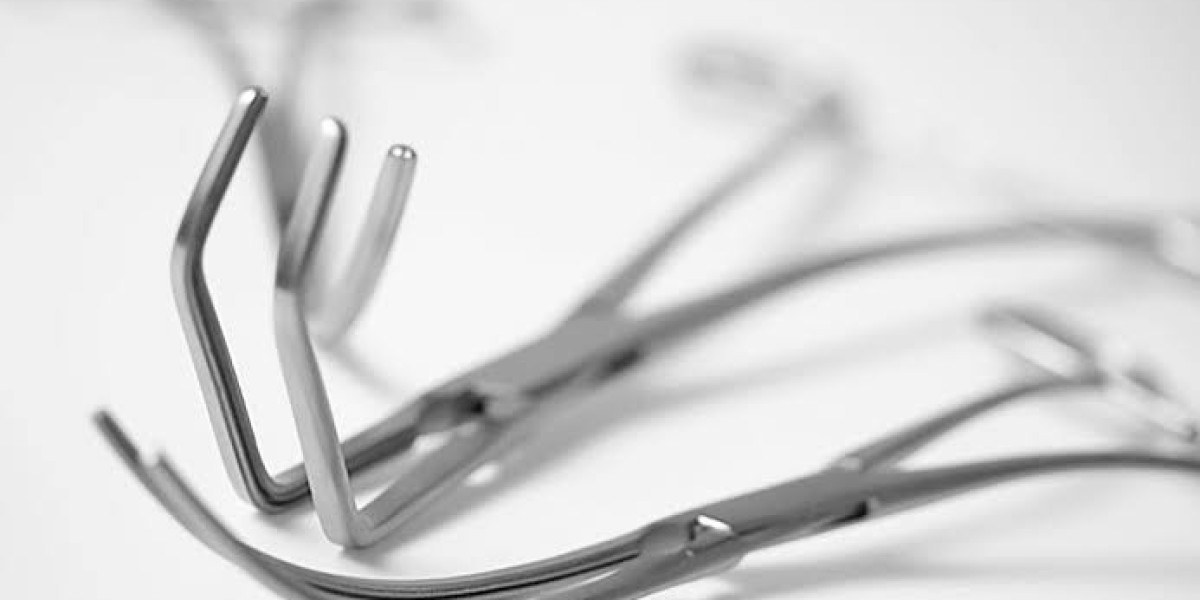


Surgical instruments are precision medical tools designed to support surgeons and healthcare professionals during procedures. Although an instrument may appear simple, producing a reliable surgical instrument requires careful material selection, precision manufacturing, skilled workmanship, finishing, inspection, and quality control.
For medical distributors, hospitals, healthcare suppliers, and private-label brands, understanding how surgical instruments are manufactured can make it easier to evaluate manufacturers and choose the right supplier for long-term sourcing.
From raw stainless steel to the finished product, every stage can influence the instrument's durability, functionality, surface finish, and consistency.
1. Selecting the Right Raw Material
The manufacturing process begins with selecting suitable raw material.
Surgical instruments are commonly manufactured from medical-grade stainless steel because the material offers a combination of strength, corrosion resistance, durability, and suitability for repeated cleaning and sterilization.
The exact material specification depends on the type of instrument and its intended application. Cutting instruments, grasping instruments, retractors, forceps, scissors, clamps, and specialty instruments can have different mechanical and performance requirements.
A professional surgical instrument manufacturer begins by establishing material specifications before production starts. Consistent raw material is important because variations can affect hardness, corrosion resistance, machining performance, and the finished instrument's service life.
For buyers sourcing instruments in bulk, asking about material specifications and quality-control procedures can therefore be an important part of supplier evaluation.
2. Cutting and Forming the Steel
Once the appropriate stainless steel has been selected, the material is prepared for manufacturing.
Depending on the instrument design, stainless steel may be cut into specific blanks or shaped using specialized forming processes. The objective is to create a starting piece that closely follows the dimensions required by the final design.
At this stage, manufacturers work according to product specifications such as:
Overall length
Width and thickness
Jaw dimensions
Tip configuration
Handle design
Working-end geometry
Joint or hinge requirements
Precision at the beginning of production helps reduce dimensional variation later in the manufacturing process.
Different instruments require different production methods. A simple forceps may require a different forming and machining process from a surgical scissors, needle holder, retractor, or specialty ophthalmic instrument.
3. Forging and Shaping
Some surgical instruments require forging or other shaping processes to achieve their required form and mechanical characteristics.
During forging, stainless steel is shaped according to the instrument's design. Skilled manufacturing teams must control the process carefully because the geometry of the instrument directly influences how it functions.
For example, instruments that require gripping, clamping, cutting, or controlled movement need accurately formed working ends.
The manufacturing process therefore combines industrial machinery with skilled technical work. The goal is not simply to create a shape that looks correct, but to produce an instrument that conforms to its intended specifications.
4. CNC Machining and Precision Manufacturing
Modern surgical instrument production can involve precision machining and CNC equipment.
Machining may be used to create detailed surfaces, holes, grooves, joints, serrations, locking mechanisms, and other features that require controlled dimensions.
This stage becomes particularly important for instruments with complex designs or narrow tolerances.
Precision machining helps manufacturers achieve repeatability when producing larger quantities. This is especially important for wholesale surgical instruments and OEM orders, where buyers expect multiple production batches to maintain consistent dimensions and functionality.
For medical companies developing their own products, precision manufacturing also makes it possible to work from technical drawings, samples, specifications, and customized designs.
5. Creating the Working End
The working end is one of the most important parts of a surgical instrument.
Depending on the instrument, this could be a:
Cutting edge
Gripping jaw
Serrated surface
Needle-holding jaw
Retracting surface
Delicate ophthalmic tip
Dental working end
Specialty surgical tip
Each working end requires a particular geometry.
For example, surgical scissors need properly aligned blades and accurately prepared cutting edges. Forceps require correctly matched tips and jaws. Needle holders require suitable gripping surfaces to hold a needle securely.
This is why surgical instrument manufacturing requires more than general metal fabrication. The instrument must be manufactured according to the functional requirements of its specific design.
6. Assembly of Components
Some instruments consist of multiple components that must be assembled accurately.
Scissors, clamps, needle holders, and other hinged instruments may contain joints, screws, rivets, springs, or other components.
During assembly, manufacturers check the relationship between moving parts.
The instrument should open, close, lock, or move according to its intended design. Misalignment can affect functionality and may also cause premature wear.
For instruments manufactured for OEM and private-label customers, assembly requirements can be incorporated into the customer's specifications before production begins.
7. Heat Treatment and Hardness Control
Certain surgical instruments require controlled heat-treatment processes to achieve appropriate mechanical properties.
Heat treatment can influence hardness, strength, durability, and wear resistance.
The exact process depends on the stainless steel grade and the type of instrument being manufactured.
For cutting instruments, hardness can be particularly important because the working edge needs to maintain its performance. At the same time, the instrument must retain the required structural properties.
Manufacturers therefore need to control processing conditions and inspect finished components according to established specifications.
8. Grinding, Polishing and Surface Finishing
After shaping and machining, the instrument may undergo grinding and finishing processes.
Grinding removes unwanted material and helps establish the required shape and surface geometry. Further finishing processes improve the surface appearance and smoothness.
Surgical instruments can have different surface finishes depending on their design and customer requirements. Common finishes include satin or matte finishes and polished finishes.
A high-quality surface finish is not simply about appearance. Proper finishing can help produce smooth surfaces that are easier to clean and maintain.
At this stage, skilled technicians may carefully work on edges, tips, jaws, handles, joints, and other areas of the instrument.
9. Cleaning and Surface Preparation
After machining and finishing, instruments must be thoroughly cleaned to remove manufacturing residues such as oils, polishing compounds, metal particles, and other contaminants.
Cleaning and preparation are important before final inspection and packaging.
Manufacturers should maintain controlled procedures for cleaning and handling finished instruments to help protect their surface condition and overall quality.
For international buyers, consistent cleaning and packaging processes are particularly important because instruments may travel long distances before reaching the final customer.
10. Quality Inspection
Quality inspection is one of the most important stages of surgical instrument manufacturing.
A finished instrument may be inspected for characteristics such as:
Dimensions
Alignment
Surface finish
Joint movement
Jaw matching
Tip condition
Cutting performance
Serration quality
Locking mechanism
Corrosion or surface defects
Overall workmanship
The inspection requirements depend on the instrument type.
For example, a pair of scissors requires appropriate blade alignment and cutting performance, while a forceps requires accurate tip alignment and gripping characteristics.
For bulk orders, manufacturers also need systems that help maintain consistency across production quantities.
11. Functional Testing
Visual inspection alone is not enough for many surgical instruments.
Functional testing helps determine whether the instrument performs according to its intended design.
A scissors should cut properly. A clamp should open, close, and lock correctly. A forceps should provide the required grip. A needle holder should hold the intended needle securely.
Functional checks help identify problems that might not be obvious from appearance alone.
For OEM customers, product specifications and functional requirements can be established before manufacturing begins so that production and inspection teams have clearly defined criteria.
12. Laser Marking and Private Label Branding
For medical distributors and healthcare companies developing their own brands, branding is an important part of the manufacturing process.
Many manufacturers provide OEM and private-label services that allow customers to add their company name, logo, model number, or other identification according to the agreed specifications.
Laser marking can provide a durable way to identify instruments while maintaining a professional appearance.
Private-label manufacturing can also include customized packaging, labeling, sets, and product configurations.
Companies interested in developing a branded instrument range can explore OEM and private-label surgical instrument manufacturing and discuss their specifications directly with the manufacturer.
13. Packaging and Preparation for Export
Once instruments pass inspection, they are prepared for packaging.
Packaging requirements can vary according to the instrument, customer, order quantity, and destination market.
OEM customers may request customized packaging and branding to match their existing product range.
For international B2B orders, proper packaging also helps protect instruments during transportation and storage.
A manufacturer serving global customers should therefore consider not only production but also order preparation, documentation, packaging, and shipping coordination.
14. Why the Manufacturing Process Matters to Buyers
Understanding the manufacturing process gives buyers a better way to evaluate potential suppliers.
Instead of looking only at price, medical distributors and healthcare companies can consider:
Material: What stainless steel specification is used?
Manufacturing: Does the supplier have appropriate equipment and skilled manufacturing personnel?
Precision: How are product dimensions and specifications controlled?
Finishing: How are grinding, polishing, and surface finishing handled?
Inspection: What quality checks are performed before shipment?
Customization: Can the manufacturer produce instruments according to drawings, samples, or specifications?
Branding: Can the supplier provide laser marking and private-label packaging?
Production capacity: Can the supplier maintain consistency for repeat and bulk orders?
Export capability: Can the manufacturer handle international orders and shipping requirements?
These questions can help buyers compare suppliers based on manufacturing capabilities rather than price alone.
Surgical Instrument Manufacturing for OEM and Private-Label Brands
For established medical distributors and companies building their own brands, working directly with a manufacturer can provide greater control over product specifications, branding, packaging, and production requirements.
An experienced OEM partner can support the process from initial product specifications through manufacturing, finishing, inspection, branding, packaging, and shipment.
Mizon International manufactures and supplies a broad range of medical instruments for international B2B customers, including surgical instruments, dental instruments, ophthalmic instruments, and beauty instruments.
The company also supports customized manufacturing, OEM requirements, private-label branding, and international supply for businesses looking to develop or expand their medical instrument product ranges.
Conclusion
The production of a surgical instrument involves much more than shaping a piece of stainless steel. It is a multi-stage manufacturing process involving material selection, forming, precision machining, working-end production, assembly, heat treatment where required, grinding, polishing, cleaning, inspection, functional testing, branding, and packaging.
For medical buyers, understanding these stages can make supplier evaluation more informed and help identify manufacturers capable of delivering consistent products for long-term business requirements.
Whether a company needs standard surgical instruments, bulk wholesale supply, customized products, or private-label manufacturing, the manufacturing process behind the instrument plays an important role in the final product.
If you are looking for a manufacturer for your next medical instrument project, you can contact Mizon International to discuss product specifications, OEM requirements, private-label opportunities, bulk orders, and custom manufacturing.






