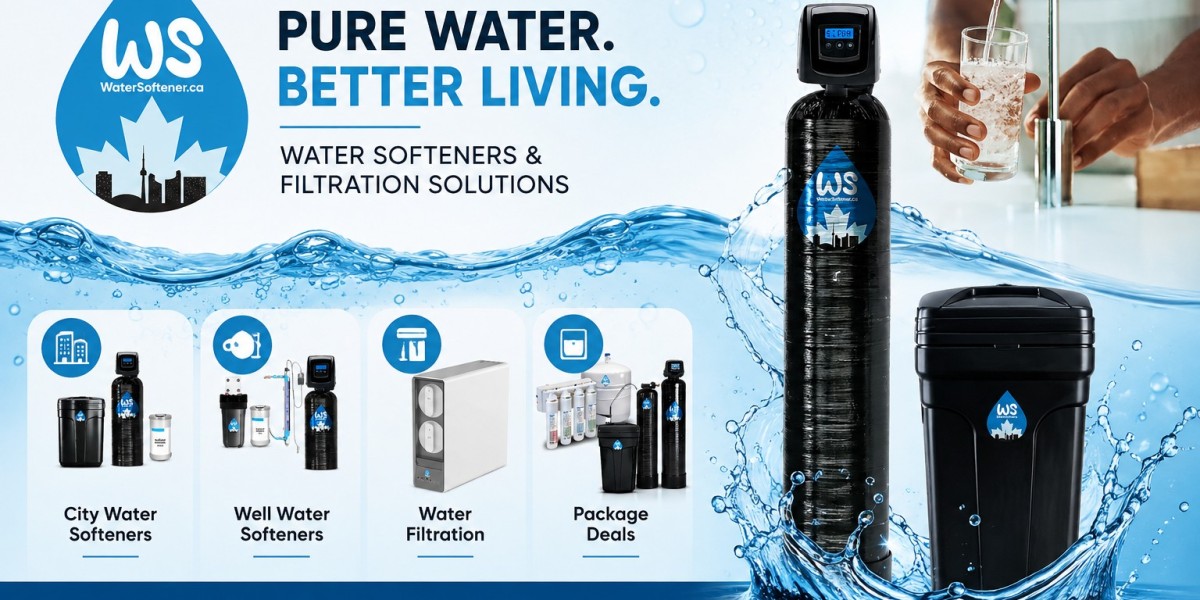


Hard water is a common concern for many households across Canada. Although hard water is generally not considered harmful to drink, the minerals it contains can create noticeable problems throughout a home. Mineral deposits can build up inside plumbing, leave spots on glassware, make cleaning more difficult, and reduce the effectiveness of soaps and detergents. Over time, these issues can affect household appliances, fixtures, and everyday comfort. A properly selected Water Softener can help manage these problems by reducing the concentration of hardness minerals in the household water supply.
For homeowners looking for a practical solution, understanding how water softening works is an important first step. Water Softener Canada provides solutions designed around the needs of Canadian households, where water hardness can vary significantly from one region to another. Choosing the right water treatment system can improve the overall experience of using water while helping protect plumbing fixtures and water-using appliances.
Understanding Hard Water and Its Effects
Hard water contains naturally occurring minerals, primarily calcium and magnesium. These minerals enter groundwater as water moves through soil and rock formations. The amount of hardness depends on the local geology and water source, which means some Canadian communities may experience considerably harder water than others.
One of the most recognizable signs of hard water is white or cloudy residue around faucets, showerheads, sinks, and bathtubs. This residue is commonly associated with mineral scale. Hard water can also make it more difficult for soap to produce a rich lather. When soap reacts with calcium and magnesium, it can leave behind a film that requires additional effort to remove.
The effects can become more noticeable when hard water is used regularly. Washing machines, dishwashers, water heaters, coffee makers, and other water-using appliances can accumulate mineral deposits. Over an extended period, scale may affect efficiency and contribute to maintenance requirements.
What Is a Water Softener?
A Water Softener is a water treatment system designed to reduce hardness minerals from household water. Traditional ion-exchange water softeners use a specially formulated resin to capture calcium and magnesium ions as water passes through the system. In exchange, the resin releases sodium or, in some systems, potassium ions.
Once the resin becomes saturated with hardness minerals, the system goes through a regeneration cycle. During regeneration, a salt-based solution is commonly used to restore the resin so that it can continue removing hardness minerals. Modern systems can automate this process based on water consumption, time, or other programmed settings.
The result is softened water that can feel different on the skin and behave differently during cleaning. By controlling hardness, a softening system can help reduce scale formation and improve the performance of many household cleaning products.
Why Canadian Homes May Benefit From Water Softening
Water conditions are different across Canada, and local water sources can have different mineral compositions. Homes supplied by municipal systems may receive water with varying hardness levels, while properties using private wells can experience their own water quality challenges.
A Water Softener can be particularly useful in areas where hard water causes persistent scale or cleaning difficulties. Instead of repeatedly dealing with mineral deposits, homeowners can use a dedicated water treatment system to address hardness at the source.
Softened water can also make routine household tasks more convenient. Soap and shampoo can lather more easily, while surfaces may require less effort to keep free from mineral residue. This can be especially noticeable in bathrooms and kitchens where water is used frequently.
How a Water Softener Works
The ion-exchange process is one of the most established methods used for residential water softening. Inside the softener is a tank containing resin beads. As hard water passes through the resin, calcium and magnesium attach to the resin beads.
The treated water then continues through the home's plumbing system. Over time, the resin becomes loaded with hardness minerals and needs to be regenerated. During this cycle, the system flushes the resin with a concentrated brine solution. The hardness minerals are removed from the resin and discharged through the system's drainage process.
After regeneration, the resin is ready to soften water again. Many modern systems are designed to automate regeneration, allowing homeowners to use softened water without having to manually operate the equipment each time.
Benefits of Softened Water for Everyday Living
One of the major reasons homeowners consider a Water Softener is the effect hard water can have on everyday cleaning. When hardness minerals interfere with soap, more product may be required to achieve the desired result. Softened water can improve soap and detergent performance, which may make washing dishes, clothes, and household surfaces easier.
Bathrooms can also benefit from reduced mineral scale. Shower doors, taps, tiles, and sinks can develop visible deposits when hard water repeatedly evaporates on their surfaces. Reducing water hardness can help minimize the formation of these deposits.
Softened water may also provide a different experience when bathing. Some people find that their skin feels less coated after washing, while hair may feel smoother because fewer mineral residues are left behind. Individual results can vary depending on water chemistry, personal preferences, and other factors.
Protecting Plumbing and Household Appliances
Hard water does not only affect visible surfaces. Mineral scale can accumulate inside pipes and water-using equipment. Water heaters are particularly exposed because water is repeatedly heated and stored, creating conditions where mineral deposits can form.
A properly maintained Water Softener can help reduce the amount of hardness minerals entering the plumbing system. This may help limit scale buildup inside appliances and fixtures. Reducing scale can also support the long-term operation of equipment such as dishwashers, washing machines, water heaters, and other water-dependent appliances.
While a water softener is not a guarantee against every plumbing or appliance problem, controlling hardness can be an important part of a broader household water treatment strategy.
Choosing the Right Water Softener for Your Home
Selecting a water softening system should not be based solely on the size or appearance of the equipment. The hardness of the incoming water, household water consumption, number of occupants, available installation space, and regeneration requirements can all influence which system is appropriate.
A professional water assessment can help determine the hardness level and identify the type of treatment that makes sense for a particular property. Homes with larger families may require a system with greater capacity, while smaller households may have different requirements.
It is also important to consider the system's control technology. Modern water softeners can include demand-based regeneration, digital controls, monitoring features, and settings designed to improve salt and water efficiency. Choosing a system that matches actual household usage can help avoid unnecessary regeneration and operating costs.
Salt-Based and Alternative Water Treatment Systems
Traditional salt-based softeners remain a widely used option for managing calcium and magnesium hardness. However, homeowners may also encounter salt-free conditioners and other water treatment technologies when researching solutions.
It is important to understand that water conditioning and water softening are not necessarily the same process. Some systems are designed to alter the behavior of minerals and reduce scale without removing hardness minerals from the water. A true ion-exchange softener, on the other hand, removes calcium and magnesium through the exchange process.
The appropriate choice depends on the household's water quality, objectives, local conditions, and preferences. Testing the water before selecting a system can provide useful information and prevent homeowners from investing in a solution that does not address their specific issue.
Water Softener Maintenance
Like other household equipment, a Water Softener requires appropriate maintenance to operate effectively. Salt-based systems need a suitable supply of softening salt, and the brine tank should be monitored to ensure that the system can complete its regeneration cycles.
The resin tank, control valve, brine system, and other components should also be checked according to the manufacturer's recommendations. Regular maintenance can help identify potential problems before they become more serious.
Water quality can change over time as well. If a home experiences changes in taste, odor, staining, or other water characteristics, additional testing may be useful. A softener specifically addresses hardness, so other water quality concerns may require different treatment technologies.
The Importance of Professional Water Testing
Before purchasing a water treatment system, homeowners should understand what is actually present in their water. Water hardness can be measured through appropriate testing, while additional testing can identify other characteristics that may influence treatment decisions.
For private well owners, comprehensive water testing can be especially valuable because well water quality can vary according to local geology, seasonal conditions, and other environmental factors. Municipal water users may also benefit from understanding the hardness level of their incoming supply.
Professional assessment can help determine whether a softener is appropriate and what capacity may be required. This approach makes it easier to choose equipment based on actual water conditions rather than assumptions.
Water Softener Canada for Canadian Water Treatment Needs
Canadian homeowners have different water treatment requirements depending on their location and water source. Water Softener Canada focuses on solutions that can help households address hard water and improve the overall usability of their water.
A suitable water softening system can help reduce scale, support household appliances, improve cleaning performance, and make everyday water use more comfortable. The right solution depends on individual water conditions, household demand, and the type of treatment required.
Working with a knowledgeable water treatment provider can make the selection process easier. Instead of choosing a system based only on price or general specifications, homeowners can consider water hardness, household consumption, system capacity, maintenance requirements, and long-term operating considerations.
Improving Household Water Quality With the Right Solution
Water is used throughout virtually every part of a home, from drinking and cooking to bathing, cleaning, and laundry. When hard water creates persistent problems, treating the underlying hardness can make a meaningful difference in daily household routines.
A Water Softener is specifically designed to manage calcium and magnesium hardness and can help reduce the mineral scale associated with hard water. When properly selected, installed, and maintained, a softening system can support cleaner fixtures, more effective cleaning, and better protection for water-using appliances.
For Canadian homeowners exploring water treatment options, Water Softener Canada offers a useful starting point for understanding the benefits of water softening and choosing an approach suited to local conditions. Rather than treating hard water as an unavoidable inconvenience, homeowners can assess their water quality and explore practical solutions that fit their property.
Ultimately, the best water treatment decision begins with understanding the water itself. By testing water hardness, considering household requirements, selecting appropriate equipment, and maintaining the system properly, homeowners can create a more efficient and comfortable water environment throughout their home. A well-designed Water Softener can be an important part of that approach, helping Canadian households manage the everyday challenges associated with hard water.






