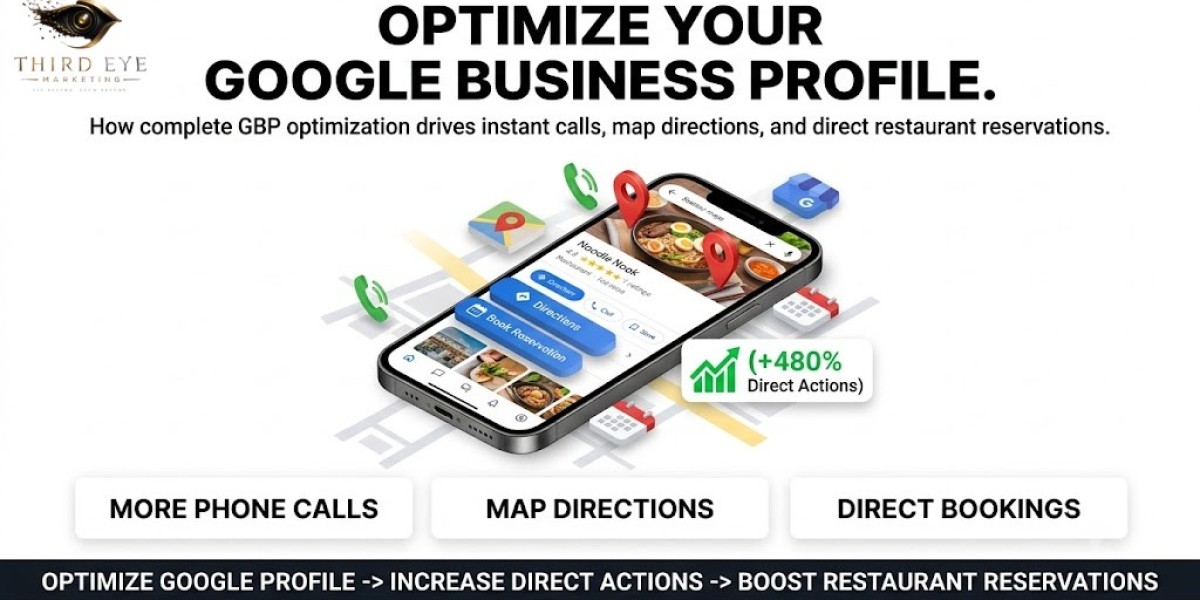


Google Maps for Restaurants: How to Turn Profile Views Into Calls, Directions & Visits
For restaurants, appearing on Google Maps is only the beginning.
A potential customer may discover your restaurant while searching for “restaurants near me,” open your Google Business Profile, look at your photos, check your reviews, view your menu, and then move on to another restaurant.
The real marketing opportunity is turning that Google Maps visibility into action.
Those actions might include:
Calling your restaurant
Asking for directions
Visiting your website
Viewing your menu
Making a reservation
Ordering online
Visiting your location
This is where local SEO for restaurants and Google Business Profile optimization become important.
Your restaurant doesn't simply need to be visible on Google Maps. Your profile needs to give customers enough relevant information, confidence, and convenience to take the next step.
For restaurants in Vancouver and Surrey, where customers can compare multiple nearby dining options within minutes, optimizing this customer journey can become an important part of a broader restaurant digital marketing strategy.
How Can Restaurants Turn Google Maps Views Into Customers?
To turn Google Maps profile views into calls, directions, and visits:
Keep your business information accurate.
Choose relevant Google Business Profile categories.
Use high-quality food and restaurant photography.
Keep your menu updated.
Clearly communicate your restaurant's value.
Collect and respond to genuine reviews.
Make calls, directions, reservations, and ordering easy.
Optimize the website connected to your profile.
Build stronger local SEO signals.
Track customer actions instead of focusing only on profile views.
The goal is simple:
Get discovered → build confidence → make action easy → create the visit.
Why Google Maps Matters for Restaurants
Google Maps captures customers at a particularly valuable stage of the buying journey.
Someone browsing Instagram may simply be discovering restaurants.
Someone searching Google Maps for a nearby restaurant may already have an immediate need.
They may be looking for:
Dinner nearby
A coffee shop
A place for lunch
A bar
Family dining
Takeout
A restaurant for a special occasion
This makes Google Maps an important part of local restaurant SEO.
However, visibility doesn't guarantee conversion.
Two restaurants may both appear in the same search results, but the customer may choose the one with better photos, stronger reviews, clearer information, a more attractive menu, or a simpler way to call or visit.
1. Make Your Google Business Profile Accurate
Before optimizing anything else, check the basics.
Your restaurant's profile should accurately represent:
Business name
Address
Phone number
Website
Opening hours
Special hours
Business category
Menu
Services or relevant attributes
Incorrect information can create unnecessary customer friction.
For example, imagine someone finds your restaurant at 8:30 PM, checks Google Maps, and sees that you're open until 10 PM.
They arrive and discover the kitchen closed at 9 PM.
That creates a poor customer experience.
Regularly review your profile information, especially when your operating hours, menu, phone number, or services change.
2. Choose Relevant Categories
Your primary business category helps Google understand what your business is.
Restaurants should select categories that accurately describe the business rather than choosing categories simply because they appear popular.
If you operate a café, bar, specialty restaurant, or another hospitality business, your profile should accurately reflect the actual business.
This is one area where a Google Business Profile optimization strategy should prioritize relevance and accuracy over trying to manipulate rankings.
3. Use Restaurant Photography That Creates Confidence
Visual content can influence whether someone stops scrolling and starts considering your restaurant.
Your Google Maps presence should include useful, authentic photographs.
Consider adding:
Food photography
Show signature dishes, popular items, desserts, drinks, and seasonal offerings.
Restaurant photography
Show the interior, exterior, seating, ambience, and overall environment.
Experience photography
Show events, groups, dining experiences, or other elements that help customers understand what visiting your restaurant is like.
Professional food photography services can help create a consistent visual library that can be reused across Google, websites, social media, and advertising.
For businesses looking for food photography Vancouver, the important consideration isn't simply having attractive images. The photographs should accurately represent the food and experience customers will receive.
4. Make Your Menu Easy to Find
One of the first questions a potential customer may have is:
“What do they serve?”
If the answer isn't immediately clear, you create friction.
Keep your menu current and make sure customers can access it easily.
Check that:
Popular dishes are represented accurately.
Prices are current where applicable.
The menu works properly on mobile.
Discontinued dishes are removed.
Restaurant hours align with availability.
Ordering information is clear.
Your Google Maps profile and website should tell the same story.
5. Give Customers a Reason to Choose You
Google Maps users are often comparing options.
Your restaurant needs to communicate what makes it relevant to their search.
For example:
“Freshly prepared Japanese dishes in downtown Vancouver.”
is more informative than:
“We are the best restaurant in Vancouver.”
Specific information helps customers understand what you offer.
Your differentiation could involve:
Cuisine
Dining experience
Location
Atmosphere
Dietary options
Signature dishes
Events
Service model
Takeout or delivery
Private dining
Avoid unsupported superlatives.
Focus on genuine differentiators.
6. Build a Strong Review Strategy
Reviews can play an important role in restaurant discovery.
Potential customers may examine recent reviews before deciding whether to visit.
Look beyond the overall rating.
Read what customers repeatedly mention about:
Food quality
Service
Atmosphere
Wait times
Value
Cleanliness
Portions
Specific dishes
This feedback can inform both marketing and operations.
A restaurant marketing strategy should not treat reviews as merely an SEO checkbox.
They are customer feedback.
7. Respond to Reviews
Your review responses are visible to future customers as well.
For positive reviews, acknowledge the customer's feedback naturally.
For negative reviews, avoid arguments and emotional responses.
Instead:
Acknowledge the concern.
Remain professional.
Address what can reasonably be addressed.
Take detailed conversations offline when appropriate.
This connects Google Business Profile management with online reputation management.
Your reputation isn't created by your responses alone. The actual customer experience remains the foundation.
8. Make the “Call” Action Easy
If customers need information before visiting, they may want to call.
Make sure your phone number is correct and easy to find.
Your team should also be prepared to handle common questions about:
Reservations
Opening hours
Menu availability
Dietary requirements
Parking
Events
Group bookings
A missed call from a potential customer can become a missed opportunity.
This is why Google Maps optimization should connect with your actual customer-service process.
9. Make Directions Easy
For physical restaurants, directions are one of the most valuable actions a customer can take.
Make sure your location information is accurate.
Your website should also clearly communicate:
Address
Nearby landmarks
Parking information
Entrance information when useful
Public transit information where relevant
For Vancouver and Surrey restaurants, local context can be particularly useful because customers may be navigating busy commercial areas, neighbourhoods, shopping districts, or transit routes.
Your goal is to reduce uncertainty between:
“This restaurant looks good.”
and
“Let's go there.”
10. Optimize the Website Behind Google Maps
Google Maps may introduce the customer, but your website can complete the conversion.
A customer who clicks through should quickly understand:
What you offer
Where you're located
When you're open
What the menu looks like
How to reserve
How to order
How to contact you
Your website should work well on mobile devices because many local searches happen while customers are away from home.
This is where website optimization and conversion optimization become part of restaurant marketing.
A restaurant doesn't necessarily need a complicated website.
It needs a website that makes important actions easy.
11. Connect Google Maps With Social Media
Google Maps and social media shouldn't operate as isolated channels.
A potential customer might:
See a restaurant on Instagram → Search it on Google Maps → Read reviews → Check the website → Visit.
Another customer might:
Search Google Maps → Visit Instagram → Look at food videos → Decide to reserve.
This is why social media marketing for restaurants can complement local search.
Your content can reinforce:
Food quality
Restaurant atmosphere
New dishes
Events
Customer experiences
Seasonal offerings
Behind-the-scenes content
For cafés, bars, and smaller restaurants, consistent social content can support local discovery while Google captures high-intent searches.
12. Use Video to Show the Restaurant Experience
Static photographs are useful, but short-form video can communicate movement, atmosphere, preparation, and experience.
A restaurant could create short videos showing:
A signature dish being prepared
A busy dinner service
A new menu item
The restaurant interior
Behind-the-scenes preparation
A seasonal promotion
These assets can support your broader video and photography services strategy across social media, your website, and advertising.
The content should remain authentic rather than looking like an unrealistic advertisement.
13. Strengthen Local SEO Beyond Google Maps
Your Google Business Profile isn't the only local SEO asset.
Your website should also communicate your relevance to the locations and customers you serve.
A restaurant SEO strategy may include:
Location-relevant website content
Consistent business information
Relevant internal links
Restaurant-specific pages
Helpful local content
Genuine local references
Review management
Technical SEO
Strong on-page optimization
A dedicated SEO agency for restaurants can help connect these elements into a broader local search strategy.
The important point is that local SEO should support real-world relevance rather than simply repeating city names throughout a website.
14. Measure Calls, Directions and Visits
Don't judge your Google Maps strategy only by impressions or profile views.
Look at customer actions.
Important signals can include:
Calls
Website clicks
Direction requests
Menu interactions
Reservation activity
Online orders
Messages
Actual customer visits where they can be reliably measured
For example:
High profile views + low calls
may indicate customers don't have enough reason to contact you.
High views + low direction requests
may suggest a problem with location relevance, offer clarity, reviews, or customer confidence.
High website clicks + low reservations
may indicate that the problem is on your website or booking journey rather than Google Maps itself.
This is why performance marketing services should focus on business outcomes rather than vanity metrics.
15. Don't Buy Into the “More Views = More Customers” Mindset
More visibility can create more opportunities.
But traffic alone isn't the final objective.
Consider this journey:
10,000 profile views → weak conversion
versus:
fewer but highly relevant profile views → strong customer actions
The second situation may be more useful to the restaurant.
That doesn't mean visibility isn't important.
It means visibility needs to be connected to:
relevance + trust + convenience + conversion.
16. Turn Google Customers Into Repeat Customers
The customer journey shouldn't end after the first visit.
A successful restaurant marketing strategy should also consider customer retention.
After a customer visits, restaurants can build relationships through:
Loyalty programs
Email marketing
Social media engagement
Seasonal campaigns
Special events
Personalized offers
Customer appreciation
Consistent service
Strong customer retention strategies can increase the value of customers beyond their first transaction.
For restaurants, this can include restaurant loyalty programs, repeat-visit incentives, and customer engagement strategies designed around genuine value rather than constant discounting.
The long-term goal is to move from:
Google discovery → first visit → repeat customer.
A Simple Google Maps Conversion Checklist
Before expecting more customers from Google Maps, ask:
Profile
Is every business detail accurate?
Are your hours current?
Is the category relevant?
Visuals
Are your food photos professional and authentic?
Can customers understand the restaurant experience?
Information
Is your menu current?
Can customers quickly find what they need?
Trust
Are you receiving genuine reviews?
Are you responding professionally?
Conversion
Is the phone number correct?
Are directions straightforward?
Is reservation/order information easy to find?
Website
Is it mobile-friendly?
Are important actions obvious?
Marketing
Does your social media reinforce your restaurant's positioning?
Are local SEO and Google Maps working together?
Measurement
Are you tracking customer actions rather than profile views alone?
If several answers are “no,” improving those areas may be more useful than simply trying to generate additional profile traffic.
How Third Eye Marketing Can Help
Turning Google Maps visibility into customer activity requires more than creating a Google Business Profile.
Third Eye Marketing can approach the restaurant's digital presence as one connected customer journey:
Google Search → Google Maps → Google Business Profile → Reviews → Website → Menu → Call/Direction/Reservation → Visit → Repeat Customer
For restaurants in Vancouver and Surrey, this can combine local SEO for restaurants, Google Business Profile optimization, restaurant social media marketing, website optimization, reputation management, visual content, and broader digital marketing.
The focus should be on making your restaurant easier to discover, easier to evaluate, and easier to visit.
Whether you need support from a digital marketing agency, an online marketing agency, a hospitality marketing agency, or a specialized restaurant marketing agency, the strategy should ultimately connect marketing activity with real customer behaviour.
Google Maps can put your restaurant in front of customers at the exact moment they're deciding where to eat.
But visibility is only the first step.
To turn profile views into calls, directions, and visits, your restaurant needs:
Accurate information.
Strong photography.
A clear menu.
Relevant positioning.
Genuine reviews.
Easy contact options.
A useful website.
Strong local SEO.
Connected social media.
And a frictionless customer journey.
For restaurants competing in Vancouver, Surrey, and surrounding communities, the objective shouldn't simply be to appear on Google Maps.
It should be to make the next action obvious.
When customers can quickly understand what you offer, trust your restaurant, find the information they need, and easily call, get directions, reserve, or order, your Google Maps presence becomes more than a listing.
It becomes part of your customer acquisition system.
Book Your Free Counselling
Getting Google Maps views but not enough calls, directions, or restaurant visits?
Book Your Free Counselling with Third Eye Marketing to discuss your restaurant's local SEO, Google Business Profile, website, social media, and conversion strategy.
Website: thirdeyemarketing.ca
Phone: +1 236-880-3783
Frequently Asked Questions
1. How can restaurants get more calls from Google Maps?
Restaurants can improve the likelihood of calls by keeping their phone number accurate, providing clear business information, maintaining current hours, building customer trust through genuine reviews, and making the restaurant's offer easy to understand.
2. How can I get more directions from my Google Business Profile?
Start by ensuring your business address and map location are accurate. Then provide clear location information on your website, use authentic photos of the exterior and entrance, and make sure customers can easily understand where the restaurant is located.
3. Do restaurant photos matter on Google Maps?
Photos can influence how potential customers evaluate a restaurant. High-quality, authentic food and restaurant photography can help customers understand the dishes, atmosphere, space, and overall experience before visiting.
4. Is Google Maps part of local SEO for restaurants?
Yes. Google Maps and Google Business Profile are important components of local search visibility for businesses with physical locations. They can help customers discover restaurants when searching for nearby dining options and provide information that supports decisions about calling, visiting, ordering, or getting directions.
5. How can restaurants turn first-time Google customers into repeat customers?
Restaurants can focus on the complete customer experience and use customer retention strategies such as loyalty programs, email communication, social engagement, special events, and consistent service. The objective is to turn a first visit into an ongoing customer relationship.






