

Introduction
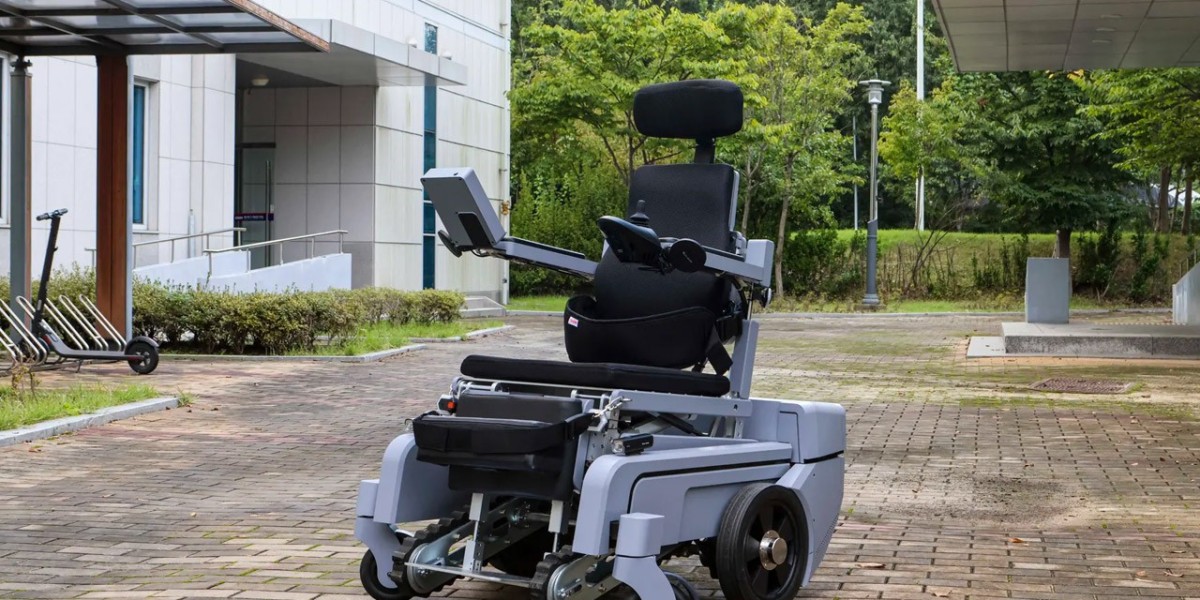
The Robotic Wheelchair Market Accelerators are strengthening the development and adoption of intelligent mobility technologies. Advances in artificial intelligence, robotics, computer vision, sensors, batteries, connectivity, and digital control systems are enabling manufacturers to create wheelchairs with increasingly sophisticated assistance capabilities.
At the same time, growing attention to accessibility, personalized mobility, independent living, and user-centered design is encouraging innovation across the sector. These accelerators do not operate independently. Improvements in one area can support progress in several others, creating a broader ecosystem for robotic wheelchair development.
Advances in Artificial Intelligence
Artificial intelligence is an important accelerator because it enables robotic wheelchairs to interpret information and support more intelligent decision-making.
AI can assist with obstacle recognition, route planning, environmental classification, and user-intent detection. As algorithms become more capable, manufacturers can develop systems that respond more effectively to changing surroundings.
Improved AI tools can also reduce the need for users to manage every movement manually, particularly in suitable indoor or structured environments.
Rapid Progress in Sensor Technologies
The development of smaller, more capable sensors is accelerating robotic wheelchair innovation. Cameras, depth sensors, proximity detectors, inertial measurement units, and other sensing technologies can provide detailed information about surrounding environments.
Combining multiple sensor inputs allows systems to improve environmental awareness and support safer navigation.
As sensors become more compact and energy efficient, manufacturers can integrate advanced perception capabilities without necessarily creating excessively large systems.
Improvements in Battery Technology
Battery performance is a key accelerator because intelligent mobility systems depend on reliable electrical power.
Higher energy density, improved battery management, efficient motors, and better charging technologies can support longer operating periods. Efficient power systems can also make it easier to add sensors and computing capabilities without excessively reducing mobility range.
Continued battery innovation can therefore influence both performance and product design.
Growth of Autonomous Navigation
Autonomous and semi-autonomous navigation is becoming an important area of development. Intelligent systems can assist users with maintaining pathways, avoiding obstacles, and reaching selected destinations.
These capabilities can be particularly useful in structured environments such as healthcare facilities, rehabilitation centers, large buildings, and accessible residential spaces.
As navigation technologies become more reliable, they can expand the practical functionality of robotic wheelchairs.
Demand for Greater Personal Independence
The desire for greater independence can accelerate development of advanced mobility equipment. Users may seek technologies that reduce reliance on caregivers for routine movement and improve their ability to navigate different environments.
Robotic assistance can potentially support greater autonomy by reducing physical effort associated with steering, positioning, and navigating around obstacles.
This user-centered demand encourages manufacturers to focus on practical functionality rather than technology alone.
Increasing Use of Multimodal Controls
Multiple control methods are accelerating personalization. Voice commands, touch controls, switches, gesture recognition, head controls, and conventional joysticks can be integrated into advanced wheelchair platforms.
Multimodal interfaces can allow users to select the method that best matches their abilities and environment.
This flexibility can expand the potential user base for intelligent mobility solutions.
Smart-Home Integration
The growth of smart-home technologies can create new opportunities for robotic wheelchair functionality.
Connected doors, lighting systems, home automation platforms, and other devices can potentially interact with mobility systems. A connected wheelchair could support easier movement through compatible residential environments.
This integration can transform robotic wheelchairs from standalone products into components of broader accessibility ecosystems.
Smart Building Development
Smart buildings can provide another accelerator. Digital access systems, automated doors, elevators, indoor positioning, and building management technologies can potentially communicate with connected mobility devices.
As more facilities adopt intelligent infrastructure, robotic wheelchairs may gain additional opportunities to interact with their surroundings.
This could support more efficient navigation in hospitals, airports, educational facilities, workplaces, and public buildings.
Expansion of Digital Healthcare
The growing use of digital technologies in healthcare can support robotic wheelchair development. Healthcare providers increasingly use connected systems, digital records, remote monitoring, and technology-assisted rehabilitation.
Robotic wheelchairs can potentially become part of this broader digital environment through configuration tools, diagnostic systems, and mobility-related data.
Integration with healthcare workflows may improve product evaluation, personalization, and long-term support.
User-Centered Product Development
Greater emphasis on user-centered design can accelerate useful innovation. Direct input from wheelchair users, caregivers, clinicians, rehabilitation professionals, and accessibility specialists can help manufacturers identify practical requirements.
This approach can improve control layouts, seating systems, navigation features, alerts, and maintenance processes.
Products designed around real-world needs may have a stronger practical foundation for adoption.
Modular Product Architectures
Modularity can accelerate innovation by allowing manufacturers to update individual components instead of redesigning complete systems.
Sensors, control modules, batteries, seating configurations, and interfaces can potentially be upgraded independently.
This approach can shorten development cycles, support customization, and help users adapt equipment as their requirements change.
Improved Digital Diagnostics
Connected diagnostic technologies can accelerate service improvements. Robotic wheelchairs can monitor battery performance, sensor status, motor behavior, and other operating parameters.
Early detection of potential faults can support proactive maintenance and reduce unexpected equipment downtime.
Digital diagnostics can also help service technicians identify problems more efficiently.
Growth of Robotics Expertise
The expansion of robotics research and engineering capabilities is another accelerator. Improvements in autonomous systems, machine vision, control algorithms, embedded computing, and human-machine interaction can transfer into mobility applications.
Collaboration between robotics specialists and mobility-equipment manufacturers can shorten the path from technological development to practical product integration.
Manufacturing Automation
Advanced manufacturing technologies can help improve production efficiency. Automation, precision assembly, digital quality control, and improved component manufacturing can support more consistent production.
Manufacturing efficiency may also help reduce the cost of complex robotic systems over time.
Scalable production methods can become particularly important as manufacturers seek to offer advanced features across different product categories.
Greater Connectivity
Wireless connectivity can accelerate the development of connected mobility services. Smartphones, tablets, cloud platforms, building systems, and diagnostic applications can provide additional functionality around the wheelchair.
Connectivity can support configuration, monitoring, software updates, and interaction with compatible environments.
However, strong cybersecurity must accompany this expansion to maintain user confidence.
Focus on Accessibility and Inclusive Design
Increasing attention to inclusive design can support the development of more adaptable mobility technologies.
Accessibility considerations can influence product interfaces, building compatibility, transportation systems, and public infrastructure.
When accessibility is incorporated earlier in the design process, robotic wheelchair systems may have more opportunities to operate effectively in diverse environments.
Partnerships Across Technology and Healthcare
Collaboration is another important accelerator. Robotic wheelchair development can involve manufacturers, software companies, sensor developers, healthcare organizations, rehabilitation centers, universities, and accessibility groups.
Partnerships can combine specialized expertise and support testing in realistic environments.
Collaborative development can also help identify practical requirements earlier in the product-development process.
Greater Focus on Reliability
As robotic wheelchair technologies mature, reliability can become a major development priority. Manufacturers are increasingly challenged to ensure that intelligent functions work consistently rather than simply demonstrating technical capabilities.
Improvements in redundant sensing, fail-safe controls, diagnostics, software validation, and testing can strengthen confidence in advanced mobility systems.
Falling Technology Costs
As electronic components and computing technologies become more widely used, certain technologies can become more accessible to manufacturers.
Lower costs for processors, sensors, communication modules, and other components can make it easier to integrate intelligent capabilities into mobility products.
Cost reductions can potentially broaden access to advanced features over time.
Future Development Environment
The Robotic Wheelchair Market Accelerators are increasingly interconnected. AI advances support autonomous navigation, better sensors improve environmental awareness, battery improvements enable additional electronics, and smart infrastructure creates new applications for connected mobility.
This interaction can create a positive development cycle in which improvements across several technologies reinforce one another.
The long-term direction will depend on maintaining a balance between innovation, safety, affordability, usability, and accessibility.
Conclusion
The Robotic Wheelchair Market Accelerators include artificial intelligence, advanced sensing, battery improvements, autonomous navigation, multimodal controls, smart-home integration, digital healthcare, modular design, connected diagnostics, manufacturing advances, and user-centered innovation.
Together, these forces can accelerate the transition toward more intelligent and adaptable mobility systems. Continued collaboration between technology developers, manufacturers, healthcare professionals, infrastructure providers, and users can further strengthen the development of practical robotic wheelchair solutions.






