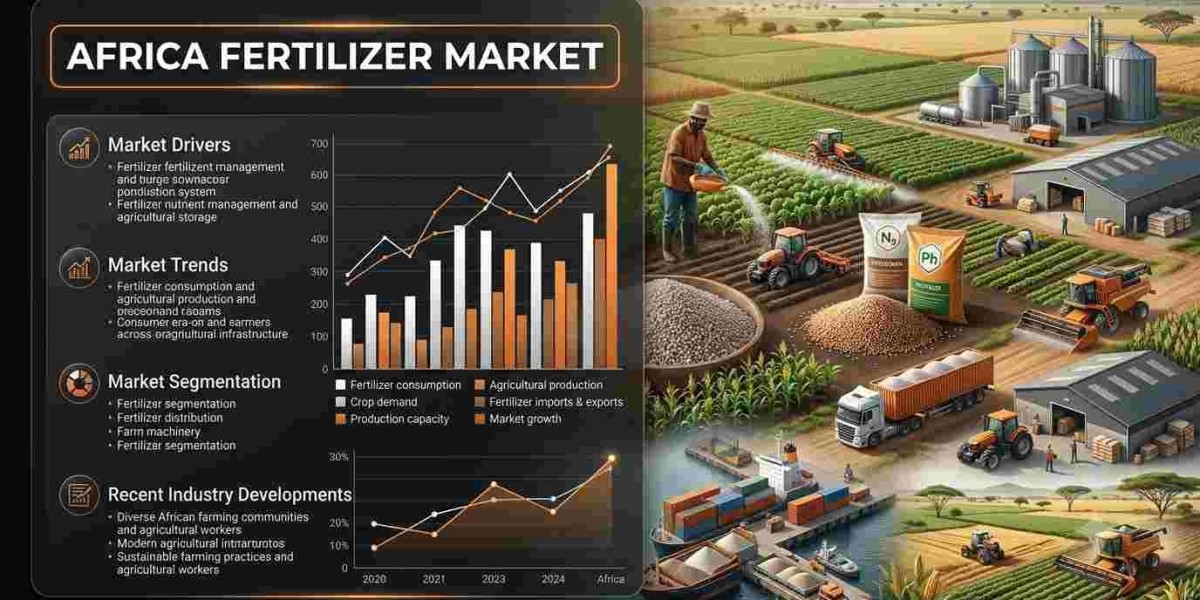


IMARC Group, a leading global market research and management consulting firm, has published its latest market intelligence report on the Africa Fertilizer Market. The Africa fertilizer market size reached USD 188.13 Billion in 2025. The market is projected to reach USD 247.02 Billion by 2034, growing at a CAGR of 3.07% during 2026-2034. Growth is being driven by expanding government-led fertilizer subsidy programs aimed at enhancing food security, accelerating investments in domestic fertilizer production capacity to reduce import dependency, and growing adoption of precision agriculture technologies that optimize resource efficiency.
Africa's fertilizer market is undergoing a fundamental structural shift, moving away from decades of heavy import dependency toward regional self-sufficiency. The African Union's Nairobi Declaration, adopted in May 2024, commits member nations to triple domestic fertilizer production and distribution by 2034, catalyzing infrastructure development across the continent. At the same time, major industrial groups such as Dangote Group and Morocco's OCP are constructing large-scale production complexes, while digital agriculture platforms and AI-powered precision farming tools are beginning to reach smallholder farmers across Nigeria, Kenya, Ethiopia, Morocco, South Africa, and beyond.
Africa Fertilizer Market at a Glance
- Market Size (2025): USD 188.13 Billion
- Market Forecast (2034): USD 247.02 Billion
- Growth Rate (2026-2034): 3.07%
- Leading Type Segment: Straight fertilizers, led by nitrogenous products such as urea, supported by expanding domestic urea production capacity
- Leading Country Market: South Africa, alongside Morocco and Nigeria as major production and consumption hubs
- Key Continental Commitment: The Nairobi Declaration's target to triple domestic fertilizer production and distribution across the African Union by 2034
How AI is Reshaping the Future of the Africa Fertilizer Market
- AI-Powered Precision Fertilizer Recommendations: AI-powered platforms analyze satellite imagery, soil health data, weather patterns, and crop conditions to generate personalized fertilizer recommendations, helping farmers reduce fertilizer waste by up to 30% while increasing output.
- Yara's AI-Driven Digital Farming Program: Yara International launched a digital farming program in Kenya in July 2024, centered on a mobile application driven by artificial intelligence that delivers real-time fertilizer recommendations based on weather patterns and soil data.
- Democratizing Precision Agriculture for Smallholders: Machine learning algorithms are enabling early detection of nutrient deficiencies and optimal application timing, giving smallholder farmers, who represent the majority of Africa's agricultural producers, access to agronomic expertise through mobile applications that was previously limited to large commercial operations.
Grab a sample PDF of this report: https://www.imarcgroup.com/africa-fertilizer-market/requestsample
Africa Fertilizer Market Trends and Drivers
Demand is underpinned by active government subsidy programs in more than 30 African countries. Kenya's government raised subsidized fertilizer distribution from 6 million bags in 2023 to 12 million bags in 2024, helping push maize production beyond 80 million bags, while Ethiopia's Agricultural Transformation Agency has developed blended fertilizers suited to regional soil conditions and Ghana's "Planting for Food and Jobs" initiative continues to sustain smallholder fertilizer use.
The market's structural differentiator is the continent-wide push into domestic manufacturing to reduce reliance on imports, which currently account for over 80% of Africa's fertilizer supply. Dangote Group's USD 2.5 Billion complex in Lagos, Nigeria, already produces 3 million metric tons of urea annually, twice domestic demand, with expansion plans set to lift capacity beyond 8 million tons, while a separate USD 2.5 Billion Dangote plant is under construction in Ethiopia's Gode region using natural gas from the Ogaden Basin.
A third driver is deepening integration of digital and precision agriculture. Satellite imagery, drone technology, and GPS mapping now provide real-time monitoring of crop health and nutrient status, with research showing precision agriculture combined with geospatial intelligence and AI can cut pesticide and fertilizer use by up to 30% while conserving up to 50% of irrigation water, aligned with the African Union's Digital Transformation Strategy.
Government Schemes and National Initiatives Driving Demand
- The Nairobi Declaration and Africa Fertilizer and Soil Health Summit: Adopted by African heads of state in Nairobi, Kenya, in May 2024, the Declaration commits African Union member nations to tripling domestic fertilizer production and distribution by 2034, establishing the Soil Initiative for Africa and a 10-year Action Plan for Fertilizer and Soil Health, overseen by the African Union Commission and reported to the AU Assembly in February 2026.
- Nigeria's National Fertilizer Quality Control Scheme: The scheme regulates fertilizer distribution and quality standards nationally, supporting Nigeria's transition toward becoming a net fertilizer exporter as domestic urea capacity expands.
- Kenya's Fertilizer Subsidy Program: The Kenyan government increased subsidized fertilizer distribution from 6 million bags in 2023 to 12 million bags in 2024, directly boosting maize production beyond 80 million bags.
- Ghana's Planting for Food and Jobs Initiative: The program sustains favorable policy conditions supporting smallholder fertilizer adoption and long-term market growth.
- Ethiopia's Agricultural Transformation Agency Blended Fertilizer Program: The agency has developed blended fertilizers tailored to Ethiopia's specific regional soil conditions to improve nutrient efficiency.
We explore the factors propelling the Africa Fertilizer Market growth, including technological advancements, consumer behaviors, and regulatory changes.
Africa Fertilizer Market Industry Segmentation
The report has segmented the market into the following categories:
Breakup By Type:
- Complex
- Straight (Micronutrients, Nitrogenous, Phosphatic, Potassic, Secondary Macronutrients)
Breakup By Form:
- Conventional
- Speciality (CRF, Liquid Fertilizer, SRF, Water Soluble)
Breakup By Application Mode:
- Fertigation
- Foliar
- Soil
Breakup By Crop Type:
- Field Crops
- Horticultural Crops
- Turf and Ornamentals
Breakup By Country:
- South Africa
- Morocco
- Nigeria
- Tunisia
- Kenya
- Others
South Africa, Morocco, and Nigeria lead the country segment, with Morocco anchored by OCP Group's extensive phosphate reserves and Nigeria scaling urea capacity through Dangote's expanding production complex.
Competitive Landscape
The Africa fertilizer market is moderately fragmented, featuring both established global producers and up-and-coming regional players pursuing vertical integration from raw material sourcing through manufacturing and distribution. Key participants include:
- Dangote Group (Dangote Fertilizer Limited)
- OCP Group
- Yara International
Major industrial groups such as Dangote and OCP are constructing large-scale production facilities that threaten to disrupt traditional import-dominated market structures, while international players like Yara leverage technical expertise and digital platforms to expand smallholder reach across the continent.
Market Concentration Analysis
- Nigeria and Morocco account for the bulk of Africa's fertilizer production capacity, anchored by Dangote Fertilizer Limited's Lagos complex and OCP Group's phosphate-based production platforms in Jorf Lasfar, Youssoufia, and Essaouira.
- Ownership and capacity expansion are increasingly concentrated around large industrial groups pursuing vertical integration, with Dangote expanding into Ethiopia and OCP targeting a 9-million-ton capacity increase by 2028 through its Mzinda-Meskala Strategic Program.
- Smaller and mid-sized producers in Tunisia, Kenya, and other African markets compete on regional distribution, subsidy-linked supply, and speciality fertilizer segments rather than head-on volume competition with continental leaders like Dangote and OCP.
What Does The Full Report Cover?
- Historical, current, and forecast market size for the Africa fertilizer market
- Market breakup by type, form, application mode, crop type, and country
- Country-level analysis covering South Africa, Morocco, Nigeria, Tunisia, Kenya, and others
- Key growth drivers, restraints, and opportunities shaping the market
- Porter's Five Forces analysis and value chain assessment
- Competitive landscape, market structure, and player positioning
- Detailed profiles of major regional and international fertilizer producers
Recent News and Developments in the Africa Fertilizer Market
- November 2025: Dangote Fertilizer Limited signed a licensing agreement with Germany's thyssenkrupp Uhde to add four new urea granulation units at its Lagos facility, each producing 4,235 metric tons per day, raising total annual output from 2.65 million tons to over 8 million tons and positioning Dangote as Africa's largest fertilizer producer.
- October 2025: The Dangote Group and the Ethiopian government launched construction of a USD 2.5 Billion fertilizer plant in Gode, Ethiopia, set to produce 3 million metric tons of urea annually using natural gas from the Ogaden Basin, aiming to transform Ethiopia from a fertilizer importer into a regional supplier.
- August 2025: Morocco's OCP Group announced its TSP production capacity would reach 7 million tons by the end of 2025 through two new production lines at the Jorf Lasfar industrial platform, each adding 500,000 tons annually to existing output exceeding 5 million tons.
- September 2024: OCP Group launched its Mzinda-Meskala Strategic Program, targeting a 9-million-ton fertilizer capacity increase by 2028 through two new industrial hubs in Youssoufia and Essaouira, incorporating renewable energy, desalinated water, and advanced automation.
- July 2024: Yara International launched a digital farming program in Kenya, centered on an AI-powered mobile application delivering real-time fertilizer recommendations based on weather patterns and soil data.
- May 2024: African heads of state adopted the Nairobi Declaration at the Africa Fertilizer and Soil Health Summit, committing African Union member nations to tripling domestic fertilizer production and distribution by 2034.
Note: If you require specific details, data, or insights that are not currently included in the scope of this report, we are happy to accommodate your request. As part of our customization service, we will gather and provide the additional information you need, tailored to your specific requirements. Please let us know your exact needs, and we will ensure the report is updated accordingly to meet your expectations.
Key Questions This Report Answers
- How big is the Africa fertilizer market and what is its growth outlook?
- What are the key growth drivers, restraints, and opportunities in the Africa fertilizer market?
- Which type, form, application mode, and crop type segments hold the largest share of the market?
- Which country leads the Africa fertilizer market, and why?
- How is the Nairobi Declaration and other government schemes shaping regional demand?
- Who are the key players in the Africa fertilizer market, and how is the competitive landscape evolving?
- What role is AI playing in precision agriculture and fertilizer application across Africa?
About Us
IMARC Group is a global management consulting firm that helps the world's most ambitious changemakers to create a lasting impact. The company provides a comprehensive suite of market entry and expansion services. IMARC offerings include thorough market assessment, feasibility studies, company incorporation assistance, factory setup support, regulatory approvals and licensing navigation, branding, marketing and sales strategies, competitive landscape and benchmarking analyses, pricing and cost research, and procurement research.
Media and Sales Contact
IMARC Group
Email: sales@imarcgroup.com
United States: +1-201-971-6302
India: +91-120-433-0800
United Kingdom: +44-753-714-6104