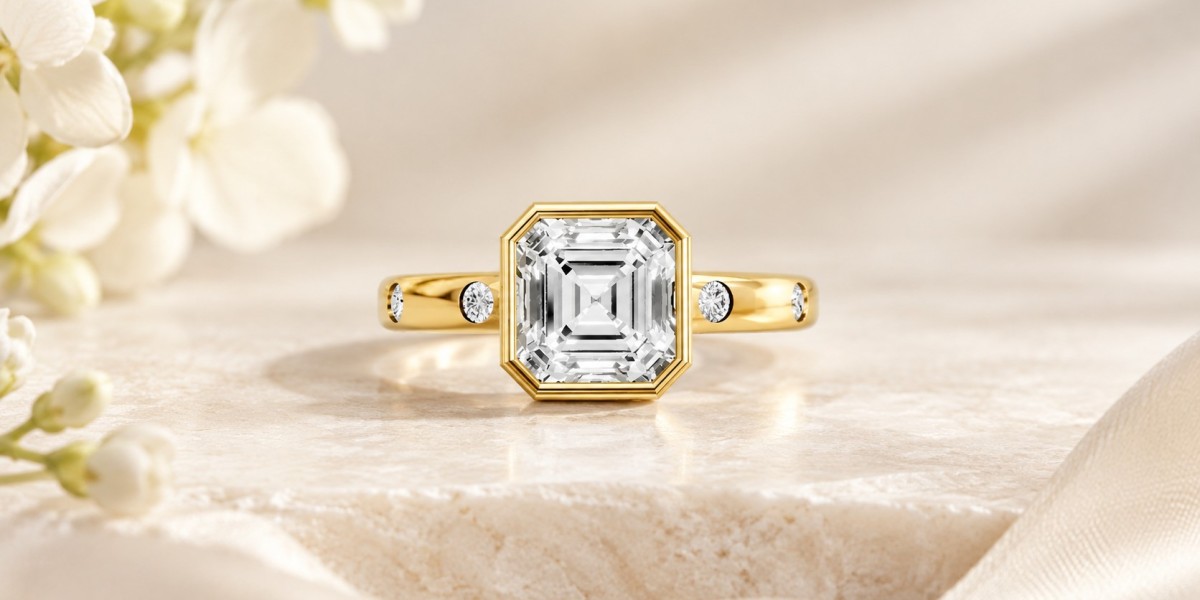


Choosing an engagement ring is a personal decision, especially when you want a setting that feels distinctive while still being practical for everyday wear. Bezel engagement rings are known for their clean metal border around the center stone, creating a secure and defined look. Before choosing a ring, it helps to consider the diamond shape, setting style, metal, band design, and how the ring will fit into your daily routine. With a little planning, you can narrow down the options and find a design that suits both your taste and lifestyle.
What Is a Bezel Engagement Ring?
A bezel setting holds the center stone with a rim of metal that surrounds part or all of the diamond. Instead of using individual prongs to secure the stone, the metal edge creates a smooth frame around it.
This type of setting can work with many diamond shapes, including round, oval, emerald, pear, cushion, and marquise cuts. The final appearance depends on how much of the diamond is covered and how the setting is designed.
One reason people choose this style is its practical construction. The metal border can help protect the edges of a diamond from catching on clothing or receiving direct contact during everyday activities.
Start With Your Diamond Shape
The shape of the center diamond has a major effect on the overall appearance of the ring. Before looking at bands and details, decide which diamond outline appeals to you most.
Round Diamond
A round diamond offers a traditional shape that works well with many ring designs. A round stone inside a smooth bezel can create a simple and balanced appearance.
Oval Diamond
Oval diamonds have an elongated outline that can give the finger a longer visual line. A bezel frame follows the stone's curved edges, creating a continuous look around the center.
Emerald Cut
An emerald-cut diamond has long step-cut facets and a rectangular outline. A bezel setting can emphasize its clean geometry while keeping the design straightforward.
Pear Shape
A pear-shaped diamond combines a rounded end with a pointed tip. When placed in a bezel setting, the direction of the point becomes an important part of the ring's design.
Cushion Cut
Cushion-cut diamonds have softened corners and a square or rectangular outline. Their shape pairs well with both traditional and contemporary-inspired bezel designs.
Consider How Much Metal You Want Around the Stone
Not every bezel setting looks the same. Some designs use a narrow metal rim that leaves most of the diamond visible, while others have a wider border.
A thin bezel can provide a lighter visual effect and keep attention on the center stone. A wider bezel creates a stronger frame and can become a noticeable part of the ring's design.
Think about the balance between the diamond and the surrounding metal. If you prefer the center stone to be the main focus, a slimmer frame may suit you. If you like the setting itself to contribute more to the design, a broader bezel could be worth considering.
Choose Between Full and Partial Bezels
A full bezel surrounds the stone's perimeter, while a partial bezel uses metal in selected areas to hold the diamond.
Full bezels generally have a smooth outline and provide substantial coverage around the stone. Partial designs can expose more of the diamond while still giving the ring the distinctive appearance associated with a bezel setting.
Your choice can come down to appearance, diamond shape, and how much protection you want around the stone.
Explore Bezel Set Engagement Rings in Different Metals
The metal you choose changes the overall character of the ring. Common choices include yellow gold, white gold, rose gold, and platinum.
Yellow gold creates a warm contrast against a colorless or near-colorless diamond. White gold provides a bright metal appearance that blends closely with the stone. Rose gold brings a soft pink tone to the design, while platinum is valued for its durability and naturally white appearance.
When choosing metal, consider the jewelry you already wear. If your everyday pieces are mostly yellow gold, a matching ring may feel more natural. If you regularly wear white metals, platinum or white gold may fit better into your collection.
Think About the Band Design
The band is just as important as the center setting. A plain band keeps attention on the center diamond, while a diamond-set band adds additional detail.
A narrow band can make the center stone appear more prominent. A wider band creates a stronger visual presence and may be particularly suitable for someone who prefers a substantial ring.
You can also consider tapered bands, straight bands, split shanks, or bands with small diamonds. The right choice depends on the proportions of the center stone and your preferred level of detail.
Look at Bezel Solitaire Engagement Ring Designs
Explore bezel solitaire engagement ring keeps the center diamond as the main feature without adding a row of side stones around it.
This design can be a good option for someone who appreciates a focused center-stone arrangement. The bezel provides the defining detail, while the solitaire structure keeps the overall design uncomplicated.
When selecting a solitaire, pay close attention to the relationship between the stone size and band width. A very delicate band paired with a large center stone creates a different look from a wider band with a smaller stone.
Consider Your Everyday Routine
Your lifestyle should play a role in your ring choice. If you work with your hands frequently, exercise often, or regularly handle clothing and other materials that can catch on jewelry, a smooth setting may be practical.
The enclosed edge of a bezel can reduce exposed areas around the stone. However, every engagement ring still requires proper care. Removing your ring during activities that could damage the metal or diamond is a sensible habit.
Also consider comfort. A ring should sit securely on the finger without feeling too tight or loose. The height of the setting can affect how the ring feels during daily activities.
Unique Bezel Engagement Rings for Individual Style
Bezel settings do not have to follow one standard design. Small changes can make a ring feel very different.
You might choose an east-west orientation for an elongated diamond, a two-tone metal combination, a geometric band, or an unusual diamond shape. These details can turn a simple setting into one that reflects your personal preferences.
For someone interested in unique bezel engagement rings, it can be helpful to look beyond the center stone and compare the complete ring design. The band shape, metal color, stone orientation, and bezel width all contribute to the final appearance.
Should You Consider a Lab-Grown Diamond?
A lab grown bezel engagement ring combines the characteristics of a bezel setting with a laboratory-grown diamond.
Lab-grown diamonds are diamonds produced through controlled technological processes rather than extracted from the earth. They have the same basic chemical composition and crystal structure as mined diamonds.
If you are considering a lab-grown center stone, compare the same factors you would when buying a mined diamond. Look at the diamond's shape, carat weight, color, clarity, cut quality, and certification.
The setting should also be evaluated separately. A high-quality diamond does not automatically mean the ring is well made, so check the craftsmanship of the bezel and band before purchasing.
Check Diamond Proportions
Carat weight alone does not tell you how large a diamond will appear from the top. Two diamonds with the same carat weight can have different measurements depending on their proportions.
This is especially important with bezel settings because the metal follows the outline of the center stone. Make sure the bezel is properly sized for the diamond and that the frame does not appear too heavy compared with the stone.
For elongated shapes such as oval, pear, or marquise diamonds, compare length-to-width ratios as well. These measurements can help you understand how the diamond will look when set.
Pay Attention to Ring Size
A well-fitting ring should stay securely on your finger without causing discomfort. Ring size can also affect how the setting sits and how the band looks on your hand.
If possible, have your finger professionally measured. Remember that finger size can change slightly depending on temperature, time of day, and other factors.
If you are purchasing a ring as a surprise, finding an accurate size can be more difficult. Borrowing a ring that the recipient already wears on the same finger can provide a useful starting point, but professional sizing is still recommended before finalizing the ring.
Think About Future Stacking
If you plan to wear your engagement ring with a wedding band, consider that before buying.
Some bezel settings sit close to the finger and pair easily with straight wedding bands. Others may have a raised or wider structure that leaves a small gap between the two rings.
Try different band shapes when possible. A curved, contoured, or straight wedding band may each create a different combination with the engagement ring.
Review Craftsmanship Before Buying
The quality of the setting matters as much as the design. Look closely at the bezel around the diamond. The metal should sit securely around the stone without appearing uneven or poorly finished.
Check the inside of the band as well. Smooth edges can make a significant difference in comfort.
If the ring includes additional diamonds, inspect their placement and setting. Ask about the metal purity, diamond certification, return policy, resizing options, and warranty before making a purchase.
Antiquecut offers a range of diamond ring designs for shoppers comparing different setting styles, including bezel-inspired options.
Questions to Ask Before Choosing Your Ring
Before placing an order, consider asking:
- What diamond shape works best with this bezel design?
- How much of the diamond is covered by the metal?
- What metal is used for the ring?
- Is the center diamond certified?
- What are the exact diamond measurements?
- Can the ring be resized?
- Will a wedding band sit comfortably beside it?
- What care does the setting require?
- Is there a warranty or repair service?
- What is the return or exchange policy?
Getting clear answers can help you compare rings more confidently.
Final Thoughts
Finding the right engagement ring does not have to come down to one feature. Start with the diamond shape you prefer, then consider the bezel width, metal, band design, ring size, and your everyday routine.
A bezel setting can offer a distinctive combination of a framed center stone and a smooth band profile. Whether you prefer a simple solitaire, a detailed band, or a laboratory-grown diamond, there are many ways to personalize the design.
Take time to compare proportions and craftsmanship rather than choosing based only on carat weight or appearance in a single photograph. The right combination of stone, setting, metal, and fit will create a ring that feels suited to the person wearing it.






