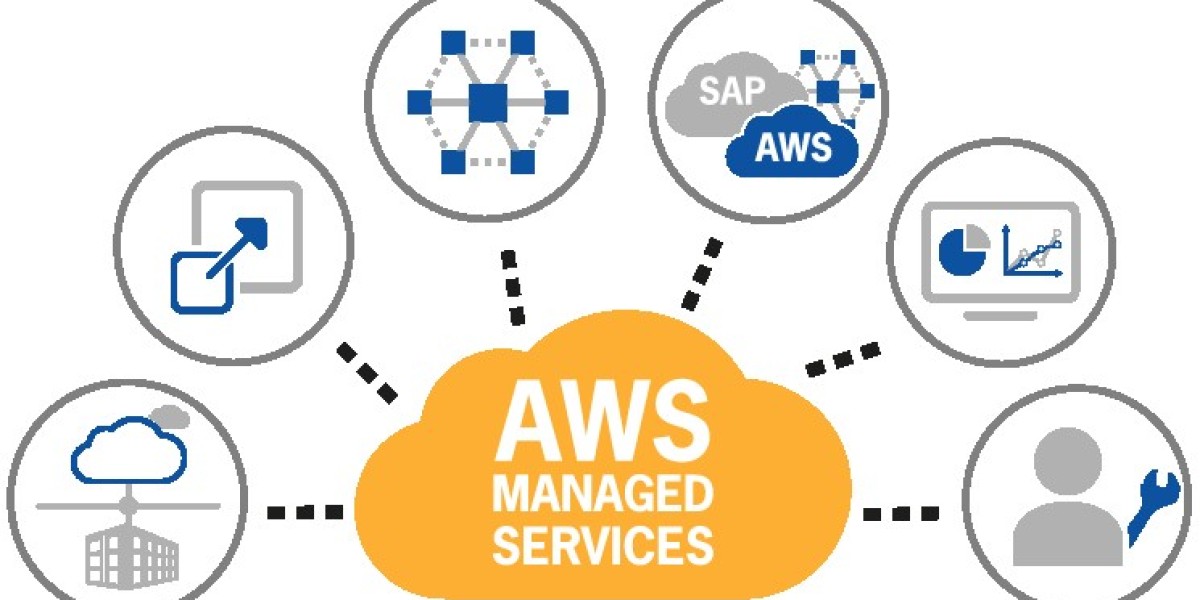


An AWS environment rarely becomes difficult overnight. It usually starts with a few workloads, straightforward configurations, and a team that can handle everything internally. Then applications grow, traffic becomes less predictable, security requirements increase, and the AWS bill becomes harder to understand. Suddenly, engineers who should be developing products are spending valuable hours reviewing CloudWatch alerts, troubleshooting EC2 performance, managing backups, and responding to infrastructure incidents.
This is where an aws managed services provider can change the operational model. Instead of asking an internal development or IT team to continuously manage every layer of AWS, businesses can assign ongoing infrastructure responsibilities to specialists. The objective is not simply to outsource technical tasks. It is to create a more predictable environment where performance, security, costs, and reliability receive continuous attention.
Why AWS Operations Become Difficult to Manage Internally
AWS provides enormous flexibility, but that flexibility also creates operational responsibility. Businesses can deploy hundreds of resources across multiple services, regions, accounts, and environments. Without consistent governance, unused resources accumulate, permissions become unnecessarily broad, and infrastructure configurations gradually drift away from their original design.
The challenge becomes more significant as workloads become business-critical. An ecommerce platform cannot afford prolonged downtime during a demand spike. A SaaS company needs stable infrastructure for customers operating around the clock. A financial technology platform may require stronger access controls, logging, and compliance processes.
Internal teams often understand the technology but lack the capacity to monitor every operational detail continuously. An aws cloud managed services approach provides dedicated expertise while allowing internal employees to focus on development, innovation, and business priorities.
Continuous Monitoring Instead of Reactive Troubleshooting
One of the biggest differences between managed operations and occasional technical support is consistency. Problems are easier to address when someone is watching for early warning signs rather than waiting for users to report an outage.
An experienced provider can establish monitoring around CPU utilization, memory behavior, application performance, database metrics, storage capacity, network activity, and service health. CloudWatch and other observability tools can help identify unusual patterns before they develop into major incidents.
This proactive approach also makes performance management more structured. Instead of discovering that an application has been operating inefficiently for months, teams can investigate performance drift and resource utilization as part of an established operational process.
Controlling AWS Costs Before They Become a Surprise
Cloud spending can increase quietly. An oversized EC2 instance may remain active long after traffic patterns change. Snapshots and storage resources can accumulate. Development environments may continue running outside working hours. Meanwhile, organizations may miss opportunities to optimize purchasing commitments or adjust resources according to actual demand.
An aws cloud managed service provider can make cost governance an ongoing responsibility. Regular reviews can examine utilization, rightsizing opportunities, idle resources, storage patterns, and purchasing strategies.
Tools such as AWS Cost Explorer and Compute Optimizer can provide valuable data for these decisions. The goal is not simply to reduce every AWS expense. Removing resources indiscriminately can create performance or reliability problems. Effective cost management focuses on eliminating waste while preserving the capacity required by important workloads.
Security Needs Continuous Attention
Cloud security is not something that can be completed once and then forgotten. New workloads, users, applications, and integrations continually change the environment.
Managed AWS operations can include regular IAM reviews, security monitoring, patch management, network controls, and configuration assessments. Services such as GuardDuty can contribute to threat detection, while AWS WAF and related controls can help protect applications exposed to the internet.
This continuous approach matters because security weaknesses often develop gradually. An unused permission may remain unnoticed, a configuration may become outdated, or a new workload may be deployed without following established security standards.
A structured managed aws cloud services model creates recurring processes for identifying and addressing these issues rather than relying entirely on occasional security reviews.
Reliable Databases and Scalable Applications
Infrastructure management extends beyond virtual machines. Databases such as Amazon RDS and Amazon Aurora require attention to performance, storage, backups, availability, and configuration.
Likewise, applications using Auto Scaling need appropriate thresholds and policies that reflect real traffic patterns. Default settings may work initially but become unsuitable as workloads evolve.
For containerized applications, EKS and ECS environments introduce another layer of responsibility. Cluster configurations, workloads, networking, scaling, and underlying infrastructure all need ongoing oversight. Without active management, configuration drift can gradually make environments harder to maintain.
An aws managed services provider can coordinate these components as one operational environment rather than treating each AWS service as an isolated responsibility.
Backup Is Only Valuable When Recovery Works
A scheduled backup does not automatically guarantee business continuity. Organizations also need confidence that backups are available, correctly configured, and capable of supporting recovery when something goes wrong.
AWS Backup, EBS snapshots, database backups, and related recovery mechanisms should therefore be reviewed and tested regularly. Recovery exercises can reveal issues that routine backup notifications cannot.
Managed services can introduce documented recovery procedures, testing schedules, retention policies, and ownership responsibilities. This transforms disaster recovery from a theoretical capability into an operational process.
Infrastructure as Code Creates Greater Consistency
As environments expand, manual configuration becomes increasingly difficult to control. Terraform and AWS CloudFormation can help organizations define infrastructure as code, making environments more reproducible and auditable.
An aws managed services provider can incorporate infrastructure-as-code practices into ongoing operations, helping teams maintain consistency across development, testing, and production environments. Changes can be documented, reviewed, and reproduced rather than depending on undocumented manual steps.
This becomes particularly valuable when organizations need to scale quickly or recreate environments after an incident.
Choosing a Provider Around Business Requirements
Not every organization needs the same level of AWS management. A small application may require monitoring, backups, and basic security governance, while a large production platform may require 24/7 response, advanced observability, container management, database optimization, and detailed compliance reporting.
Businesses should therefore examine service scope, response processes, security practices, escalation procedures, reporting, and technical expertise before selecting a provider. Clear ownership is especially important. The engagement should establish who monitors specific systems, who responds to incidents, and how operational decisions are communicated.
The Bigger Value of Managed AWS Operations
The most meaningful benefit of working with an aws managed services provider is often not a single technical improvement. It is the creation of an operating model where infrastructure receives continuous attention without consuming the majority of an internal team's time.
When monitoring, security, cost optimization, backup validation, infrastructure automation, and incident response operate together, businesses gain greater visibility into the environment and can address problems before they become expensive disruptions.
As cloud environments become increasingly central to everyday business operations, the question is no longer simply whether a company can run AWS internally. The more important question is whether its existing team can sustainably manage growing complexity while continuing to innovate. For organizations facing rising cloud costs, operational pressure, or expanding infrastructure, structured AWS managed services may provide a path toward an environment that is not only scalable, but also more predictable, secure, and easier to operate.






