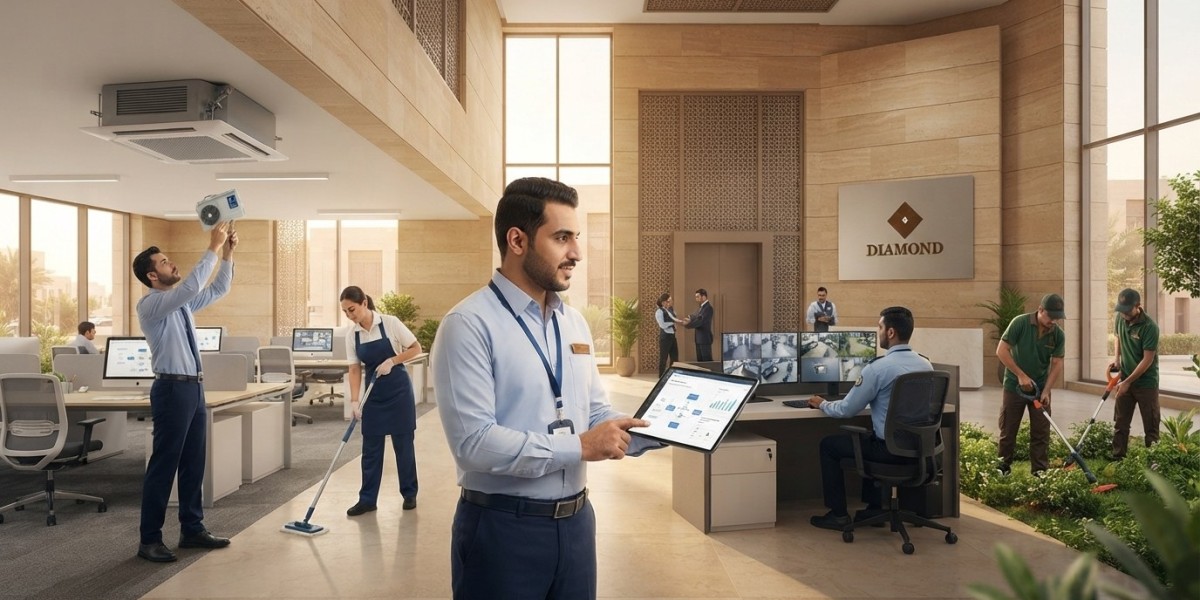


Managing several contractors may appear flexible, but it often creates another job for the property manager. One company handles cleaning, another handles maintenance, while separate teams manage security, landscaping, and waste. When a problem crosses two service areas, responsibility can become unclear. Integrated facility management creates a coordinated structure that brings related property services under a more organized operating model.
The Problem With Fragmented Facility Operations
A building does not experience services as separate departments.
A leaking pipe can affect flooring, electrical areas, cleaning requirements, and tenant access. A cooling issue may require technical repair while the facilities team manages affected rooms and communicates with occupants.
When several contractors work independently, each team may focus only on its assigned task.
The property manager then becomes the person responsible for connecting everyone.
That structure can work for small sites with limited requirements, but larger commercial properties often need tighter coordination.
Integrated Management Creates Clearer Ownership
Integrated facility management groups multiple building-support functions within one management framework.
The exact scope can vary by property. It may cover building maintenance, electrical services, cleaning, security, waste management, landscaping, pest control, parking support, and other operational requirements.
Instead of asking several vendors who owns an issue, the client works through a defined management structure.
Companies researching Facility Services Providers Riyadh can use this principle when comparing different service models and contract scopes.
The goal should not simply be to reduce the number of contractors. The goal should be to create clearer operational accountability.
Better Coordination Improves Daily Work
Consider what happens when maintenance work creates dust and debris in an occupied office.
Under a fragmented model, the maintenance contractor may finish the repair and leave. The property manager then contacts the cleaning company and arranges another visit.
An integrated team can coordinate both activities within the same workflow.
The technician completes the repair, the cleaning team restores the area, and the supervisor checks the final condition before closing the task.
Small improvements like this can make facility operations noticeably easier to manage.
Preventive Maintenance Becomes More Organized
Commercial properties contain systems that require regular attention.
Cooling equipment, electrical installations, plumbing, doors, lighting, pumps, fixtures, and other assets can deteriorate when teams rely only on reactive repairs.
An integrated facility management team can organize these assets within a structured maintenance plan.
Technicians can schedule inspections and routine tasks while supervisors track outstanding work.
When the same management team oversees daily operations, it can also connect observations from other employees with technical maintenance.
A cleaner who notices a recurring water leak or a security guard who identifies a damaged door can report the problem through the same operating structure.
Soft Services Benefit From Shared Supervision
Building performance involves more than mechanical and electrical systems.
Employees, tenants, customers, and visitors interact directly with cleaning teams, security personnel, reception areas, parking spaces, landscaped areas, and common facilities.
These services need consistent standards.
A shared supervision model can coordinate schedules, inspections, staffing, and corrective actions across different teams.
For example, a supervisor may identify repeated cleanliness problems in a high-traffic entrance and adjust the cleaning frequency instead of waiting for complaints.
That kind of day-to-day adjustment becomes easier when management can view the facility as one operating environment.
Reporting Becomes More Useful
Separate contractors often produce separate reports.
The maintenance provider sends one document. The cleaning company sends another. Security keeps its own records. Waste services may use another reporting format.
Management must then combine the information manually.
An integrated reporting structure can give property managers a broader view of what happened across the facility during the reporting period.
Reports can track completed maintenance, unresolved issues, service inspections, recurring faults, operational observations, and planned work.
This does not mean every activity needs a lengthy report. Effective reporting highlights information that helps the client make decisions.
Emergency Response Needs Coordination
Unexpected incidents test the quality of a facility management structure.
Imagine water entering an occupied area after a plumbing failure. The technical team needs to stop the source. Other employees may need to restrict access, protect nearby equipment, remove water, clean the area, and assess any damage.
Multiple independent contractors can complete these tasks, but someone must coordinate them.
An integrated team already has a defined chain of responsibility.
That structure can reduce confusion during situations that require several services at once.
One Contract Still Needs a Clear Scope
Integrated facility management does not remove the need for detailed agreements.
Clients should still define service frequencies, response procedures, maintenance responsibilities, exclusions, consumables, reporting expectations, and approval processes.
Never assume that an “integrated” contract automatically includes every building requirement.
Review the scope line by line.
The agreement should clearly identify what the management fee covers and which repairs, materials, specialist works, or projects require separate approval.
Transparency protects both parties.
Integrated Does Not Mean Identical for Every Site
A successful facility management plan should reflect the property.
A corporate office has different operating patterns from a residential compound. A retail location faces different visitor traffic from an industrial property.
The management structure should account for building use, occupancy, operating hours, asset types, critical areas, and service expectations.
A provider should assess the property before recommending staffing levels and schedules.
This approach creates a contract around actual site requirements rather than forcing the site into a generic package.
Communication Remains Essential
Integration only works when teams communicate properly.
The provider should define who manages the account, who supervises the site, who receives service requests, and who handles escalations.
Clients should know where to report routine issues and what process applies to urgent situations.
Regular operational reviews can also help both sides discuss recurring issues, upcoming work, and changes in property requirements.
Clear communication keeps small problems from becoming long-running frustrations.
A More Manageable Approach to Property Operations
Facility management works best when building services support each other instead of competing for attention.
Integrated management can connect technical maintenance, cleaning, security, environmental services, and other support functions through one operating structure.
Property owners still need a detailed scope, measurable expectations, and consistent reporting. Integration does not replace good management; it gives good management a clearer framework.
For commercial properties with several operational requirements, that framework can make the building easier to supervise and daily issues easier to resolve.






