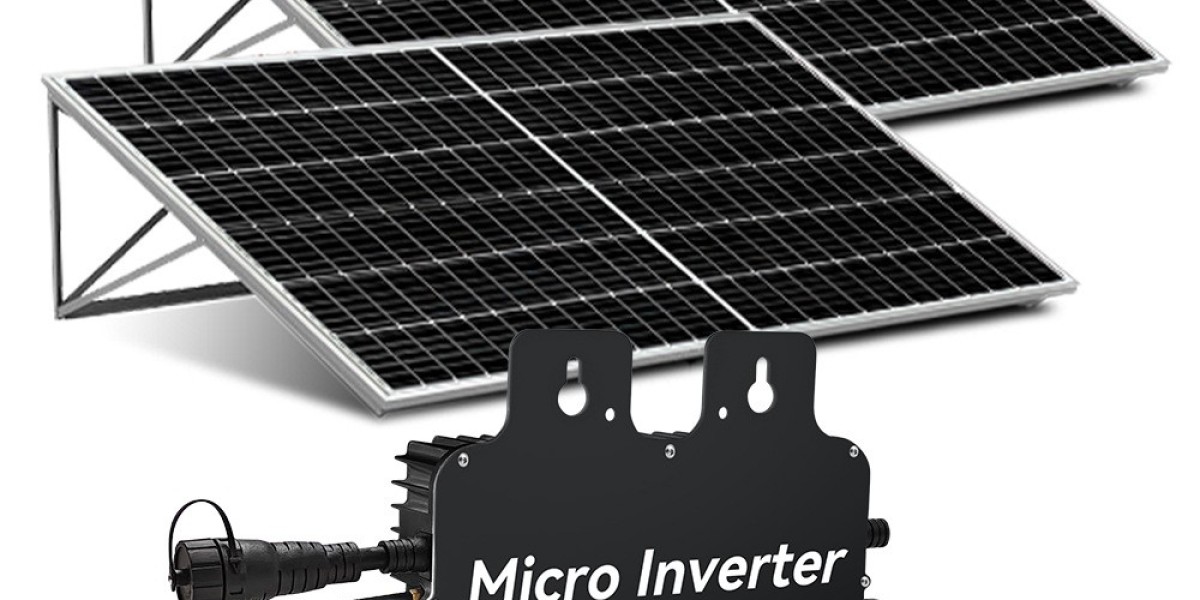


The solar microinverter market growth is being influenced by the increasing adoption of distributed photovoltaic systems and the changing requirements of modern solar installations. Microinverters convert electricity at the individual solar-module level, allowing panels to operate more independently and providing detailed information about system performance.
As rooftop solar expands across residential and commercial properties, customers are increasingly looking for systems that offer flexibility, monitoring, reliability, and compatibility with emerging energy technologies. These requirements are creating new areas of development for microinverter manufacturers and their supporting ecosystems.
Expansion of Rooftop Solar Installations
The growing use of rooftop solar is one of the fundamental factors supporting microinverter adoption. Residential and commercial properties can use available roof space to generate electricity close to where it is consumed.
Unlike large centralized solar projects, rooftops often present complicated installation conditions. Different roof orientations, partial shading, structural features, and limited usable areas can make system design more challenging.
Microinverters can address some of these conditions through independent module-level conversion. This flexibility can make them suitable for installations where panels do not all experience identical operating conditions.
Increasing Residential Energy Requirements
Household electricity consumption is changing as more homes adopt electric vehicles, heat pumps, induction cooking, smart appliances, and other electricity-dependent technologies.
As electricity demand increases, homeowners may look for ways to expand or optimize onsite solar generation. Microinverter systems can support flexible photovoltaic configurations while providing detailed information about individual module performance.
The ability to monitor production can also help homeowners understand how solar generation changes throughout the day and identify potential equipment issues.
Growing Interest in Battery Storage
Battery storage is becoming increasingly connected with rooftop photovoltaic systems. Solar panels typically generate the most electricity during daylight hours, while household electricity demand can continue into the evening.
Batteries can store excess generation for later use, creating a more flexible energy system.
Microinverter manufacturers are responding by developing storage-compatible architectures and communication capabilities. These developments can support new solar-plus-storage installations as well as upgrades to existing photovoltaic systems.
Commercial Rooftop Applications
Commercial buildings represent another area supporting solar microinverter market growth. Offices, retail properties, warehouses, educational facilities, and other buildings can have rooftops with multiple orientations or areas affected by shading.
Panel-level conversion can provide designers with additional flexibility when configuring systems across these spaces.
Higher-capacity microinverters and products designed for commercial electrical configurations can broaden the range of projects that can use the technology. Monitoring features can also help businesses track energy generation across larger installations.
Advantages of Module-Level Monitoring
Monitoring is an increasingly important feature of modern solar systems. Microinverters can provide information about individual modules rather than only providing data for an entire string or array.
This detailed information can help installers identify underperforming panels, investigate system abnormalities, and perform remote diagnostics.
For customers, module-level monitoring can improve visibility into system performance. For installers, it can support more efficient maintenance and reduce the need for unnecessary site visits.
The growing importance of digital services can therefore contribute to demand for advanced microinverter platforms.
Technological Improvements
Continuous improvements in power electronics are supporting the evolution of microinverter products. Manufacturers are developing solutions capable of working with newer, higher-output photovoltaic modules.
Advances in semiconductor technology, circuit design, thermal management, and enclosure engineering can improve equipment performance and reliability.
Improved products can also address installation requirements through more compact designs, simplified connections, and easier commissioning procedures.
These developments can help manufacturers respond to changing photovoltaic system specifications.
Opportunities in Solar Retrofit Projects
Existing solar installations can provide another pathway for market expansion. Older photovoltaic systems may eventually require component replacement, performance upgrades, or additional capacity.
Microinverters can be considered in certain retrofit and repowering projects, particularly where homeowners or businesses want to expand systems or address complicated roof conditions.
The ability to add modules more flexibly can also be useful when electricity consumption increases after the original solar installation.
Support From Digital Energy Systems
The development of smart energy-management platforms is creating additional opportunities for microinverter technology.
Solar generation can increasingly be coordinated with batteries, electric vehicle chargers, smart appliances, and other electrical loads. Microinverters can provide generation data that contributes to these broader energy-management systems.
As digital platforms become more capable, the value of communication and interoperability may become increasingly important in equipment selection.
Installer Ecosystem Development
Solar installers play an important role in determining which inverter technologies are adopted. Contractors generally consider installation time, equipment reliability, troubleshooting requirements, training, technical support, and customer expectations.
Manufacturers that provide effective training and installation resources can make it easier for contractors to adopt new products.
Simplified installation and commissioning can also help reduce labor requirements, particularly in markets where demand for solar installation services is increasing.
Distributed Energy and Grid Integration
The increasing number of distributed solar systems is changing how electricity is generated and managed. Instead of relying entirely on centralized generation, electricity networks can incorporate thousands of smaller generation assets.
Microinverters can contribute to this distributed architecture through communication and grid-support capabilities where permitted by applicable standards.
Future distributed-energy platforms may coordinate solar systems with batteries and flexible electrical loads. This can create additional applications for connected microinverter technologies.
Competition and Cost Considerations
Growth opportunities exist alongside competitive and economic pressures. String inverters and power optimizer systems continue to serve many solar applications and are also incorporating advanced monitoring and storage capabilities.
Microinverter manufacturers must therefore maintain competitive pricing while investing in product development.
Reducing manufacturing costs, improving supply-chain efficiency, and increasing production scale can help address price considerations. At the same time, reliability and long-term service remain important because solar equipment is expected to operate for many years.
Supply-Chain and Manufacturing Factors
The availability of semiconductors, electronic components, communications equipment, and specialized materials can influence microinverter production.
Supply-chain disruptions may affect equipment availability and project schedules. Manufacturers can respond through supplier diversification, inventory planning, and improved production processes.
Stable manufacturing and distribution networks can support installers as solar deployment expands across different markets and applications.
Role of Energy Electrification
The broader shift toward electrification can contribute to the long-term development of distributed solar. As transportation, heating, and other applications increasingly rely on electricity, consumers may place greater emphasis on managing their energy generation and consumption.
Microinverters can form part of systems that combine solar generation with storage and intelligent load management.
This creates opportunities for the technology to participate in a broader energy ecosystem rather than remaining limited to basic photovoltaic conversion.
Factors Influencing Future Growth
Several factors will influence solar microinverter market growth over the coming years:
- Expansion of residential rooftop solar
- Development of commercial distributed generation
- Adoption of battery storage
- Increasing electricity consumption from electrification
- Higher-output photovoltaic modules
- Demand for module-level monitoring
- Advances in power electronics
- Installer training and labor availability
- Competition from alternative inverter architectures
- Supply-chain reliability
- Development of smart energy-management systems
The relative importance of these factors can vary by application and region.
Long-Term Growth Perspective
The solar microinverter market growth trajectory is closely linked to the broader development of distributed energy. As solar systems become more connected with batteries, EV charging, digital monitoring, and intelligent energy-management platforms, the role of module-level power conversion can expand.
Future growth will depend on the ability of manufacturers to combine reliable performance with competitive costs, simple installation, strong monitoring, and broad system compatibility.
Microinverters can provide useful advantages for complex rooftops and distributed solar applications, while ongoing technological development may expand their role in integrated energy systems. The continued evolution of rooftop solar, storage, electrification, and digital energy management will remain important to the industry's long-term development.






