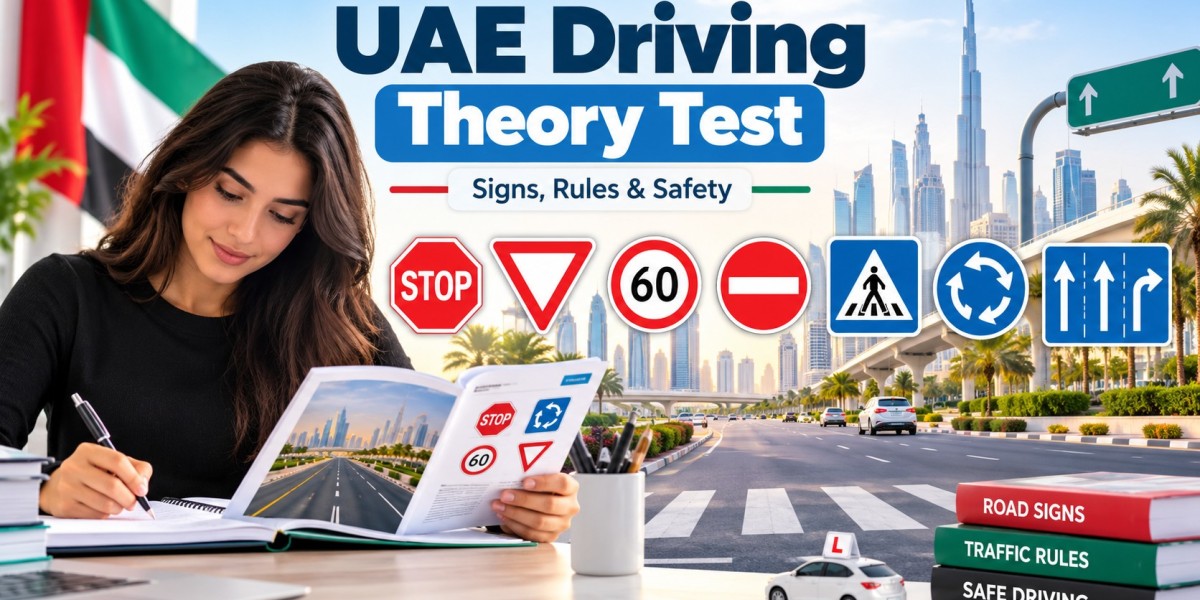


Preparing for the UAE driving theory test is not just about memorising answers. The test checks whether you understand the rules that keep traffic moving safely, how to read road signs, and what to do when a situation changes quickly.
For learners in Dubai, the RTA Knowledge Test currently contains 40 questions, and you need at least 30 correct answers to pass. Before taking the test, applicants must complete the required theory lectures for their vehicle category.
The best preparation is to study the rules in context. That means knowing what a sign means, why a rule exists, and how you would react if the same situation appeared on the road.
Start With UAE Road Signs
Road signs are one of the most important parts of the UAE driving theory test. They control traffic, warn drivers about hazards, and provide directions.
RTA groups road signs into categories such as regulatory, warning and guide signs. Regulatory signs tell drivers what they must or must not do, while warning signs alert you to conditions ahead. Guide signs help with directions, routes and road information.
When studying UAE road signs, pay close attention to:
Stop and Give Way signs
No Entry signs
Speed limit signs
No Parking and No Stopping signs
Mandatory direction signs
Pedestrian crossing signs
Lane-control signs
Roundabout signs
Warning signs for curves, junctions and roadworks
Do not study the picture alone. Ask yourself what action is required when you see it.
Speed Limits and Safe Following Distance
Speed is another key topic in UAE driving test preparation.
A posted speed limit shows the maximum legal speed for that section of road, but it does not mean you should always drive at that speed. Traffic, weather, visibility and road conditions can require you to slow down further.
RTA theory training also places emphasis on observing speed limits and maintaining a safe following distance.
Questions may describe a situation rather than simply ask for a number. For example, you may be asked what to do when visibility is poor, traffic is slowing, or the vehicle ahead is braking frequently.
A safer answer usually comes from thinking about stopping distance, reaction time and the space needed to respond calmly.
Lane Discipline and Changing Lanes
Lane discipline is especially important on busy UAE roads.
Learners should understand when to stay in lane, when to change lanes, and how to do so safely. Before moving across lanes, you should check mirrors, signal clearly, check blind spots and make sure there is enough space to complete the manoeuvre.
Correct lane use is also part of the road-safety training provided to learner drivers in Dubai.
For theory questions, watch for situations involving:
Motorway lane changes
Joining or leaving a main road
Turning at intersections
Lane arrows
Solid and broken lane markings
Vehicles approaching from behind
Do not assume that using an indicator automatically gives you priority. You still need to make sure the move can be completed safely.
Roundabouts and Right of Way
Roundabouts often cause confusion because the correct action depends on traffic position, lane choice and road markings.
When preparing for the UAE driving theory test, review how to approach a roundabout, choose the correct lane, give way where required, signal, and exit safely.
Questions may ask what you should do when another vehicle is already inside the roundabout or when road markings direct traffic into specific lanes.
Instead of memorising a single rule, look at the whole situation. Road signs, markings and traffic position all matter.
Pedestrians and Vulnerable Road Users
Pedestrian safety is another topic that appears throughout UAE driver training.
Learners are expected to understand pedestrian rights and to drive carefully near crossings, schools, residential areas and locations where people may enter the road unexpectedly. RTA includes respect for pedestrian rights as part of its road-safety education.
You should also think about cyclists, motorcyclists and other vulnerable road users.
When a theory question describes a pedestrian near a crossing, a child near a school zone, or a cyclist beside your vehicle, the safest response usually involves reducing speed, creating more space and being ready to stop.
Mobile Phones and Driver Distraction
Driver distraction is treated seriously because a few seconds of inattention can create a dangerous situation.
RTA theory programmes specifically address the risks of distraction, including mobile phone use while driving.
For the Dubai RTA theory test, do not only learn that mobile phone distraction is unsafe. Understand why it matters.
A distracted driver may miss:
A changing traffic light
A pedestrian entering the road
A vehicle braking suddenly
A lane-control sign
A motorcycle in a blind spot
A developing hazard ahead
The written test may present these as practical situations rather than simple definitions.
Parking and Stopping Rules
Parking questions can be more detailed than they first appear.
Learners should know the difference between stopping and parking, understand parking restriction signs, and recognise places where stopping can create danger or block visibility.
When reviewing UAE traffic rules, pay particular attention to areas near intersections, pedestrian crossings, entrances, bus stops and other restricted locations.
Road signs and road markings should always be considered together.
Weather and Road Conditions
The UAE also presents driving conditions that learners should understand before the theory test.
Fog, rain, sand and reduced visibility can all affect the way a vehicle should be driven. The correct response may involve lowering speed, increasing following distance and avoiding sudden manoeuvres.
RTA now uses advanced training methods that can include simulated rainy, foggy and emergency driving scenarios, showing how seriously these conditions are treated in learner preparation.
How Should You Prepare for the RTA Knowledge Test?
Start with the official handbook and theory lessons. Then use UAE driving theory test questions to check whether you understand what you have studied.
A simple study method works well:
Review one topic at a time.
Practise questions on that topic.
Write down the questions you get wrong.
Return to the rule behind each mistake.
Take mixed practice tests once you are comfortable with individual topics.
Avoid memorising answer patterns. A question can be reworded while testing exactly the same driving rule.
Focus on Safe Decisions
The UAE driving theory test is meant to check whether you can recognise a safe and legal response before you begin driving independently.
Spend time on UAE road signs, lane discipline, right-of-way rules, speed control, pedestrian safety, parking restrictions and hazard awareness. These topics are useful not only for passing the RTA Knowledge Test but also for making better decisions during yard training and the final road test.
Once you are comfortable with the theory, continue with practice questions and review any topic that still feels uncertain. You can also visit our UAE Driving Licence Guide for more information about knowledge tests, road signs, licensing stages, Dubai and Abu Dhabi procedures, and the steps that come after the theory exam.






