

Introduction
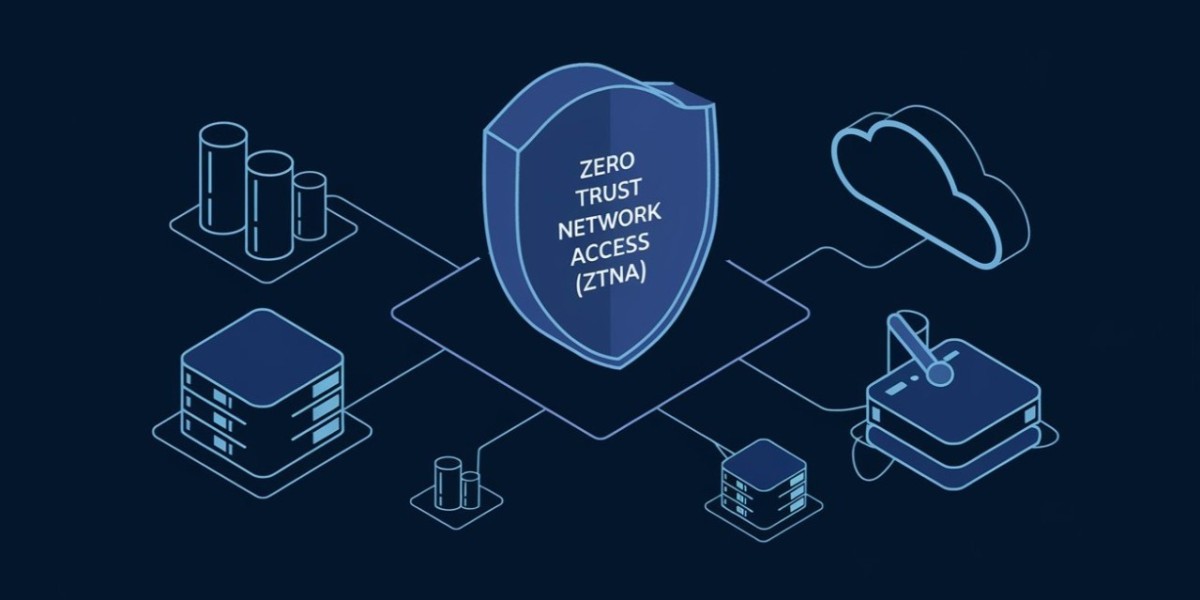
The zero trust network access (ztna) market future trends are emerging alongside major changes in enterprise technology, cybersecurity, and workforce models. Organizations are increasingly operating across cloud environments, private infrastructure, SaaS applications, remote locations, and connected endpoints. As digital boundaries become less defined, businesses require security architectures that can evaluate access continuously rather than relying on traditional network-based trust.
ZTNA is expected to evolve beyond basic application access toward a broader security framework incorporating identity intelligence, endpoint context, automation, adaptive policies, and deeper integration with enterprise security platforms.
Identity-Centric Security Will Become More Advanced
Identity is expected to remain at the center of future ZTNA strategies. Organizations will increasingly seek access controls capable of understanding users, roles, privileges, authentication strength, and behavioral context.
Multifactor authentication and single sign-on will continue supporting identity protection, while more granular authorization policies can determine exactly which resources each user should access.
Future systems may place greater emphasis on continuously evaluating identity-related signals rather than treating authentication as a one-time event.
Adaptive Access Will Gain Importance
Static access policies may become less effective in dynamic enterprise environments. A user who is considered low risk at one moment may present different circumstances later because of changes in device condition, location, behavior, or application sensitivity.
Adaptive access policies can respond to these changing conditions. Additional authentication can be requested when risk increases, while normal activity can remain relatively seamless.
This approach can help organizations maintain strong security without applying excessive friction to every access request.
Endpoint Intelligence Will Expand
The condition of a device is increasingly relevant to access security. Future ZTNA architectures are likely to incorporate more detailed endpoint intelligence when making authorization decisions.
Security teams may evaluate operating system health, endpoint protection, encryption, configuration, device ownership, and other signals.
Combining device intelligence with identity information can help distinguish between legitimate access from a secure endpoint and potentially risky access from a compromised or unmanaged device.
Application-Level Segmentation Will Become Standard
Another important future trend is the continued expansion of application-centric security. Instead of connecting users to broad network segments, organizations can establish access boundaries around individual applications.
This model aligns with least-privilege principles and can reduce the potential for lateral movement. It is particularly useful when applications are distributed across cloud platforms, data centers, and other infrastructure environments.
As enterprises modernize their application portfolios, granular segmentation may become an increasingly common security requirement.
Cloud-Native ZTNA Architectures Will Grow
Cloud adoption is changing how applications are deployed and managed. Future ZTNA solutions will need to operate efficiently across public clouds, private infrastructure, SaaS platforms, and hybrid environments.
Organizations are likely to prioritize architectures that provide centralized policy management while supporting applications regardless of where they are hosted.
Cloud-native approaches can also help organizations scale access controls as new workloads and applications are introduced.
Greater Security Ecosystem Convergence
ZTNA is expected to become increasingly integrated with other cybersecurity technologies. Identity systems, endpoint platforms, security monitoring tools, cloud security services, and incident response technologies can exchange information to improve access decisions.
For example, an endpoint security platform may identify a compromised device, while the access layer can immediately restrict that device's application connectivity.
This convergence can create a more coordinated security environment and reduce gaps between different security controls.
Automation Will Reduce Administrative Complexity
As ZTNA deployments grow, organizations will need more automation to manage users, applications, policies, and devices.
Automated provisioning and deprovisioning can ensure access changes when employees join, leave, or change roles. Automated policy updates can also reduce manual administrative effort.
Future platforms may increasingly use intelligent automation to identify unusual access patterns, recommend policy changes, and support faster responses to security events.
Risk-Based Authentication Will Improve User Experience
Security teams are increasingly expected to protect resources without unnecessarily disrupting employees. Risk-based authentication can support this objective by adjusting security requirements according to circumstances.
Routine activity from a verified user on a compliant device may require fewer interruptions. Suspicious activity or access to highly sensitive resources can trigger additional verification.
This balance between protection and convenience may become an important factor in future ZTNA adoption.
Remote and Hybrid Work Will Remain Important
Distributed work models are likely to remain a significant influence on ZTNA development. Employees may access applications from homes, branch offices, travel locations, and mobile environments.
ZTNA can provide application-specific access without requiring broad connectivity to corporate networks. This allows organizations to support flexible working arrangements while maintaining granular security controls.
The same model can be extended to contractors and temporary workers who require controlled access.
Third-Party Access Will Become More Granular
Businesses increasingly rely on external partners, suppliers, consultants, and service providers. Managing their access securely will remain an important ZTNA use case.
Future approaches are likely to provide more precise permissions, shorter access periods, automated expiration, and stronger monitoring for external users.
Organizations can use these controls to reduce exposure while maintaining efficient collaboration with external stakeholders.
Security Analytics Will Influence Access Decisions
Analytics is expected to play a greater role in future ZTNA architectures. Access systems can collect information about authentication activity, devices, applications, and policy decisions.
Analyzing this information can help identify unusual behavior and support faster investigation. Security teams may use these insights to refine policies and identify excessive privileges.
Greater analytical visibility can therefore improve both preventive security and operational decision-making.
Zero Trust Will Become a Broader Architecture
A major future trend is the continued movement from ZTNA as a standalone access technology toward zero trust as an enterprise-wide architecture.
Organizations may increasingly connect access controls with identity security, endpoint protection, application security, cloud security, data protection, and security operations.
This broader approach can create consistent security principles across different parts of the digital environment.
Greater Focus on Policy Lifecycle Management
As organizations create more granular access rules, policy management will become increasingly important. Future ZTNA platforms are likely to provide stronger tools for reviewing, testing, updating, and retiring policies.
Automated policy lifecycle management can help prevent outdated rules from creating unnecessary access.
Clear ownership and regular reviews will remain essential as enterprises expand their application and user environments.
Industry-Specific Security Requirements
Future ZTNA adoption will also reflect differences between industries. Financial organizations may emphasize protection of financial applications and customer information. Healthcare institutions may prioritize confidential records and clinical systems.
Manufacturing companies may focus on operational technology access, while professional services firms may require secure collaboration across clients and contractors.
These requirements can encourage specialized policies while maintaining common zero trust principles.
Future Strategic Direction
The zero trust network access (ztna) market future trends point toward security architectures that are more adaptive, automated, integrated, and identity-focused.
Organizations will increasingly expect ZTNA to respond to changing risk conditions while maintaining reliable access to critical applications. Stronger endpoint intelligence, cloud integration, security analytics, and application segmentation can support this direction.
The most effective future approaches will likely combine security precision with operational simplicity.
Conclusion
ZTNA is entering a phase in which future development will extend well beyond remote access. Identity intelligence, adaptive verification, endpoint awareness, application segmentation, cloud-native deployment, automation, analytics, and security ecosystem integration are likely to shape the next stage of enterprise access security.
Organizations that prepare for these trends can build access architectures capable of supporting distributed infrastructure and evolving workforce requirements. By continuously evaluating identities, devices, applications, and context, enterprises can strengthen security while maintaining the flexibility required for modern digital operations.






