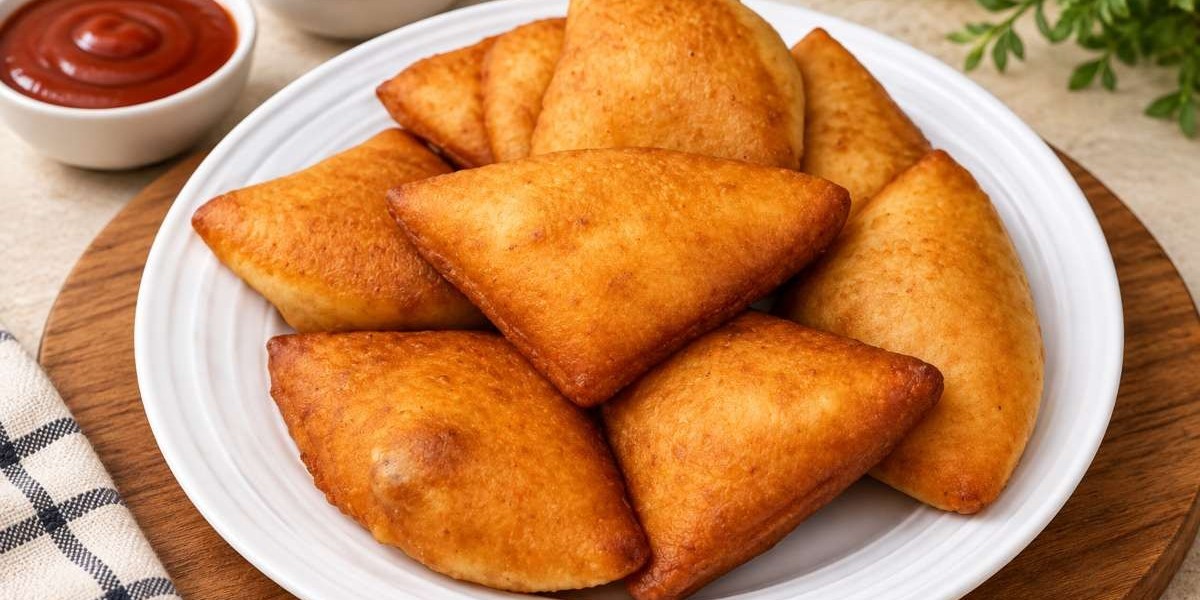


Some foods announce themselves before you see them. Coastal East African markets have one of those smells: sweet coconut, warm cardamom, and bread sizzling in hot oil. Vendors lift puffed, golden triangles out of the pot and pass them over wrapped in paper, still too hot to hold comfortably.
This guide brings that experience home. It covers where the bread comes from, how to make it step by step, why each stage matters, how to fix common mistakes, and what to serve alongside it. By the end, you will be comfortable making Mahamri whenever the craving hits.
What Is Mahamri?
Quick answer: This is a lightly sweet fried bread from the Swahili coast of Kenya and Tanzania. A yeasted dough is enriched with coconut milk and scented with cardamom, then rolled, cut into triangles, and fried until puffed and golden. The inside is airy and tender, and the outside has a thin, gentle crisp. It is usually eaten at breakfast or as a snack with tea, beans, or stew.
Snapshot:
Active time: about 35 minutes
Resting time: about 1 hour 30 minutes
Frying time: about 15 minutes
Makes: 24 triangles
Skill level: beginner-friendly with a little patience
Flavor profile: coconut, cardamom, mild sweetness
Roots on the Swahili Coast
The Swahili coast runs from southern Somalia through Kenya and Tanzania to northern Mozambique. For more than a thousand years its ports, including Lamu, Mombasa, Zanzibar, and Kilwa, traded with Arabia, Persia, and India. Ships carried cloth, beads, and above all spices. Cardamom, cloves, and cinnamon became part of local cooking, while coconut palms already shaded every beach.
The bread is a direct result of that exchange. Spice from the Indian Ocean trade, coconut from the shoreline, and a yeasted dough technique all meet in one pot. East African Mahamri is more than breakfast. It is a small record of how people, ships, and flavors moved across the water and settled into everyday life.
Today you will find it at roadside stalls, family tables, weddings, and Eid gatherings. If you enjoy exploring dishes with this kind of history, the African cuisine category on Devine Dishes is a good next stop.
How It Differs from Other Fried Breads
Almost every culture has a fried dough. These details make this one distinct:
Coconut milk is the liquid. It adds richness and a gentle sweetness that water or cow's milk cannot.
Cardamom leads the spice. Its floral, citrus-like warmth is the first thing you notice.
Yeast does the lifting. That produces a soft, chewy, bread-like interior.
The triangle shape is classic. Each wedge puffs in the middle and holds its shape.
Mandazi vs. Coconut Fried Bread
The two are cousins and often get mixed up. Mandazi usually relies on baking powder, so the dough is mixed and fried quickly. The crumb is a little denser and more cake-like. The yeasted version asks for more time and gives a lighter, springier texture. If you want a faster fix, start with this East African mandazi recipe. When you have a lazy weekend morning, come back to the yeasted version.
Ingredients
This Kenyan Mahamri Recipe needs only pantry staples. The quantities below make about 24 triangles.
Dough
4 cups (500 g) all-purpose flour, plus more for dusting
1/4 cup (50 g) granulated sugar
2 1/4 teaspoons (7 g) instant yeast
1 teaspoon ground cardamom
1/2 teaspoon salt
1 1/4 cups (300 ml) full-fat coconut milk, warmed to about 100°F (38°C)
2 tablespoons melted butter or neutral oil
1 egg (optional) for a slightly richer, more golden bread
Warm water, a tablespoon at a time, only if the dough feels dry
For Frying
About 4 cups (1 liter) neutral oil, such as sunflower, canola, or vegetable
Why These Choices Matter
Full-fat coconut milk supplies the fat that makes the crumb tender. Light versions give a drier, plainer bread.
Instant yeast can be mixed directly into the flour. If you only have active dry yeast, dissolve it in the warm coconut milk for 10 minutes first.
Fresh cardamom makes a real difference. Crack green pods, collect the black seeds, and grind them just before mixing. The aroma is noticeably stronger than store-bought powder.
A neutral oil keeps the coconut and spice flavors clean.
Mahamri Recipe: Step-by-Step Method
This Traditional Mahamri Recipe follows the classic coastal approach, with extra detail so first-timers can feel sure at each stage.
Step 1: Mix the Dry Ingredients
In a large bowl, whisk the flour, sugar, yeast, cardamom, and salt. This spreads the yeast and spice evenly, so every bite tastes the same.
Step 2: Add the Liquids
Pour in the warm coconut milk and melted butter, and add the egg if using. Stir with a spatula until a rough, shaggy dough forms and no dry patches remain.
Step 3: Knead
Turn the dough onto a lightly floured counter. Knead for 8 to 10 minutes, or 5 to 6 minutes with a stand mixer dough hook. The dough should become smooth, springy, and just slightly tacky.
Readiness check: Press a fingertip into the dough. If the dent slowly fills back in, you are there. For a more precise test, stretch a small piece between your fingers. If it forms a thin, see-through sheet without tearing, the gluten is well developed.
If the dough sticks to everything, dust with a spoonful of flour. If it cracks or feels stiff, work in a little warm water. Resist the urge to add lots of flour, because it makes the finished bread tougher.
Step 4: First Rise
Place the dough in a lightly oiled bowl, turn it once to coat, and cover. Leave it somewhere warm for about 1 hour, until it has doubled.
Warm spot ideas: Use an oven that is off with only the light on, or set the bowl near a pan of hot water. In cool weather, allow extra time rather than rushing.
Step 5: Divide and Rest
Gently deflate the dough and divide it into 6 equal pieces. Shape each into a ball, cover, and rest for 5 minutes. This brief pause relaxes the gluten, so the dough rolls out without snapping back.
Step 6: Roll
Roll each ball into a circle about 1/4 inch (6 mm) thick and 7 to 8 inches (18 to 20 cm) wide. Aim for even thickness, since uneven dough puffs unevenly.
Step 7: Cut
Cut each circle into 4 wedges with a pizza cutter or sharp knife. Keep cut pieces under a cloth so they do not dry out.
Step 8: Short Second Rest
Lay the triangles on a lightly floured tray, cover loosely, and rest for 15 to 20 minutes. They should look slightly puffy, not doubled. This pause is the secret to light, airy bread.
Step 9: Heat the Oil
Pour oil about 2 inches (5 cm) deep into a heavy pot. Heat to 340 to 350°F (170 to 175°C).
No thermometer? Drop in a small piece of dough. It should sink for a second, then rise and bubble steadily. If it browns instantly, the oil is too hot. If it just sits there, wait.
Step 10: Fry
Add 4 or 5 triangles at a time. They should puff within seconds. Fry 1 to 2 minutes per side, flipping once, until deep golden. Remove with a slotted spoon, drain briefly, and place on a rack or paper towels. Let the oil return to temperature between batches.
Step 11: Serve
Serve warm. The texture is best within the first half hour.
Tips for Soft and Fluffy Mahamri
Small habits make a big difference. These are the ones worth remembering for Soft and Fluffy Mahamri:
Hold the oil steady. Too cool produces greasy bread. Too hot browns the outside while the center stays raw. Check the temperature between batches.
Never skip the second rest. Frying straight after cutting gives a denser result.
Roll evenly. About 1/4 inch is ideal. Thinner turns cracker-like, and thicker stays doughy.
Handle proofed dough gently. Keep as many air bubbles as you can.
Do not overcrowd. Too many pieces drop the oil temperature quickly.
Adjust sweetness to taste. The base is mildly sweet for savory meals. For a dessert-style version, raise the sugar to 1/3 cup or dust the warm triangles with powdered sugar.
Troubleshooting Guide
The bread is dense
Likely causes are old yeast, under-kneading, or a short rise. Test your yeast, knead until elastic, and extend the rise by 15 to 30 minutes in a cold kitchen.
They did not puff
Dough that is too thin, oil that is too cool, or a skipped second rest are the usual suspects. Check all three.
They are greasy
The oil was too cool. Let it recover fully between batches and fry in smaller groups.
The center is raw
The oil was too hot or the dough too thick. Lower the heat a little and roll thinner.
They are tough
Too much flour was added or the dough was over-handled after proofing. Keep the dough slightly tacky and roll with a light hand.
The dough will not come together
Flour varies by brand and humidity. Add warm water by the tablespoon if dry, flour by the spoonful if sticky.
Variations to Try
Citrus lift: Add the zest of one lemon or orange.
Extra spice: Mix in 1/4 teaspoon cinnamon or a pinch of nutmeg.
Vanilla coconut: Add 1 teaspoon vanilla and a spoonful of toasted coconut flakes.
Whole wheat blend: Swap up to 1 cup of white flour for whole wheat for a nuttier bite.
Vegan version: Use oil instead of butter and omit the egg.
Air fryer option: Brush triangles lightly with oil and cook at 360°F (180°C) for 6 to 8 minutes, flipping once. The result is lighter but less rich.
What to Serve With It
The mild sweetness makes these triangles a flexible partner for both sweet and savory plates.
Spiced Chai
The classic pairing is a mug of milky tea infused with ginger and cardamom. The spices in the cup echo those in the bread. Try this Kenyan chai recipe for a true coastal breakfast.
Fragrant Pilau
For a more filling meal, pair the bread with a pot of spiced rice. The soft bread balances the savory depth of the meat and spices. This pressure cooker beef coconut pilau works especially well.
Fresh Kachumbari
Rich fried foods love something sharp and cool. A bowl of tomato, onion, and chili salad does that job. Serve it alongside with this kachumbari recipe.
Beans, Curries, and Stews
On the coast, the bread often accompanies coconut beans, lentils, or fish curry. Tear off a piece and use it to scoop up the sauce.
Sweet Snack Style
Dust with powdered sugar, drizzle with honey, or serve with sliced mango for a simple afternoon treat.
Make-Ahead, Storage, and Reheating
Storing
Cool completely and keep in an airtight container at room temperature for up to 2 days. Avoid the fridge, which dries the bread out.
Freezing
Freeze fried, fully cooled triangles in a single layer, then bag them for up to 2 months. You can also freeze cut, unfried triangles on a tray, bag them, and thaw about 45 minutes before frying.
Dough Ahead of Time
After the first rise, cover the dough and refrigerate overnight. Bring it to room temperature for 30 minutes, then roll, cut, rest, and fry. The slow, cool fermentation also deepens the flavor.
Reheating
Warm in a 300°F (150°C) oven for 5 to 8 minutes, or in an air fryer for 2 to 3 minutes. The microwave makes the bread chewy.
Dietary and Nutrition Notes
This is a fried treat, so it is best enjoyed in moderation. Coconut milk adds saturated fat, and flour provides most of the carbohydrates. Actual values depend on ingredients and oil absorption, so treat online calorie estimates as rough guides.
Vegetarian: yes
Vegan: yes, using oil and no egg
Dairy-free: yes, using oil instead of butter
Gluten-free: not as written, since gluten-free blends behave very differently in yeasted dough
The Science Behind Great Mahamri
Understanding what happens in the bowl and the pot helps you adapt the recipe with confidence:
Yeast produces gas that inflates the dough and develops flavor during fermentation.
Kneading builds a gluten network that traps that gas.
Coconut fat coats flour proteins, which keeps the crumb tender rather than chewy.
The second rest lets gluten relax, so the dough expands evenly in the oil.
Hot oil sets the outer crust quickly while steam inflates the interior, creating the signature puff.
When a batch goes wrong, these principles help you trace the cause instead of guessing.
From My Kitchen to Yours
My first batches were inconsistent. Some were pale and heavy, others dark outside and doughy inside. The change came when I started using a thermometer and stopped hurrying the rise. After that, the results were reliable. If your first try is not perfect, remember that even imperfect batches taste good, and each one teaches you something useful.
Final Thoughts
Great fried coconut bread comes down to a handful of habits: fresh yeast, full-fat coconut milk, fragrant cardamom, patient resting, and steady oil heat. Get those right, and you can make Mahamri that rivals anything from a coastal market stall. Keep this Mahamri Recipe handy for relaxed weekends, family gatherings, and holiday mornings.
Frequently Asked Questions
What is the difference between this bread and mandazi?
Mandazi usually uses baking powder and is quicker, with a denser crumb. The yeasted version takes longer but is lighter and chewier.
Can I make it without yeast?
You can use baking powder for speed, but the texture will resemble mandazi. Yeast gives the classic airy result.
Why is cardamom used?
Cardamom arrived on the East African coast through Indian Ocean trade. Its floral warmth pairs beautifully with coconut and defines the flavor.
Can I bake it instead of frying?
You can bake at 375°F (190°C) for 12 to 15 minutes, but the result is closer to a soft roll. Air frying comes nearer to the original.
How do I stop it from soaking up oil?
Keep the oil at 340 to 350°F, avoid overcrowding, and drain on a rack or paper towels.
How long does it stay fresh?
Best on the day it is made. It keeps up to 2 days in an airtight container, or 2 months frozen.






