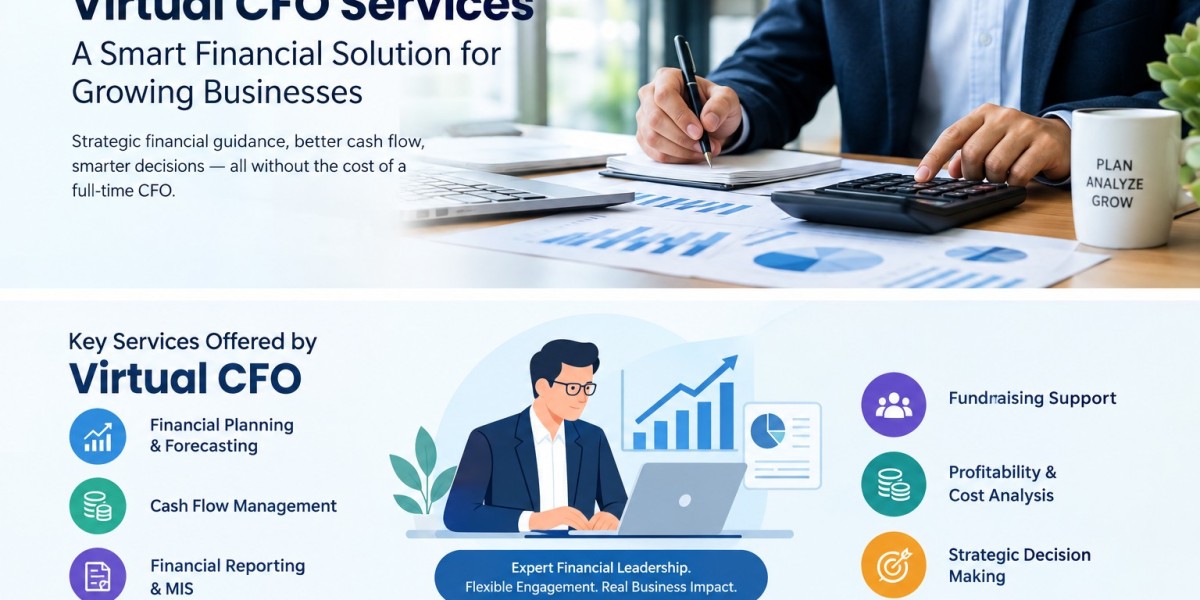


For a growing business, financial information is more than a collection of numbers. Revenue, expenses, cash flow, profit margins, and investments can tell business owners what is working and where improvements are needed. However, understanding and using this information effectively often requires more than routine accounting. This is where Virtual CFO services can make a meaningful difference.
A Virtual CFO provides experienced financial guidance to businesses without the need to employ a full-time Chief Financial Officer. The service gives startups and growing companies access to strategic financial expertise while allowing them to choose a level of support that matches their current needs.
Understanding the Role of a Virtual CFO
A Virtual CFO works as an outsourced financial leader for a business. Their role can include analysing financial performance, preparing forecasts, managing cash flow, developing budgets, reviewing costs, and supporting important business decisions.
Unlike routine accounting, the focus is on understanding the financial direction of the company. A Virtual CFO helps management answer practical questions such as:
- Is the business generating enough cash?
- Which areas are producing the best margins?
- What expenses can be controlled?
- How much capital may be required for expansion?
- Is the company financially prepared for its next stage of growth?
By answering these questions with financial data, businesses can make decisions with greater confidence.
Why Cash Flow Matters
Cash flow is one of the areas where businesses can benefit significantly from professional financial oversight. A company may have strong sales but still experience difficulties if customers pay late or expenses increase unexpectedly.
A Virtual CFO can review cash inflows and outflows, prepare cash-flow projections, monitor working capital, and identify potential financial gaps. This gives business owners more time to prepare for upcoming obligations rather than reacting to problems after they occur.
Financial Forecasting for Better Planning
Business decisions are often based on expectations about future revenue, expenses, and investment requirements. Financial forecasting helps turn these expectations into measurable projections.
A Virtual CFO can develop financial models and forecasts based on historical performance, current business conditions, and future objectives. These projections can be useful when planning expansion, hiring employees, launching new products, purchasing assets, or seeking external funding.
Supporting Startups During Fundraising
Fundraising can be a major milestone for a startup. Investors typically want to understand the company's financial performance, business model, growth potential, and future projections.
Virtual CFO support can help startups prepare financial models, revenue forecasts, investor reports, and other financial information required during fundraising discussions. Having organised and realistic financial projections can also help founders communicate their business plans more effectively.
Improving Profitability
Growing revenue is important, but sustainable profitability is equally valuable. Businesses need to understand how much they are spending to generate revenue and which products, services, or activities are contributing to their margins.
A Virtual CFO can analyse pricing, operating expenses, gross margins, and other financial metrics to identify opportunities for improvement. This allows management to focus on profitable growth rather than simply increasing sales.
Who Can Benefit From Virtual CFO Services?
Virtual CFO services can be useful for a wide range of businesses, particularly companies that are growing but do not yet require a full-time CFO.
They may be suitable for:
- Startups preparing for investment
- Small and medium-sized businesses
- Companies experiencing rapid growth
- Businesses expanding into new markets
- Organisations dealing with complex cash-flow requirements
- Companies seeking better financial reporting
- Businesses planning restructuring or major investments
The level of involvement can be adjusted according to the company's size, financial complexity, and objectives.
Virtual CFO and Accountant: What's the Difference?
An accountant generally focuses on maintaining accurate financial records, bookkeeping, tax compliance, reconciliations, and financial statements.
A Virtual CFO works more strategically. They take financial information and use it to evaluate performance, prepare forecasts, manage cash flow, analyse profitability, and support management decisions.
The two roles can work together effectively. Accurate accounting provides the financial foundation, while CFO-level analysis helps turn that information into actionable business insights.
Finding the Right Financial Support
Choosing a Virtual CFO should involve more than comparing prices. Businesses should consider the professional's financial experience, understanding of the business environment, range of services, communication style, and ability to provide practical recommendations.
For businesses exploring professional financial management and strategic support, Virtual CFO Services can be a useful option to consider.
Conclusion
Strong financial management can influence every stage of business growth. A Virtual CFO helps businesses move beyond basic accounting by providing financial analysis, forecasting, cash-flow management, profitability insights, and strategic guidance.
For startups and growing companies that need experienced financial leadership without immediately hiring a full-time CFO, Virtual CFO services can provide a flexible way to strengthen financial decision-making and prepare the business for sustainable growth.






