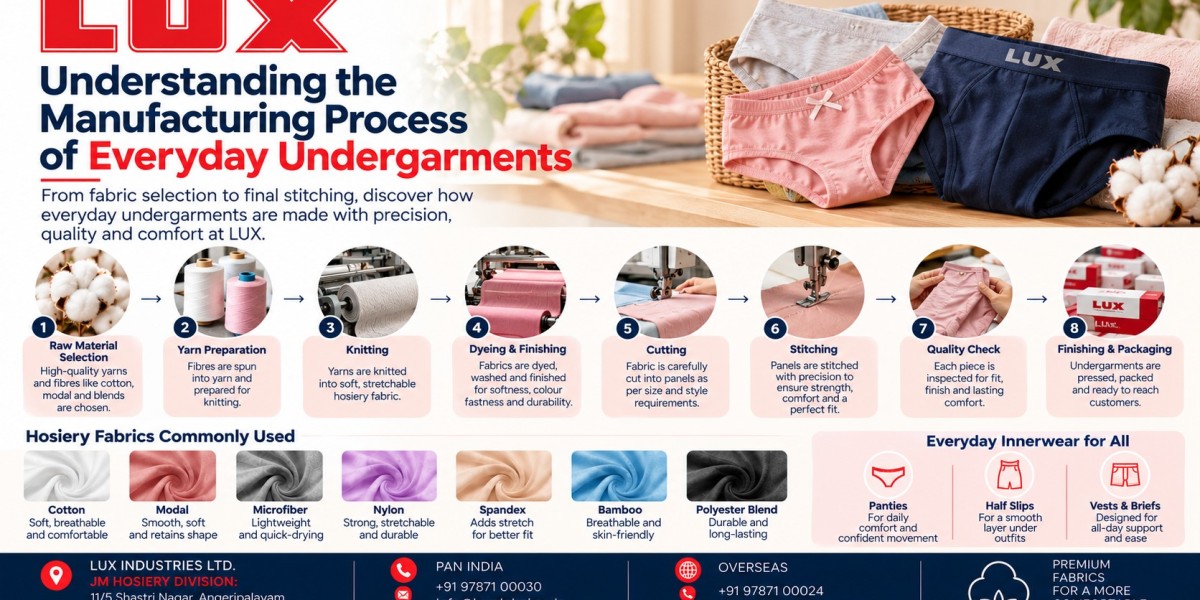


Everyday undergarments are an essential part of daily clothing, offering comfort, support, and ease of movement. Behind every well-fitted vest, brief, camisole, or inner top is a carefully planned manufacturing process. Tirupur undergarments manufacturers are known for combining quality fabrics, skilled workmanship, and modern production methods to create garments suitable for everyday use. From fabric selection to final inspection, each stage plays an important role in delivering comfortable and durable innerwear.
1. Fabric Selection and Preparation
The manufacturing process begins with selecting the right fabric. For everyday undergarments, manufacturers commonly use cotton, cotton blends, modal, and other hosiery materials based on the product's purpose. Cotton hosiery fabric is particularly popular because it offers softness, breathability, and comfort for regular wear.
Once the fabric is selected, it is inspected for quality, colour consistency, texture, and defects. The fabric may then undergo processes such as washing, dyeing, or finishing to achieve the required appearance and feel. Proper preparation helps ensure that the material performs well during cutting and stitching.
2. Pattern Making and Fabric Cutting
After fabric preparation, manufacturers create patterns according to the required size and design. The pattern determines the shape and dimensions of different garment components. Accurate measurements are essential because even small errors can affect the final fit.
The prepared fabric is then spread across cutting tables in multiple layers. Advanced cutting equipment or skilled operators cut the fabric according to the patterns. Efficient cutting reduces material waste while maintaining consistency across large production batches.
3. Stitching and Garment Assembly
The cut fabric pieces are moved to the stitching section, where different components are assembled. Depending on the garment, this can include attaching front and back panels, elastic, straps, neckbands, waistbands, and other elements.
Modern undergarments manufacturers focus on stitching techniques that provide strength without compromising comfort. Seam quality is especially important for everyday innerwear because the garment comes into direct and prolonged contact with the skin. Flat seams, soft elastics, and carefully finished edges can improve the overall wearing experience.
For products such as vests and briefs, manufacturers also pay close attention to stretch, recovery, and shape retention. These characteristics help the garment maintain its fit after repeated use and washing.
4. Quality Checking, Finishing, and Packaging
Once stitching is complete, each garment goes through quality inspection. Manufacturers check measurements, seams, elastic attachment, fabric defects, stitching consistency, and overall appearance. Products that do not meet the required standards are corrected or removed before packaging.
Finishing may include thread trimming, pressing, folding, and labelling. The finished products are then packed according to the requirements of retailers, brands, or distributors. Consistent quality control helps ensure that customers receive products that are comfortable, durable, and ready for everyday use.
Quality and Expertise at LUX Industries
Established manufacturing expertise is important when producing garments designed for daily wear. LUX Industries has a strong presence in the Indian innerwear industry, with a focus on products designed around comfort, quality, and everyday requirements. Its experience in the sector reflects the importance of combining suitable fabrics, efficient production methods, and quality-focused manufacturing.
For businesses sourcing innerwear, working with experienced hosiery undergarments manufacturers can help maintain consistency across product ranges. From fabric selection to finishing, an organized manufacturing system supports reliable quality and better product performance.
Conclusion
The journey of everyday innerwear involves much more than cutting and stitching. Fabric selection, pattern development, precise cutting, skilled assembly, and detailed quality inspection all contribute to the final product. Experienced Tirupur undergarments manufacturers continue to play an important role in India's garment manufacturing ecosystem by combining textile expertise with efficient production practices.
Whether you are looking for comfortable everyday innerwear, vests and briefs manufacturers, or reliable hosiery fabric solutions, understanding the manufacturing process can help you make more informed sourcing decisions. Explore LUX Industries and its product range to learn more about quality-focused innerwear manufacturing.






