

If you have ever watched a local council certifier walk into a suburban backyard with a 900 mm measuring arc and a digital leveller, you will surely be aware of the sweat that breaks out across any homeowner's forehead. Last summer on a job in western Sydney, the client had spent five figures on imported travertine paving only for the certifier to red flag the whole set-up over a 12-mm variance in ground clearance and a nearby raised garden bed. Australian pool laws don't care how sleek your landscaping looks. They care about compliance down to the exact millimetre under the national safety codes.
These laws in Australia don't just dictate whether a fence needs a gate or what a barrier should look like. They influence –
● Where the barrier sits
● What can sit near it?
● How they get operated
● What standards apply to older pools
The National Construction Code recognises state and territory variations, and individual jurisdictions handle administration and compliance processes.
Pool Laws Should Shape The Fence Choice Early
The biggest mistake that homeowners commit is treating compliance as the final box to tick after choosing the fence. In fact, it should influence the choice from day one, as Australian standards for pool fencing requirements broadly focus on restricting unsupervised access by young children. Then there is the National Construction Code, which identifies issues including barrier continuity, structural strength, climbable elements, openings, and the operation of self-closing and self-latching gates. This means the question is not just: "Which Fence Looks Best?" A better question is: "Which Barrier Design Works with This Particular Pool Area without Creating Compliance Headaches Later?" This is an important question because even a –
● Narrow side passage
● Sloping yard
● Raised retaining wall
● Existing boundary fence
● Crowded entertaining area
…can all affect the practical outcome.
This is where pool fence experts earn their keep, as in most cases, the product is straightforward; but not the site.
A pool barrier is not judged in isolation, and the safety it offers should depend on the fence, gate, surrounding landscape and how the space changes after installation. This is also a reason why the cheapest quote can be misleading. Two contractors may price the same number of linear metres while allowing for completely different site conditions, fixing methods or hardware quality.
The Standard Matters, But So Does The Age Of The Pool
Australian homeowners often assume there is one universal rulebook for every pool in the country, but this is the wrong pathway. State and territory requirements differ, and the applicable requirements can also depend on when a pool was constructed or whether the barrier has been altered or not. For example, NSW laws state that different versions of AS-1926 may apply depending on the construction date. They also note that modifying a pool barrier or undertaking certain renovations can trigger application of current requirements and remove earlier exemptions. Western Australia similarly directs owners to the Building Regulations, the National Construction Code, and relevant Australian standards, while noting that older pools may fall under different provisions depending on installation dates. So, before ordering fencing, homeowners should establish the following details:
● When was the pool built?
● Which state or territory rules apply?
● Whether recent renovations affect the barrier?
● Whether the existing fence forms part of the compliant enclosure?
● Whether the proposed layout changes access around the pool?
This is not a glamorous task at all, and it also means paying to move a newly installed panel because a site detail was missed.
Glass Pool Fencing Changes The Design Conversation
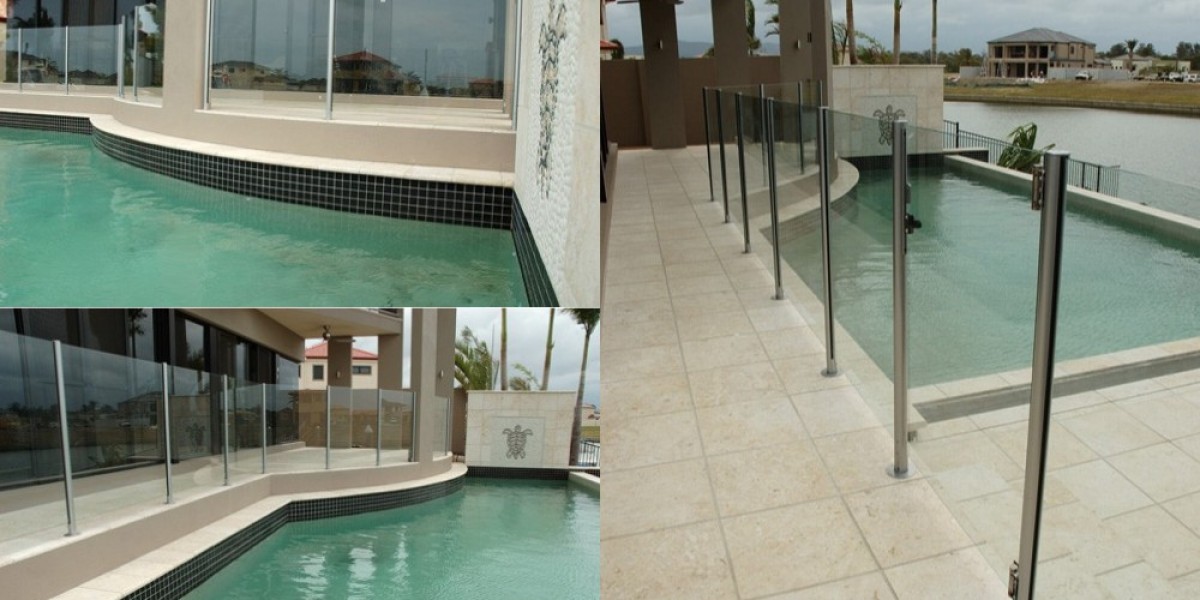
One major reason behind the popularity of glass pool fencing is visibility, and this means it can preserve views across the backyard. In short, it can make a compact pool area feel less boxed in, but this also remains a fact that clear glass does not automatically make compliance simpler. The real advantage is often layout flexibility, and a well-designed glass barrier can separate the pool from entertaining areas without visually chopping the backyard into smaller zones. This can be particularly useful in newer Australian homes where the pool, alfresco area and outdoor kitchen sit close together.
There is a trade-off though, as frameless systems demand accurate installation and suitable fixing conditions. Concrete thickness, deck construction, drainage, panel alignment and hardware selection all matter and on coastal properties, hardware exposure deserves extra attention too. The reason is simple: salt-laden air does not care how premium the brochure looks.
As a homeowner, if you are comparing glass pool fence services, the useful conversation is not simply about "frameless versus semi-frameless". You must also ask how the system suits the actual substrate, local exposure and future use of the outdoor space. This question is important because a fence that looks minimalist can involve very precise work underneath.
The Gate Is Often Where Good Plans Get Messy
Most people spend more time choosing the fence panels than thinking about the gate, but this can be backwards. Pool barrier regulations place significant importance on restricting access, and the National Construction Code requires gates and doors forming part of a barrier to have latching arrangements. They should be impossible to operate readily by young children and should automatically close and latch. Practically speaking, gate problems often come from the surrounding layout rather than the gate itself. For example –
● The furniture gets moved closer
● Pot plants appear
● Outdoor storage changes hands
● Landscaping grows
A nearby feature that was harmless during installation may later create a climbable opportunity or interfere with access.
This is the right situation where "We'll Sort That Out Later" is not a great strategy at all. Before finalising glass pool installations, homeowners should think about the following –
● The traffic flow
● Where will people enter the pool area?
● Where do kids play?
● Will the gate swing into a tight entertaining zone?
● Could future furniture placement compromise the surrounding clearance?
A good pool barrier should work when the backyard is being lived in, not just when it is photographed.
What Should Influence The Final Decision?
When comparing fencing options, price should be part of the decision. It just shouldn't be the whole decision, and a sensible comparison looks at the following:
● Compliance suitability for the property
● Material and hardware durability
● Installation method
● Gate reliability
● Visibility and backyard design
● Maintenance requirements
● Future landscaping plans
● Installer experience with similar sites
This is where homeowners should compare scopes rather than totals, as a cheaper quote may exclude site preparation, specialist fixings or other work required for the chosen system. But this does not automatically make it a bad quote, but it means the two proposals may not be directly comparable.
What Inspectors Actually Measure? – This Is Where Most DIY Jobs Cop It:
● Height: 1200mm minimum from finished ground level, measured on the outside
● Gaps: No more than 100mm under panel, no more than 100mm between verticals, no footholds over 10mm within neck
● Gates: Must self-close and self-latch from any open position, even just cracked open. Must open away from the pool.
● Latch height: 1500mm minimum if it's inside, or shielded if lower
If you have frameless glass gates with a basic gravity latch at 1200mm, you're already non-compliant unless it has a proper shield. That's straight from AS1926.1:2024 CLAUSE 2.3.2.
FAQs – The Stuff People Actually Get Wrong
What Are The Current Australian Pool Laws For Glass Fences?
All pool barriers must meet AS1926.1:2024 and state laws: 1200mm high, 100mm max ground gap, self-closing gate. For glass pool fencing, that also means 12mm toughened Grade A glass with compliant spigots and latches. Your council enforces it, not the fencer.
Is Frameless Glass More Likely To Pass Council Inspection?
Yes, when installed correctly, because it has no climbable rails and offers clear supervision. Semi-frameless can pass too if post gaps and NCZ are sorted. The installer matters more than the style for passing the first time.
How Much Does Compliant Glass Pool Fencing Cost In 2026?
In Sydney, semi-frameless is $320-$460 per metre, frameless $480-$680 installed with -316 hardware. Prices jump for curves, tight access, or core drilling into pavers. Cheap quotes usually mean -304 stainless or 10mm glass.
What Fails Most During Pool Fence Compliance Checks?
Gates not self-closing from any position, gaps over 100mm, and climbable objects in the NCZ. Pool fence compliance isn't just the fence; it's the metre around it.
How Do I Choose Between Frameless And Semi-Frameless For Compliance?
Frameless gives cleaner sight lines and zero climb points, so it's easier to comply in tight yards. Semi-frameless is cheaper and stronger in windy coastal spots.
Should I Hire Pool Fence Experts Or A General Landscaper?
Use licensed pool fence experts who live and breathe Australian Standards pool fencing and pool barrier regulations. Landscapers are great at paving, but they often miss latch heights and NCZ details that cause failures. Ask who pays if it doesn't pass.
Final Word
Australian pool laws aren't there to make your life hard. They're there because a 100mm gap is enough for a toddler. When you're weighing up options, don't chase the cheapest per metre rate. Chase the quote that mentions AS1926.1:2024, 316 stainless, self-closing tension, and actually measures your non-climbable zone on site.
If you're stuck between two quotes, get the one who talks about compliance first and looks second. That's usually the crew who won't have to come back.






