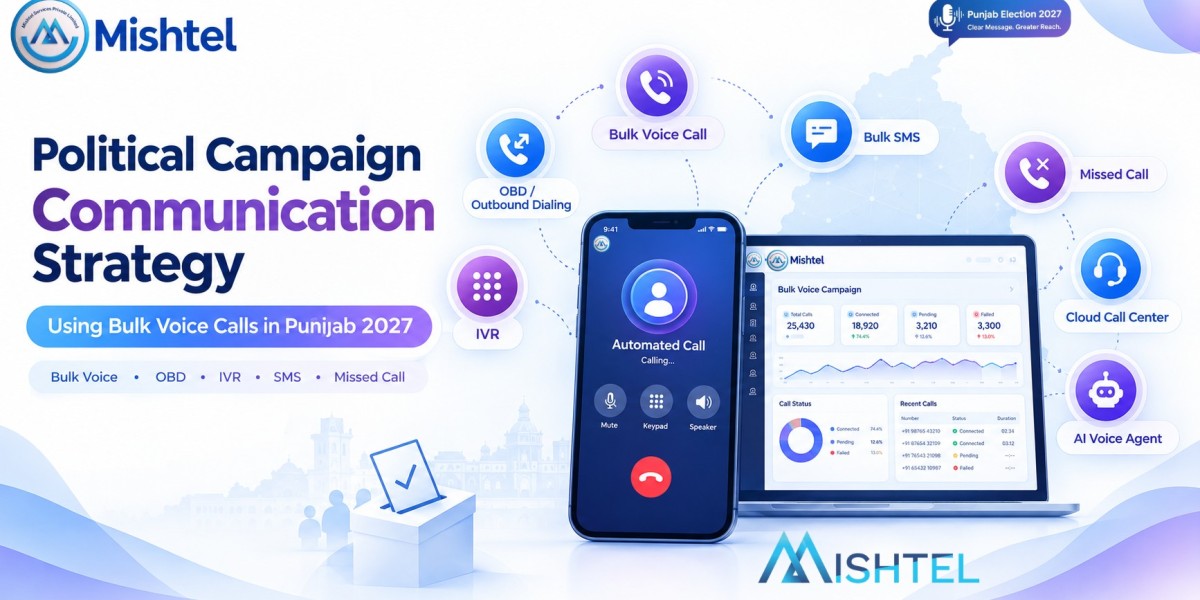


Political Campaign Communication Strategy Using Bulk Voice Calls in Punjab 2027
Every campaign team has the same challenge. Many people need the same information at the right time. Without a plan, messages arrive late, change from one worker to another, or never reach some areas.
This is why political campaign communication needs clear planning. A team should know what it wants to say, who needs to hear it, and how it will check the results. Voice calls can help here, because people can hear a message in their own language without reading anything.
Bulk voice calls send a recorded message to many phone numbers using an automated system. The method is often called OBD. This guide explains how to use it as one part of a wider plan for Punjab Election 2027, in a neutral and responsible way.
What Is Bulk Voice Call Service?
A bulk voice call service lets a team send one recorded message to a large list of phone numbers. The team records the message once. The system then dials each number and plays the recording when someone answers.
This method is also called voice broadcasting. OBD stands for Outbound Dialing. An outbound dialer is the software that places the calls automatically from a prepared list.
Manual calling is different. A worker dials each number, speaks to each person and writes notes by hand. This works well for personal talks, but it takes a lot of time and the words can change with each call.
Automated voice calls keep the message the same for every listener. That helps when a team shares dates, venues or public notices. If you want a service page with the available voice options, see the Mishtel Bulk Voice Service overview.
Why Bulk Voice Calls Matter for Campaign Communication
Voice calls are best seen as an operations tool. They help teams share information in an organized way. They are not a way to push opinions or pressure anyone.
Here are the practical uses:
Campaign announcements: share official notices in a clear spoken format.
Event information: give the date, time and place of a public event.
Meeting reminders: remind registered attendees before a meeting starts.
Schedule updates: tell people about changes quickly.
Volunteer communication: pass instructions to workers in many locations.
Public information: share helpline details and general information.
Feedback requests: invite people to share a response by pressing a key.
Follow-up communication: reach out again after an event or enquiry.
Voice also helps people who find text hard to read. A short recording in the local language can be easier to follow than a written message.
Building a Political Campaign Communication Strategy
A strategy turns tools into a plan. The six steps below work for most campaign teams.
1. Define the Communication Objective
Start by writing down what the team needs to share. It could be an event notice, a volunteer call or a schedule change. One clear objective keeps the message short and useful.
A vague goal creates a vague recording. Ask one simple question before every campaign: what should the listener know or do after the call?
2. Identify the Intended Audience
Next, group your contacts for legitimate communication needs. Do not send the same message to everyone. Useful groups include:
Location: village, town, ward or constituency.
Language: Punjabi, Hindi, English or another language.
Purpose: event, volunteer or public information.
Volunteer status: active workers and new volunteers.
Event relation: people who registered for a meeting.
Previous response: people who asked for a callback.
Only use contacts that the team has the right to call. Good grouping makes the message more relevant and saves effort.
3. Select the Communication Channel
No channel is best in every case. Choose based on the message and the audience.
Bulk SMS suits short written details that people may want to save.
Bulk voice calls suit recorded announcements.
Missed calls suit simple responses.
IVR suits menu-based information.
Cloud call center suits two-way conversations with agents.
Many teams use more than one channel together.
4. Prepare the Voice Message
A good recording is easy to follow on the first listen. Use short sentences and plain words. Include only the details that matter, such as the date, time, place and contact number.
Check every fact before recording. Keep the tone polite and calm. State the purpose in the first few seconds so the listener knows why you are calling.
Read the Full Guide to Learn More
Source: Political Campaign Communication Using Bulk Voice Calls






