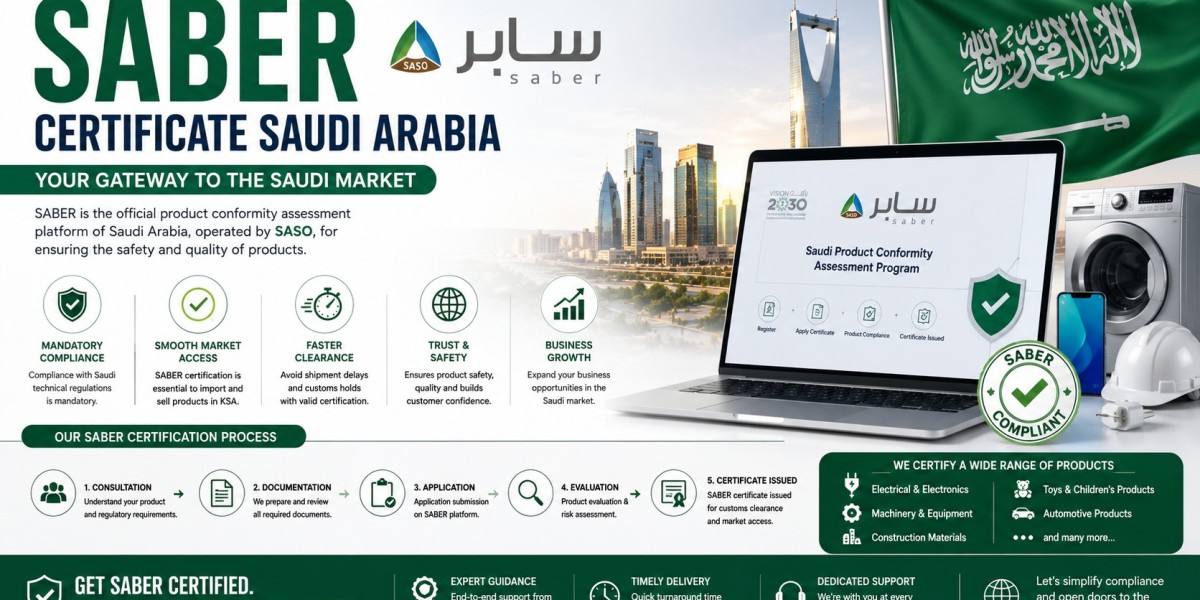


Obtaining saber registration is one of the most important steps for businesses importing regulated products into Saudi Arabia. The registration process ensures compliance with Saudi Standards, Metrology and Quality Organization (SASO) regulations, product conformity requirements, customs clearance procedures, shipment certification, import documentation, and Saudi technical standards. Whether you're a manufacturer, exporter, or importer, understanding how the Saber Product Certificate works—from application to approval—can help you avoid shipment delays, reduce compliance risks, and successfully access the Saudi market.
What Is a Saber Product Certificate?
A Saber Product Certificate, commonly known as the Product Certificate of Conformity (PCoC), is an official document issued through the Saber platform that confirms a product complies with Saudi Arabia’s applicable technical regulations and safety standards.
The certificate is issued after a successful conformity assessment by an approved certification body and is mandatory for many regulated products imported into Saudi Arabia.
Its primary objectives are to:
Ensure product safety
Protect consumers
Verify compliance with Saudi regulations
Support faster customs clearance
Facilitate legal importation into the Kingdom
Without a valid Product Certificate, many regulated goods cannot proceed through Saudi customs.
Understanding the Saber Platform
The Saber platform is an online compliance system developed by the Saudi Standards, Metrology and Quality Organization (SASO).
It connects:
Importers
Manufacturers
Exporters
Certification bodies
Saudi Customs
The platform digitizes the entire product conformity process, making registration, certification, and shipment approvals more efficient.
Why Saber Registration Is Important
Saber registration offers several advantages for importers and exporters.
It helps businesses:
Meet Saudi import regulations
Demonstrate product compliance
Speed up customs clearance
Reduce documentation errors
Improve shipment processing
Avoid regulatory penalties
Businesses that complete registration correctly experience fewer customs delays and smoother import operations.
Products That Require a Saber Product Certificate
Many regulated products require certification before entering Saudi Arabia.
Common categories include:
Electrical and Electronic Products
Home appliances
Consumer electronics
Lighting equipment
Electrical accessories
Automotive Products
Tires
Vehicle spare parts
Automotive accessories
Construction Materials
Building materials
Industrial machinery
Safety equipment
Consumer Goods
Toys
Cosmetics
Household products
Personal care items
Certification requirements depend on the applicable Saudi technical regulations for each product category.
Step-by-Step Process: From Application to Approval
Understanding each stage of the process helps businesses prepare accurate applications and avoid unnecessary delays.
Step 1: Create a Saber Account
The importer must first create an account on the Saber platform.
During registration, the importer provides:
Company information
Commercial registration details
Contact information
Authorized user details
Only registered importers can initiate product registration.
Step 2: Register the Product
Once the account is active, the importer registers each product.
Required information generally includes:
Product name
Brand
Model number
Product category
Manufacturer details
Country of origin
HS Code
Accurate product information is essential for successful approval.
Step 3: Upload Supporting Documents
The importer uploads all required documentation for review.
Typical documents include:
Commercial invoice
Product specifications
Technical datasheets
Test reports
Product images
Manufacturer declarations
Depending on the product category, additional documents may be required.
Step 4: Select an Approved Certification Body
The importer chooses an approved conformity assessment body through the Saber platform.
The certification body evaluates:
Product documentation
Test reports
Applicable technical regulations
Compliance requirements
If additional information is required, the importer may be asked to submit supplementary documents.
Step 5: Product Evaluation
The certification body conducts a detailed conformity assessment.
The review confirms that the product complies with Saudi standards for:
Safety
Quality
Performance
Labeling
Technical specifications
Products meeting all applicable requirements proceed to certification.
Step 6: Product Certificate Approval
Once the assessment is complete, the Product Certificate of Conformity (PCoC) is issued.
The certificate typically remains valid for one year, allowing multiple shipments of the same approved product during its validity period.
Step 7: Obtain Shipment Certificate
After receiving the Product Certificate, importers must obtain a Shipment Certificate of Conformity (SCoC) for each shipment entering Saudi Arabia.
The Shipment Certificate verifies that the imported goods match the approved product registration.
Without an SCoC, customs authorities may not release regulated shipments.
Documents Required for Saber Registration
Preparing complete documentation helps avoid approval delays.
Commonly required documents include:
Commercial Invoice
Contains shipment value and transaction details.
Product Specifications
Describe product features and technical characteristics.
Test Reports
Demonstrate compliance with applicable Saudi technical standards.
Product Images
Help certification bodies verify product identification.
Manufacturer Declaration
Confirms manufacturing details and product authenticity.
Certificate of Origin
Verifies the country where the product was manufactured.
Common Mistakes That Delay Approval
Many applications are delayed due to avoidable errors.
Incorrect Product Classification
Selecting the wrong product category may result in:
Additional reviews
Application rejection
Delayed certification
Incomplete Documentation
Missing technical documents or test reports frequently slow the approval process.
Inconsistent Product Information
Differences between invoices, specifications, and product descriptions can trigger compliance reviews.
Expired Test Reports
Some technical reports may no longer be valid under current regulations.
Always ensure supporting documents are up to date.
How Long Does the Approval Process Take?
Approval timelines vary depending on:
Product category
Complexity of technical evaluation
Document accuracy
Certification body workload
Applications with complete and accurate documentation are generally processed more quickly than incomplete submissions.
Planning ahead helps prevent shipment delays.
Benefits of Obtaining a Saber Product Certificate
Businesses that complete the certification process gain several important advantages.
Faster Customs Clearance
Certified products move through Saudi customs more efficiently.
Regulatory Compliance
Certification demonstrates compliance with Saudi technical regulations.
Reduced Shipment Delays
Approved products are less likely to face customs holds.
Improved Business Reputation
Compliance enhances credibility with customers, distributors, and regulatory authorities.
Better Market Access
Certified products can enter the Saudi market with greater confidence.
Best Practices for Successful Saber Registration
Businesses can improve approval success by following these recommendations.
Register Products Before Shipping
Complete certification before goods leave the country of origin.
Prepare Complete Documentation
Review all technical documents carefully before submission.
Verify Product Information
Ensure consistency across:
Product descriptions
Model numbers
Manufacturer details
HS Codes
Stay Updated on Saudi Regulations
Product requirements may change as Saudi Arabia updates its technical regulations.
Regularly reviewing regulatory changes helps maintain compliance.
Work With Experienced Customs Clearance Professionals
Professional customs clearance providers can assist with:
Product registration
Documentation review
Certification applications
Regulatory compliance
Shipment processing
Their expertise helps reduce delays and improve approval rates.
The Future of Saber Certification
Saudi Arabia continues to strengthen its digital trade ecosystem under Vision 2030.
Future enhancements may include:
Faster digital approvals
Greater customs integration
Automated compliance verification
Expanded product coverage
Improved online tracking
These developments will continue making the import process more efficient for businesses operating in the Kingdom.
Conclusion
Obtaining a Saber Product Certificate begins with accurate saber registration and continues through documentation review, conformity assessment, and final approval. While the process requires careful preparation, it plays a critical role in ensuring compliance with Saudi import regulations and facilitating smooth customs clearance.
By registering products correctly, submitting complete documentation, selecting approved certification bodies, and obtaining both the Product Certificate of Conformity (PCoC) and Shipment Certificate of Conformity (SCoC), businesses can avoid unnecessary delays and confidently access the Saudi market. Partnering with experienced customs clearance and compliance specialists further simplifies the process and helps ensure long-term success in Saudi Arabia's growing import sector.