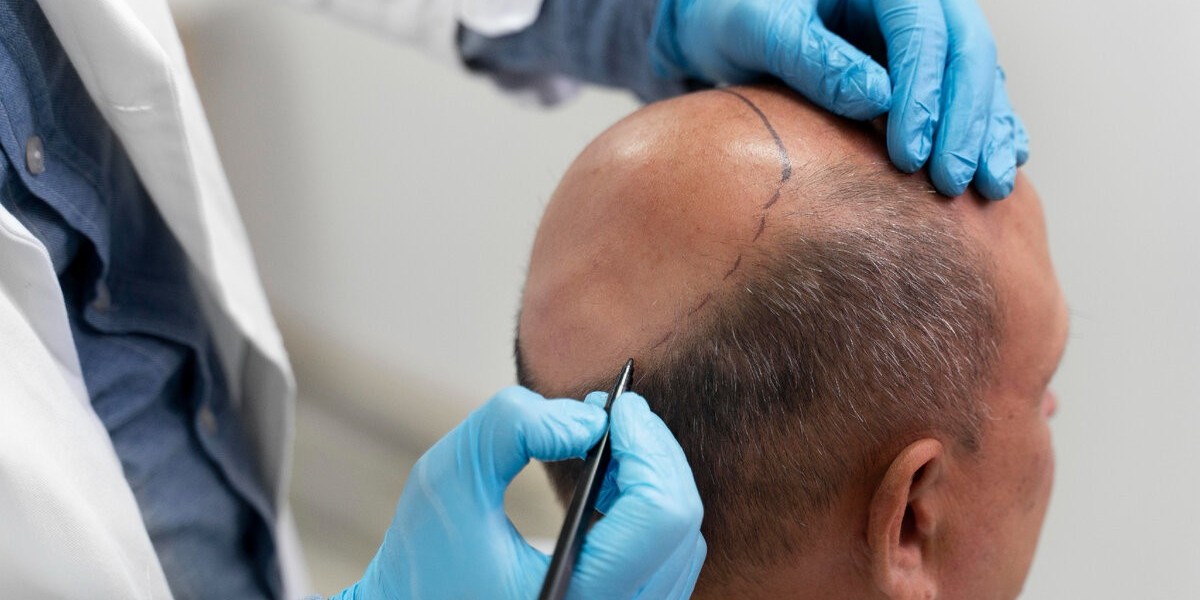


Temple recession can subtly change the appearance of the face. As hair becomes thinner around the sides of the forehead, the frontal hairline may look wider, less defined, or uneven. For suitable candidates, FUE Hair Transplant can be considered when the goal is to improve coverage in selected areas while maintaining a natural relationship with existing hair.
For people researching hair transplant in Islamabad, understanding temple restoration, donor capacity, hair direction, and long-term planning is important before making a decision.
Why Do the Temples Recede?
Temple recession can develop gradually and may be associated with genetic hair loss. In some individuals, the temples become noticeably thinner before other areas of the scalp.
As the hairline changes, the natural framing of the forehead can also change. Some people may notice that hairstyles no longer provide the same coverage they once did.
The pattern and speed of recession vary from person to person, so an individual assessment is necessary.
How Can FUE Address Temple Thinning?
FUE involves extracting individual follicular units from a suitable donor region and placing them into carefully selected recipient areas.
For temple restoration, grafts can be positioned according to the natural direction of surrounding hair. The angle and orientation are particularly important because temple hair tends to follow a distinctive growth pattern.
The objective is to improve the appearance of sparse areas while creating a transition that works with the patient's existing hair.
Why Is Temple Design So Detailed?
The temples are located in a highly visible part of the hairline. A design that does not match the patient's natural facial proportions may appear noticeable.
A suitable plan may consider forehead width, facial shape, existing temple position, hair density, and age.
Rather than creating an identical temple shape for every patient, the restoration should be customized according to the individual's features.
Can FUE Improve Both Temples?
Some people experience recession on both sides, while others have more noticeable thinning on one side.
If treatment is appropriate, the two sides can be assessed separately. The goal is not necessarily to make them perfectly identical but to create a balanced appearance that complements the rest of the hairline.
The amount of donor hair available can also influence how much coverage can be provided.
What Role Does Existing Hair Play?
Existing hair around the temples can be important when planning FUE. Transplanted follicles may need to be positioned around remaining natural hairs to improve the overall density.
The direction of existing hair can help guide graft placement. This can create a smoother transition between restored and naturally growing areas.
Future hair loss should also be considered because existing hairs may continue to thin after treatment.
Why Is Donor Hair So Important?
The donor region provides the follicular units used during FUE. Its density, thickness, and overall quality can influence the number of grafts available.
A strong donor area may provide more flexibility, while limited donor capacity may require careful prioritization.
For individuals considering hair transplant in Islamabad, evaluating donor availability before treatment can help establish realistic expectations about possible coverage.
Does Hair Type Affect Temple Restoration?
Hair characteristics can influence the visual appearance of a restored temple area. Thick hair shafts may create more visible coverage, while fine hair may require a different distribution strategy.
Straight, wavy, and curly hair can also produce different visual effects.
A treatment plan should therefore take the patient's natural hair characteristics into account rather than relying only on a standard grafting pattern.
What Is the Recovery Process Like?
After FUE, temporary redness, mild swelling, sensitivity, or small crusts may appear around the treated areas.
The scalp gradually settles as healing progresses. The transplanted follicles also require time to move through their natural growth cycle.
Because hair growth develops gradually, patients should understand that the appearance immediately after treatment will not represent the final result.
Following the recommended aftercare instructions can help protect the scalp during recovery.
Who May Be Suitable for Temple Restoration?
People with noticeable temple recession or localized thinning may consider an FUE consultation. However, suitability depends on several factors.
The donor area's condition, the progression of hair loss, existing hair density, scalp condition, age, and individual expectations may all influence whether treatment is appropriate.
A professional evaluation can help determine whether the available donor follicles are sufficient for the desired restoration.
Why Consult Dr Adnan Bashir?
Careful planning is especially important when restoring visible areas such as the temples. Dr Adnan Bashir can evaluate the patient's hair-loss pattern, donor region, existing density, and restoration goals.
The consultation can help identify which areas may benefit from treatment and how grafts could potentially be distributed.
A realistic plan should focus on creating an appearance that suits the patient's natural features rather than promising identical results for everyone.
Enfield Royal Clinic in Islamabad
People searching for Enfield Royal Clinic in Islamabad may wish to discuss temple recession and other forms of hair thinning through a professional consultation.
At Enfield Royal Clinic in Islamabad, patients can explore FUE Hair Transplant and discuss their concerns about temple density, frontal coverage, donor availability, and recovery.
Individualized planning is particularly important when the goal is to improve a visible part of the hairline.
Why Are Long-Term Goals Important?
Hair restoration should be considered with future hair changes in mind. Natural hair can continue to thin, while transplanted follicles may behave differently depending on their characteristics and placement.
For this reason, treatment planning should consider both current concerns and possible future changes.
A conservative and balanced approach may help support a more natural-looking result over time.
Final Thoughts
Temple recession can affect the shape of the hairline and the way the forehead is framed. FUE Hair Transplant provides a method of placing individual follicular units into selected areas, allowing restoration to be planned according to the patient's unique hair pattern.






