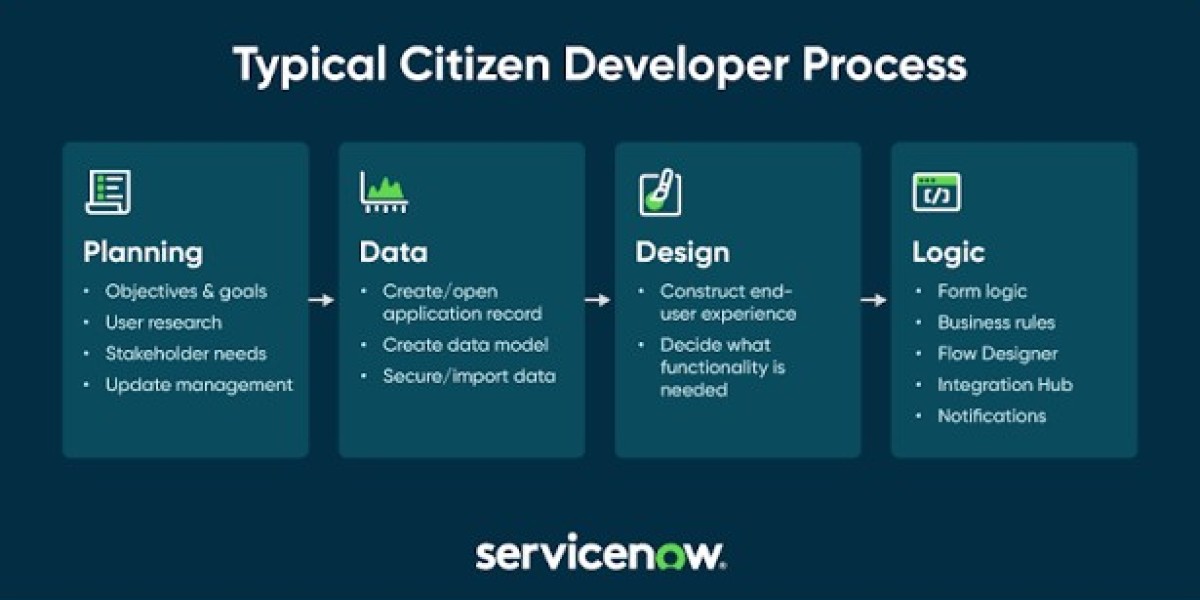


Businesses are constantly looking for better ways to improve productivity, simplify daily operations, and reduce their dependence on traditional software development. As companies adopt digital tools and automation, the role of the citizen developer has become increasingly important. Citizen developers help organizations create practical digital solutions without requiring extensive programming knowledge.
A citizen developer is typically a business employee who uses low-code or no-code platforms to build applications, automate repetitive tasks, and improve existing workflows. These individuals understand the challenges within their departments and can often identify useful solutions because they work directly with the processes that need improvement.
Citizen development is changing how organizations approach digital transformation. Instead of relying entirely on professional software developers for every internal application, businesses can empower employees to create simple solutions while maintaining appropriate IT oversight.
Understanding citizen development can help business owners, managers, and employees recognize opportunities to improve operations, reduce manual work, and build more flexible digital workplaces.
What Is a Citizen Developer?
A citizen developer is a person who creates business applications or automated workflows using approved development tools without having formal software engineering experience. These individuals usually work outside traditional IT departments but contribute to digital innovation within their organizations.
For example, a sales employee might create an application to track customer inquiries, while a human resources professional could build a workflow for managing employee onboarding. Similarly, an operations manager might automate approval requests to reduce paperwork and improve communication.
Citizen developers typically use visual interfaces, reusable components, templates, and drag-and-drop features instead of writing extensive code. These capabilities make application development more accessible to people who understand business processes but do not have specialized programming skills.
However, citizen development does not mean that technical knowledge is unnecessary in every situation. Employees still need to understand their requirements, data handling responsibilities, security policies, and the limitations of their chosen platforms.
Why Is Citizen Development Important?
Traditional software development can require significant time, specialized expertise, and coordination between business departments and technical teams. Although professional developers remain essential for complex systems, not every business problem requires a completely customized application.
Citizen development helps close the gap between business needs and available technical resources.
Faster Business Solutions
Employees often understand their daily challenges better than anyone else. When they have access to suitable development platforms, they can create solutions that address those challenges without waiting for every small request to pass through a lengthy development process.
This can help teams respond more quickly to changing business requirements.
Reduced Manual Work
Many business processes involve repetitive activities, including transferring information between spreadsheets, sending reminders, collecting approvals, and updating records. Citizen developers can use automation tools to simplify these tasks and reduce unnecessary administrative work.
Improved Employee Productivity
When employees spend less time managing repetitive tasks, they can focus on activities that require judgment, communication, and problem-solving. Well-designed internal applications can also make information easier to access and reduce confusion between departments.
Better Collaboration Between Teams
Citizen development encourages employees and IT professionals to work together. Business teams contribute their knowledge of operational requirements, while IT teams provide guidance on security, architecture, integration, and governance.
This collaboration can lead to more useful applications and better adoption across the organization.
Greater Digital Innovation
Employees who can experiment with approved tools may discover opportunities to improve existing processes. These small improvements can support broader digital transformation initiatives when they are evaluated, documented, and scaled appropriately.
What Does a Citizen Developer Do?
The responsibilities of a citizen developer depend on the organization, department, and tools available. Some focus on building simple applications, while others concentrate on workflow automation or reporting.
Common responsibilities include:
Identifying repetitive tasks and inefficient business processes.
Gathering requirements from colleagues and managers.
Creating simple applications with low-code or no-code platforms.
Automating notifications, approvals, and routine activities.
Connecting approved data sources and business tools.
Testing applications before introducing them to users.
Collecting feedback and improving application usability.
Documenting workflows and explaining how solutions operate.
Following company policies for privacy, security, and data access.
Working with IT professionals when technical support is necessary.
Citizen developers should also recognize when a project requires professional software engineering. Applications involving sensitive information, complex integrations, critical business operations, or demanding performance requirements may need specialist involvement.
Citizen Developer vs. Professional Developer
Citizen developers and professional developers both contribute to business technology, but their roles are different.
A citizen developer usually focuses on solving departmental problems through accessible development platforms. Their strength is often their practical understanding of business operations and the needs of end users.
A professional developer typically has deeper expertise in programming languages, software architecture, databases, testing methods, system integrations, and application security. Professional developers can create complex systems and manage technical requirements that extend beyond the capabilities of standard low-code platforms.
Citizen developers are particularly useful for straightforward internal applications, approval processes, task automation, and departmental reporting. Professional developers are generally better suited to complex enterprise systems, specialized software products, and applications with demanding technical requirements.
These roles are complementary rather than competitive. Citizen developers can handle suitable business-led projects, allowing IT specialists to concentrate on complex technical challenges and strategic development work.
Tools Used by Citizen Developers
Citizen developers rely on platforms that simplify application creation and workflow automation. The right choice depends on an organization's existing technology, security requirements, budget, and business objectives.
Low-Code Development Platforms
Low-code platforms provide visual development environments with reusable components and limited coding requirements. They allow users to create forms, dashboards, applications, and business workflows while offering opportunities for customization when needed.
These platforms are useful when a business needs more flexibility than a basic template can provide.
No-Code Application Builders
No-code tools allow users to create applications through visual interfaces, configurable settings, and prebuilt components. They are particularly useful for straightforward business applications that do not require extensive customization.
Employees can often create prototypes quickly and refine them based on feedback from actual users.
Workflow Automation Tools
Workflow automation platforms connect business applications and perform actions when specific conditions are met. For example, a workflow might notify a manager when a request is submitted or update a record after an approval is completed.
Automation can reduce repetitive work and improve consistency across business processes.
Reporting and Dashboard Tools
Citizen developers may also use re






