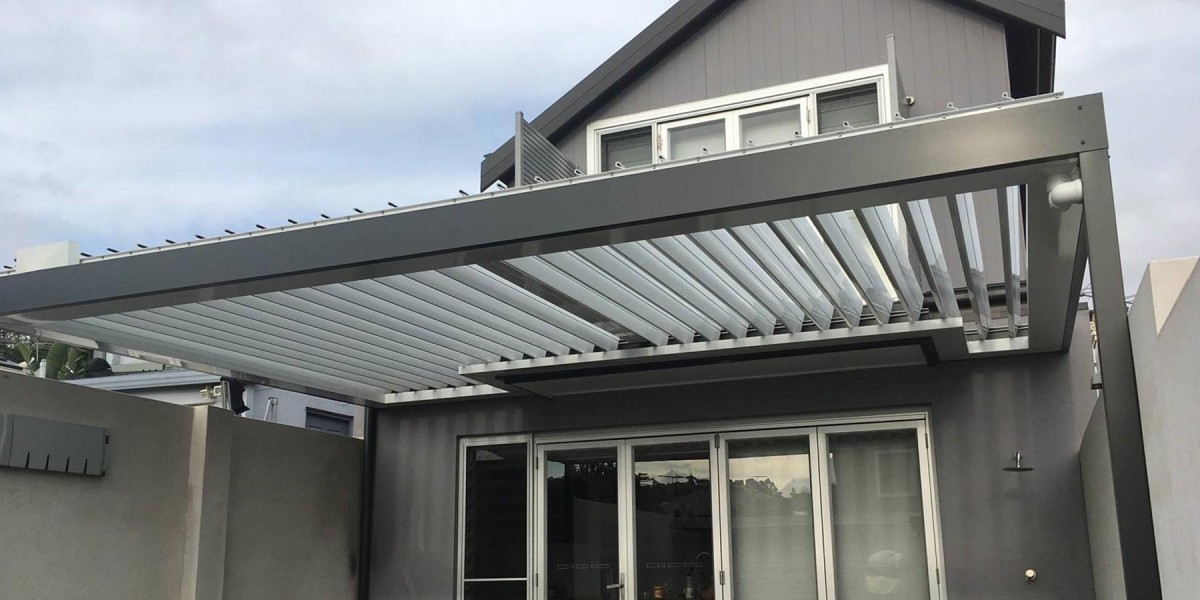


People who have set up patios across Sydney and Queensland for years know home trends come and go. However, automated outdoor living is one area where the tech has finally caught up with the sales pitch. A motorised louvred roof used to mean a basic wall switch hooked up to an inline motor that grinded to a halt every time a bit of salt spray got into the track. Fast forward to 2026, and the shift to smart automation – where your pergola adjusts itself based on real-time BOM weather feeds or smartphone triggers. This has completely changed how outdoor spaces are now built or designed.
This has resulted in huge convenience, but this convenience comes with some trade-offs. Between app setups, handheld remotes and automated weather sensors, homeowners constantly misjudge what they actually need versus what just looks good in a showroom.
For Australian homeowners and small businesses, the real question is not whether a louvred roof can be automated. It is which level of automation suits the site, weather, users, and budget.
What Are You Actually Paying For?
Smart louvred roof automation can range from a motor and handheld remote to systems with smartphone control, timers, and rain-sensor controls. A remote can be practical for a family patio, as it is immediate, familiar and independent of finding a phone.
On the other hand, app control becomes more useful when the roof is part of a smart-home setup or the owner wants to operate it remotely. Then, there are automatic sensors to solve another problem. For example, rain sensors can close the roof when conditions change, and this matters more when a patio is unattended.
The catch here is that these sensors need sensible positioning, maintenance and a control system that responds predictably. Therefore, it's recommended to start with how the space is used, and not the longest feature list. The reason is simple: more automation means more hardware, wiring, settings and potential points of failure. A high-quality motorised patio roof should be convenient without becoming something the owner troubleshoots every few weeks.
The Australian Weather Test
Automation makes the most sense when the roof has to respond to changing conditions. A hot afternoon followed by a quick storm is familiar Australian weather, and in this situation, automation can close the roof without someone having to race outside.
The bigger issue is designing the roof and controls together. Australian government energy-related rules recommend external shading to manage solar heat gain with the right approach depending on climate and orientation. These rules also recognise pergolas and adjustable shading as useful tools in suitable climates. However, this does not guarantee energy savings, as elements like orientation, glazing, walls, ventilation and occupant behaviour affect the result. When comparing the best motorised opening louvred roof systems, it's important to ask a better question than "How Smart Is It?" Homeowners should rather ask: What Problem Will Automation Solve Here?
Rain Sensors Cannot Fix Poor Louvred Roof Design
A rain sensor is useful, but it cannot compensate for poor design of your louvred roof system. Drainage will matter the most, and similarly, gutters, falls, outlets, overflow arrangements and the discharge point need to suit the structure and site. The National Construction Code (NCC) provisions address weatherproofing and drainage, including measures intended to prevent water penetration and damage. This matters a lot when a louvred roof connects to an existing house or commercial building because water can be redirected towards new concentration points.
Homeowners should understand very clearly that sensor closing is not a substitute for weather judgement. Wind, debris and power interruptions can affect automated operation on a significant basis. One more very important point to keep in mind is that the best automation is not the system with the most controls. It is the system that removes the right points of friction without creating new ones.
Coastal Exposure Changes The Conversation
Coastal Australia is brutal on outdoor structures, and salt-laden air and humidity make material and hardware selection more important than the app interface. Marine-grade aluminium louvres can be relevant in exposed locations, but the whole assembly deserves attention. Critical components like fasteners, brackets, motors, wiring, seals and drainage components should all be considered during decision-making for louvred roof systems as well as covered walkways in Australia.
This is where chasing the cheapest smart app-controlled louvred roof cost can become a false economy. Saving on the control package means very little if a coastal installation later develops hardware or maintenance problems. This is a serious issue for any small business owner, as downtime can have direct operational consequences when an outdoor dining or customer area relies on the roof.
What About The Cost In 2026?
There is no useful single national figure for smart louvred roof automation, and the final cost depends on –
Roof size
Structural work
Motorisation
Electrical requirements
Sensors
Access and installation complexity
Apart from this, the existing structures can add hidden work, and hence, rather than asking only for a system price, buyers should get the automation components identified separately. This means they should ask for the following:
Which controls are included?
Is app access standard or an upgrade?
What sensors are included?
What happens if Internet connectivity is unavailable?
Is electrical work included?
What maintenance does the system require?
Which components are covered by warranty?
The answers to these questions will make it easier to compare the available quotes properly.
App, Remote, or Both?
For many residential jobs, "BOTH" is a sensible middle ground, as the remote provides quick local control, while the app adds convenience where remote access, scheduling or integration is genuinely useful. A rain sensor can further handle a specific weather-response task. However, it's important to remember that not every patio needs every feature. If the roof is five steps from the kitchen and used mainly on weekends, complex automation may add cost without much value.
So, Which Control Setup Should You Actually Pay For?
If you want a straight answer for featured snippet value:
Best Control Setup For Most Australian Homes In 2026:
Primary Control: Handheld RF remote with 2-4 channels — fastest, most reliable, works without Internet
Secondary Control: Smartphone app for scheduling and remote access when away from home
Non-Negotiable Safety: Automatic rain sensor + wind sensor with auto-close and delay
Coastal or Commercial: Marine-Grade aluminium louvres and IP65 motor housing, not powder-coated steel
Where Covered Walkways Are Different?
The same thinking applies to covered walkways Australia projects, where weather protection and pedestrian movement can matter more than smart-home convenience. A walkway serving a school, workplace or public-facing site is part of broader circulation and therefore, drainage, clearance, lighting, columns and maintenance may matter more than phone or remote control.
The equation is simple to understand: automation should follow operational requirements, not lead them.
Before Specifying A Smart Louvred Roof
Before comparing brands or control packages, homeowners should check the following five things:
Site Exposure: Sun, rain, wind and coastal conditions.
Roof Configuration: This includes assessment of the span, drainage, connections and structural requirements.
Daily Use: Who operates it, how often and from where.
Control Needs: Remote, app, sensors or a combination.
Maintenance: Access to motors, sensors, wiring and drainage.
FAQs
Do I Need Council Approval For A Smart Louvred Roof In NSW?
Most under 25sqm in residential zones is CDC, but over that or in Heritage/BAL areas needs DA. Always get engineering and electrical certificates. Your louvred roof supplier should handle paperwork.
Is App Control Reliable During Storms Or NBN Outages?
The app needs Wi-Fi, so it can lag when NBN drops. RF remote and automatic sensors work locally, so the roof still closes. The redundancy is essential in storm season.
How Much Does A Smart Louvred Roof Cost In 2026?
A base 6x4m motorised roof starts around $20k in Sydney. Add $1.8k-$2.8k for app and sensors.
Are Rain Sensors Worth It Or Just A Gimmick?
Absolutely worth it for Australian weather. They auto-close before furniture gets soaked and stop you sprinting outside. Just keep the sensor clean and mount it correctly.
What's Better For Coastal Homes — Aluminium Or Steel Louvres?
Marine-grade aluminium every time. Steel corrodes within 2-3 years near salt air, even powder-coated. Aluminium costs more upfront, but saves replacement drama.
Can I Retrofit App Control To An Existing Motorised Patio Roof?
Sometimes yes, if the motor is compatible and has dry-contact inputs. Many older systems need a new controller and wiring. Get a sparky to check the motor brand first.
How Long Do Motors And Remotes Actually Last?
Good IP65 motors last 10-15 years with service. Remotes last 3-5 years if kept out of the sun. Batteries and seals are the usual failure points.
Final Words
If you're speccing a roof this year, spec it like you'll live with it for 15 years, not like you're selling the house next month. Get the marine-grade frame, get the remote as primary, add an app and rain sensing if you actually need remote access. Get everything in writing — motor brand, warranty, who does the electrics.
If you're comparing quotes, ask to see a working display close in heavy rain. That tells you more than any brochure ever will.






