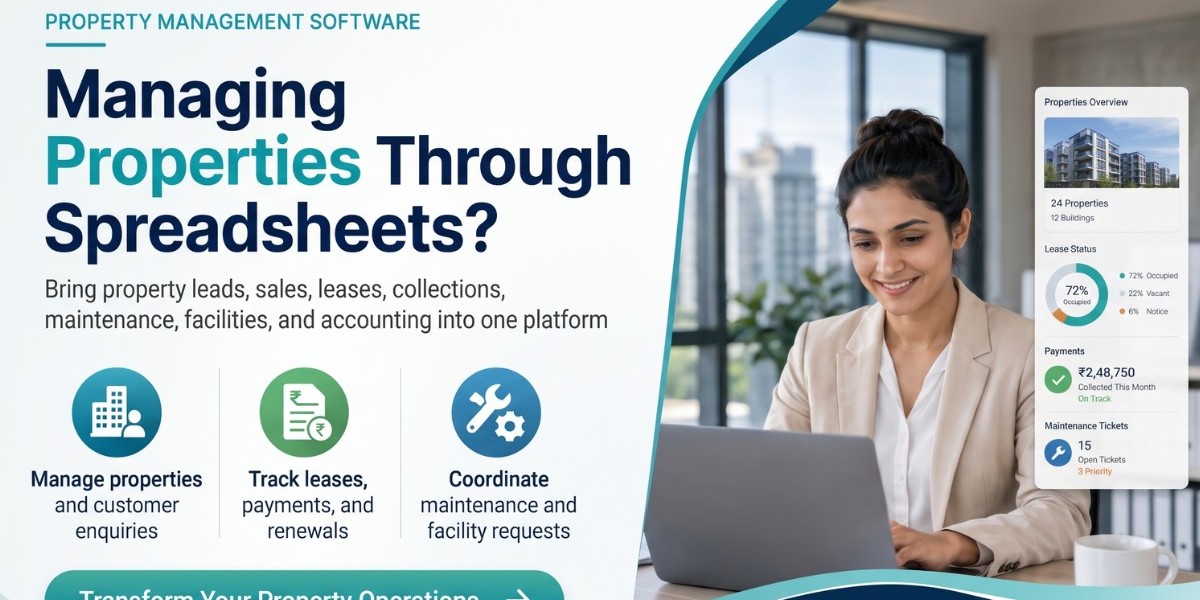


The UAE real estate market includes residential apartments, villas, commercial buildings, holiday homes, and large property portfolios. Managing these properties involves more than collecting rent. Property owners and managers must coordinate tenant communication, lease renewals, maintenance requests, payment records, property documents, and financial reporting.
When these activities are handled through spreadsheets, emails, messaging apps, and separate accounting tools, information can become difficult to track. Missed renewal dates, delayed maintenance, inconsistent records, and manual reporting can affect daily operations.
Property management software in UAE helps bring these activities into one organised system. Depending on the platform, it can support rental administration, tenant records, maintenance workflows, financial tracking, and property-level reporting.
However, not every solution suits every business. A small landlord managing two apartments has different requirements from a real estate company overseeing hundreds of residential and commercial units. Understanding the available features and your operational needs is essential before choosing a system.
What Is Property Management Software?
Property management software is a digital platform that helps property owners, landlords, and real estate managers organise and monitor their property-related activities.
Instead of maintaining separate records for each building, tenant, payment, and maintenance request, users can manage relevant information through a central platform. The available functions vary by provider, but common features include property listings, tenant management, lease tracking, rent records, maintenance coordination, and financial reporting.
For businesses operating in the UAE, the software should also fit local rental practices, business processes, and documentation requirements. Depending on the portfolio, this may include support for different currencies, Arabic and English communication, relevant tenancy documentation, and integrations with existing accounting or business systems.
The objective is straightforward: reduce repetitive administrative work, improve record accuracy, and make property information easier to access.
Why Property Management Software in UAE Matters
Property management becomes more complicated as the number of units, tenants, and service requests increases. Manual processes that work for a few properties can become difficult to maintain across multiple buildings or locations.
1. Centralised Property and Tenant Records
Property managers often need to access tenant contact details, tenancy agreements, payment histories, property information, and renewal dates. Keeping these records in different files makes retrieval slower and increases the possibility of errors.
A centralised system allows authorised users to access relevant records from one place. Managers can review property details, identify upcoming renewals, and check tenant information without searching through multiple spreadsheets.
2. Better Rent and Payment Tracking
Rental administration involves monitoring expected payments, recording received amounts, identifying outstanding balances, and maintaining financial histories.
Property management software can organise these records and, where supported, automate reminders and payment-status updates. This helps managers identify overdue payments earlier and communicate with tenants more consistently.
Automated tracking does not guarantee that rent will be collected on time, but it can reduce the administrative effort required to monitor payments.
3. More Efficient Maintenance Coordination
Maintenance requests can arrive through calls, emails, messaging apps, or conversations with building staff. Without a consistent process, requests may be overlooked or assigned without clear deadlines.
A suitable platform can record reported issues, assign tasks, track progress, and maintain a history of repairs. Property managers can then review outstanding work and identify recurring maintenance problems.
4. Improved Reporting and Decision-Making
Property owners need reliable information to understand rental income, operating expenses, vacancy levels, and maintenance costs.
Reporting tools can bring these figures together, depending on the system's capabilities and the quality of the data entered. This helps decision-makers compare properties, investigate unexpected expenses, and plan maintenance budgets.
Essential Features to Look for in Property Management Software
The best solution is not necessarily the one with the longest feature list. It is the one that handles your most important workflows accurately and consistently.
Property and Unit Management
Look for tools that organise multiple properties, buildings, units, ownership details, occupancy status, and property documents. If you manage both residential and commercial spaces, confirm that the system supports the different information and workflows each property type requires.
Tenant and Lease Management
Tenant management should support contact records, lease information, agreement documents, renewal dates, and relevant communication histories. Renewal alerts can help managers prepare for expiring agreements rather than relying on manual calendar checks.
For UAE operations, assess whether the platform supports your required tenancy documentation and applicable processes. Confirm specific integration or compliance capabilities directly with the provider.
Rental and Financial Management
Useful financial features include rent schedules, payment records, outstanding balance tracking, expense categorisation, and property-level reports.
If the software includes accounting functions, examine whether it supports your invoicing, approval, tax, and reporting requirements. Businesses already using accounting software should check whether reliable integration is available to avoid entering the same transactions twice.
Maintenance and Vendor Management
Maintenance features should allow users to log issues, assign responsibilities, set priorities, monitor progress, and record completed work. Vendor records and expense histories can also help managers understand repair costs across their portfolios.
Document Management and Notifications
A document management feature can help organise leases, invoices, inspection records, and maintenance documents. Automated notifications may cover upcoming renewals, payment reminders, and pending tasks.
Check access permissions, document security, backup arrangements, and how the provider handles sensitive tenant information.
Dashboards and Reports
Dashboards should show information relevant to daily decisions rather than simply displaying large amounts of data. Useful indicators may include occupied units, upcoming renewals, outstanding payments, open maintenance requests, and rental income.
The ability to filter reports by property, unit, date, or portfolio can make the system more useful as operations expand.
How to Choose the Best Property Management Software UAE Businesses Need
Searching for the best property management software can produce many options, but a popular product is not automatically the right fit for your business.
Use the following criteria to evaluate potential solutions.
1. Define your property portfolio. List the number of units, property categories, locations, and users who will access the system. Identify whether you manage long-term rentals, commercial leases, serviced apartments, or holiday homes.
2. Map your current workflow. Document how you handle rent collection, lease renewals, maintenance, tenant communication, and reporting. Identify the tasks that consume the most time or produce frequent errors.
3. Prioritise essential features. Separate must-have functions from optional features. For example, a company managing commercial buildings may prioritise lease administration and operating expenses, while a holiday-home operator may need booking calendars and housekeeping coordination.
4. Verify UAE-specific requirements. Check support for your preferred currency, tenancy documentation, language requirements, accounting workflows, and applicable local processes. Do not assume that a platform is compliant simply because it is marketed to UAE businesses.
5. Test integrations and usability. Ask whether the software connects with your accounting tools, payment providers, communication systems, or booking platforms. Request a demonstration using realistic examples from your business.
6. Compare the total cost. Review subscription fees, onboarding, data migration, user limits, additional modules, support, and future upgrades. A low initial price may not represent the lowest overall cost.
7. Check security and support. Review access controls, backup policies, data export options, and support availability. Make sure you can retrieve your business records if you later change providers.
When evaluating the best property management software UAE 2026 options, compare current product capabilities, pricing, and support terms directly with vendors. A meaningful comparison should be based on verified features rather than rankings alone.
Property Management Software for Different Business Types
Property management requirements vary according to the properties being managed and the people responsible for daily operations.
Property Management Software for Small Landlords
Small landlords may need a straightforward way to track a few rental units, tenant details, lease expiry dates, rent payments, and repair requests.
For these users, ease of use and predictable pricing may matter more than advanced automation. A system with unnecessary modules can add cost without solving a real operational problem.
Property Management Software for Airbnb and Holiday Rentals
Property management software for Airbnb and other short-term rentals may need booking calendars, reservation management, guest communication, housekeeping schedules, and channel integrations.
These requirements differ from conventional long-term rental management. Before choosing a platform, verify whether it supports the booking channels you use and whether calendar updates can be synchronised reliably.
Property Management Software for Hotels
Hotels generally require specialised hospitality functions, including room inventory, reservations, guest check-in and check-out, housekeeping, and potentially front-desk and revenue management.
A conventional property management system may not provide all these capabilities. Hotels should evaluate hospitality-focused platforms or confirm that the required hotel operations are explicitly supported.
Software for Real Estate and Commercial Property Companies
Companies managing larger residential or commercial portfolios may need multi-property reporting, role-based access, lease administration, expense tracking, approval workflows, and integrations with accounting or enterprise systems.
Solutions such as PACT REVENU can be included in an evaluation where the business needs connected operational and financial workflows. The appropriate choice depends on the specific modules available, the company's requirements, and the results of a practical demonstration—not the brand name alone.
Common Mistakes to Avoid When Selecting Property Management Software
One common mistake is choosing software based only on price. An inexpensive system may lack essential features, require manual workarounds, or impose additional charges as the portfolio grows.
Another mistake is assuming that every property management platform supports short-term rentals, hotels, residential leases, and commercial properties equally well. These are different operating models, and feature availability must be verified.
Businesses also risk overlooking data migration. Existing tenant records, contracts, payment histories, and property documents need to be transferred accurately. Ask the vendor how migration will work and how data quality will be checked before switching systems.
Finally, do not ignore staff adoption. A system with advanced features can fail to deliver value if employees find it difficult to use or continue maintaining separate records outside the platform. A structured onboarding process and clear internal procedures are important for successful implementation.
Frequently Asked Questions
1. What is property management software in UAE used for?
Property management software in UAE helps landlords, property managers, and real estate companies organise property records, tenant information, lease renewals, rent tracking, maintenance requests, and financial reports. Available features depend on the selected platform.
2. Which is the best property management software in UAE?
There is no single best option for every business. The right platform depends on portfolio size, property type, required features, integrations, budget, and local operational requirements. Compare vendors using the same criteria and test their systems before making a decision.
3. Is property management software suitable for small landlords?
Yes. Small landlords can use property management software to track rental payments, manage tenant records, monitor agreement expiry dates, and organise maintenance requests. A simple, affordable platform may be sufficient for a small portfolio.
4. Can property management software manage Airbnb rentals?
Some platforms support short-term rental operations, including booking calendars, guest communication, housekeeping, and channel integrations. However, these features are not available in every property management system, so confirm support for your booking channels before purchasing.
5. How much does property management software cost in UAE?
Pricing varies by provider, number of units, users, selected modules, implementation requirements, and support arrangements. Request a quotation that includes setup, migration, integrations, recurring fees, and any additional charges to understand the total cost.
6. What should UAE businesses check before buying property management software?
Businesses should evaluate property and tenant management, rent tracking, maintenance workflows, financial reporting, document security, integrations, and support. They should also verify the system's suitability for relevant UAE rental processes and their own documentation requirements.
Conclusion
Choosing property management software in UAE requires a clear understanding of how your properties are managed, which tasks create the most administrative work, and what information you need to make better decisions.
A small landlord may need reliable rent tracking and renewal reminders, while a large real estate company may require multi-property reporting, maintenance coordination, and financial integrations. Short-term rentals and hotels have additional requirements that should be evaluated separately.
Start by documenting your workflows, prioritising essential features, comparing the total cost, and testing shortlisted platforms with realistic scenarios. Verify local requirements and integration claims before committing to a contract.
The goal is not to buy the software with the most features. It is to select a system that fits your portfolio, improves daily operations, and remains practical as your property management needs change.







