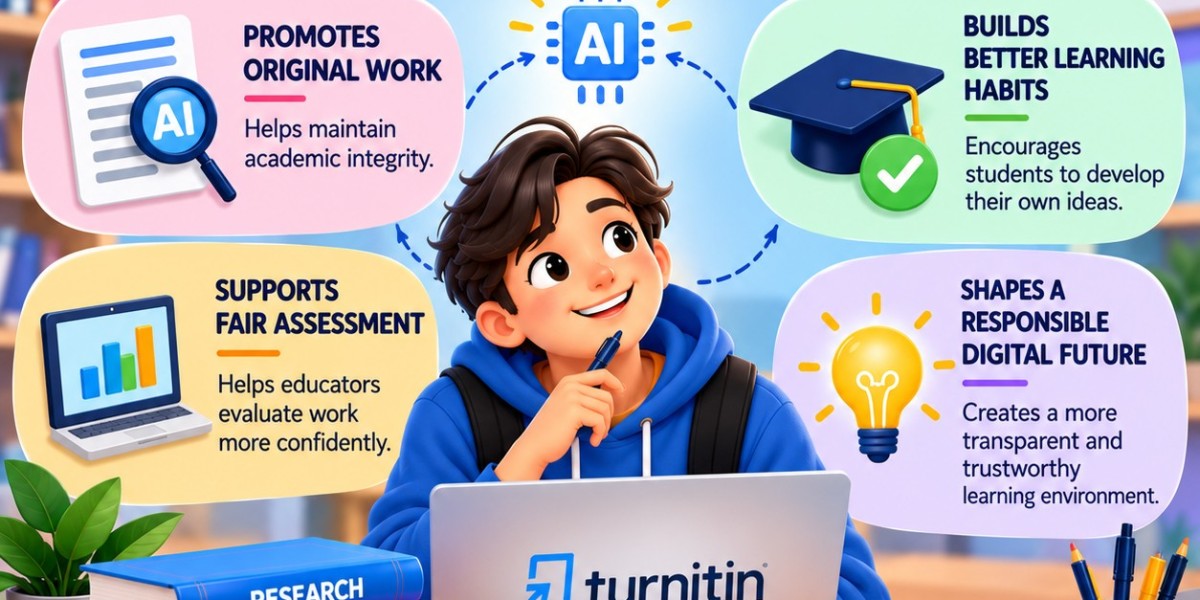


Digital technology is changing how students learn, research, and complete academic assignments. Artificial intelligence tools can help learners explore unfamiliar topics, organise information, and improve their understanding of complex subjects. At the same time, educational institutions are developing ways to maintain academic standards and encourage responsible technology use. The Turnitin AI Detector is part of this changing educational landscape.
Understanding its purpose can help students and educators make informed decisions about AI-assisted learning while keeping independent thinking and academic integrity at the centre of education.
The Growing Role of AI in Education
Artificial intelligence has introduced new ways for students to approach their studies. Learners may use AI-powered tools to brainstorm essay topics, summarise difficult concepts, or create study plans. These features can make learning more accessible when students use them appropriately.
However, AI-generated information is not always accurate or complete. Students must verify facts, consult reliable sources, and develop their own understanding before using information in an assignment. Technology should support the learning process rather than replace critical thinking.
Understanding Turnitin AI Detector
The Turnitin AI Detector is designed to identify text that may have been generated by artificial intelligence. Educators may use its results as one source of information when reviewing written assignments.
It is important to understand that AI detection is not infallible. A detection result does not automatically prove that a student has violated academic rules. The results require careful interpretation and should be considered alongside relevant context, institutional policies, and other evidence.
This balanced approach helps prevent students and educators from treating automated results as unquestionable conclusions.
Encouraging Independent Learning
Independent learning remains essential even as AI becomes more common in education. Students need to practise evaluating information, constructing arguments, and expressing their understanding in their own words.
One useful approach is to begin an assignment by reviewing the question and preparing a basic outline. Students can then gather credible academic sources, identify important arguments, and develop a draft based on their research.
If AI assistance is permitted, learners should use it within their institution's guidelines and remain responsible for the final submission. Keeping notes and drafts can also help them understand how their ideas develop throughout the writing process.
Preparing Students for Responsible Technology Use
Educational institutions can help students understand AI by communicating clear policies and explaining acceptable uses. Students should know whether AI tools can be used for brainstorming, grammar suggestions, research assistance, or drafting.
Teachers can also encourage students to explain their reasoning, evaluate evidence, and reflect on their research decisions. These activities help learners build practical skills that remain valuable beyond university.
Conclusion
The Turnitin AI Detector reflects the wider changes taking place in digital education. Although AI detection can contribute to assignment reviews, it should not replace human judgment or meaningful assessment. By combining responsible technology use, independent thinking, and clear academic policies, students and educators can adapt to changing educational expectations while maintaining the value of genuine learning.






