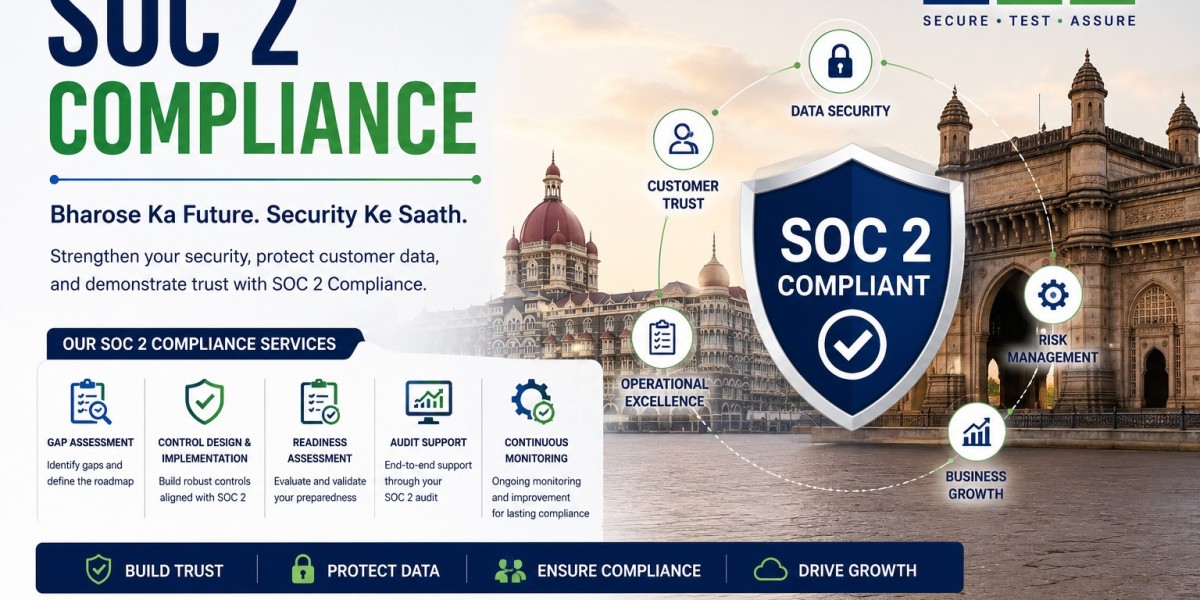


SOC 2 Compliance Checklist for Indian Companies
As Indian businesses continue to expand into global markets, customers and partners increasingly expect organizations to demonstrate strong information security practices. Whether you're a startup offering cloud-based solutions, an SME managing sensitive customer information, or an enterprise serving international clients, achieving SOC 2 Compliance has become an important milestone for building trust and improving business credibility.
SOC 2 is widely recognized as a leading framework for evaluating how organizations protect customer data through effective security controls and operational processes. Preparing for a SOC 2 Audit requires more than implementing technical safeguards it involves creating documented policies, establishing governance practices, and maintaining evidence that controls operate effectively over time.
This checklist outlines the essential steps Indian companies should follow to prepare for SOC 2 Compliance and improve their overall security posture.
Understanding SOC 2 Compliance
SOC 2 is a security framework developed by the American Institute of Certified Public Accountants (AICPA). It assesses how organizations manage customer information based on the Trust Services Criteria, which include:
- Security
- Availability
- Processing Integrity
- Confidentiality
- Privacy
Unlike regulatory standards that prescribe fixed technical controls, SOC 2 focuses on whether an organization's controls are appropriately designed and consistently followed.
Companies pursuing SOC 2 Compliance typically undergo either a Type I or Type II audit, depending on customer expectations and business objectives.
Why SOC 2 Compliance Matters for Indian Companies
Many Indian startups and technology companies work with clients across North America, Europe, and other international markets where SOC 2 reports are frequently requested during vendor evaluations.
Achieving SOC 2 Compliance provides several business advantages, including:
- Increased customer confidence
- Faster enterprise sales cycles
- Stronger cybersecurity practices
- Improved operational governance
- Better risk management
- Enhanced market competitiveness
For organizations handling confidential customer data, compliance demonstrates a proactive commitment to information security.
SOC 2 Compliance Checklist
Preparing for a successful SOC 2 Audit involves multiple technical, administrative, and operational activities. The following checklist provides a structured approach for Indian businesses.
Define the Audit Scope
Begin by identifying the systems, applications, cloud infrastructure, and business processes that fall within the scope of the audit.
Clearly defining the audit boundary helps reduce unnecessary complexity and ensures compliance efforts remain focused on relevant environments.
Identify Applicable Trust Services Criteria
Not every organization requires all five Trust Services Criteria.
Security is mandatory for every SOC 2 engagement, while Availability, Processing Integrity, Confidentiality, and Privacy are included based on the services offered and customer requirements.
Selecting the appropriate criteria ensures your compliance program aligns with business operations.
Conduct a Gap Assessment
Evaluate your existing security controls against SOC 2 requirements.
A gap assessment helps identify weaknesses in documentation, technical controls, employee processes, and governance practices before remediation begins.
Organizations often discover gaps related to access management, logging, vendor oversight, and incident response.
Create Security Policies and Procedures
SOC 2 Compliance requires documented policies covering key operational areas.
Common policy documents include:
- Information security policy
- Access control policy
- Password management policy
- Backup and recovery policy
- Incident response plan
- Business continuity plan
- Vendor management policy
- Change management policy
- Asset management policy
- Acceptable use policy
These documents should accurately reflect how security controls operate within the organization.
Implement Strong Access Controls
User access should follow the principle of least privilege, ensuring employees only have access to systems necessary for their roles.
Organizations should implement:
- Multi-factor authentication
- Role-based access control
- User provisioning procedures
- Timely access removal for departing employees
- Periodic access reviews
Proper identity management is one of the most important aspects of SOC 2 Compliance.
Secure Cloud Infrastructure
Most Indian startups operate cloud-native environments, making cloud security a critical component of compliance.
Key practices include:
- Secure network configurations
- Firewall management
- Data encryption
- Secure storage services
- Infrastructure monitoring
- Regular vulnerability remediation
Organizations should continuously monitor cloud environments to detect unauthorized activities.
Strengthen Endpoint Security
Endpoints such as employee laptops and workstations require protection through:
- Antivirus or endpoint detection solutions
- Device encryption
- Automatic software updates
- Remote wipe capabilities
- Secure configuration management
Endpoint security helps reduce risks associated with phishing attacks and compromised devices.
Establish Continuous Monitoring
SOC 2 emphasizes ongoing security rather than one-time compliance activities.
Organizations should implement monitoring processes for:
- User authentication
- Administrative activities
- System changes
- Security alerts
- Failed login attempts
- Infrastructure events
Maintaining audit logs supports both security investigations and evidence collection during the audit process.
Develop an Incident Response Process
Every organization should have a documented incident response plan outlining how security events are identified, investigated, contained, and resolved.
The response plan should define roles, communication procedures, escalation paths, and post-incident reviews to improve future preparedness.
Manage Vendor Risks
Third-party vendors often process or access sensitive customer information.
Organizations should maintain a vendor management program that includes:
- Vendor risk assessments
- Security reviews
- Contract evaluations
- Ongoing performance monitoring
Proper oversight of external service providers strengthens overall compliance.
Conduct Employee Security Awareness Training
Employees play a significant role in maintaining information security.
Regular training should cover topics such as:
- Password security
- Phishing awareness
- Secure remote working
- Data handling practices
- Incident reporting procedures
Well-informed employees reduce the likelihood of security incidents caused by human error.
Collect and Maintain Audit Evidence
One of the most overlooked aspects of preparing for a SOC 2 Audit is maintaining evidence that controls are operating effectively.
Examples of audit evidence include:
- Access review records
- Training completion reports
- Backup verification logs
- Incident reports
- Security monitoring records
- Vulnerability scan results
- Change management approvals
Organized documentation simplifies the audit process and reduces delays.
Common Challenges During SOC 2 Compliance
Many organizations face similar challenges when implementing SOC 2 requirements.
These include:
- Limited internal security expertise
- Incomplete documentation
- Inconsistent operational processes
- Resource constraints
- Difficulty collecting audit evidence
- Lack of continuous monitoring
Addressing these issues early helps improve audit readiness and reduces remediation efforts.
Preparing for a Successful SOC 2 Audit
Preparation should begin well before the formal audit starts. Organizations should periodically review policies, verify that controls are functioning as intended, and ensure documentation remains current.
Internal reviews, regular security assessments, and ongoing employee awareness initiatives help organizations maintain readiness throughout the compliance lifecycle.
Rather than treating compliance as a one-time project, businesses should integrate security practices into their daily operations to support continuous improvement.
Conclusion
Achieving SOC 2 Compliance is an important step for Indian startups, SMEs, and enterprises seeking to strengthen information security and build trust with customers. By following a structured compliance checklist, organizations can establish effective security controls, improve governance, and prepare confidently for a successful SOC 2 Audit.
As global customers continue to prioritize data protection when selecting business partners, maintaining SOC 2 Compliance not only supports regulatory expectations but also enhances operational resilience and creates new opportunities for growth in competitive international markets.








