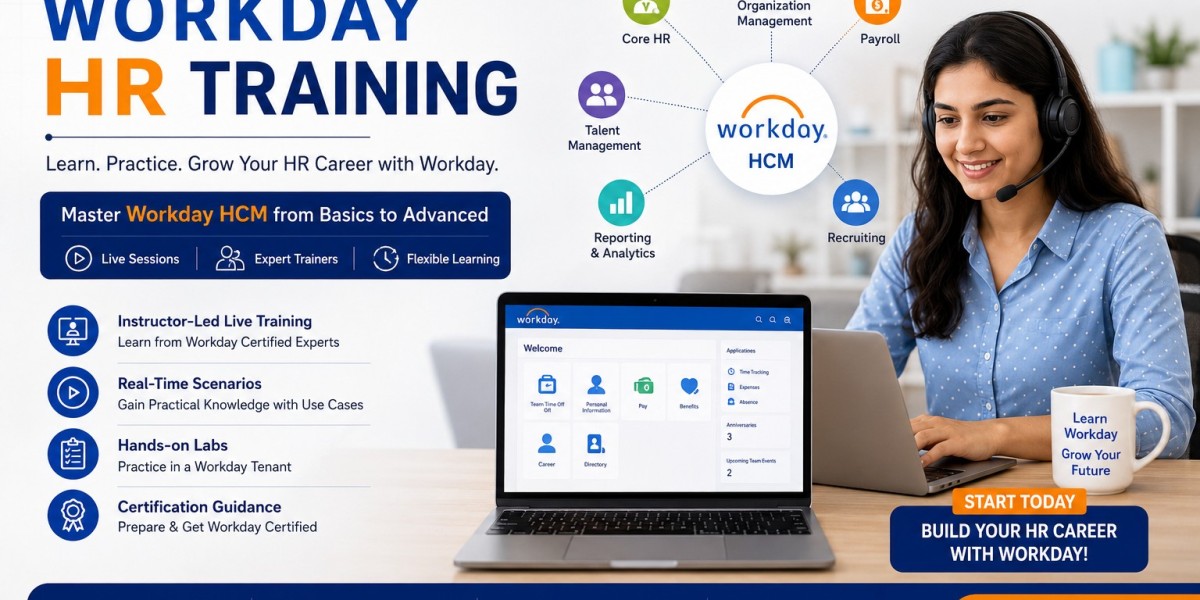


Workday HR training helps learners learn how organisations manage employee onboarding and workforce activities with a unified cloud-based HR platform. The employee lifecycle includes employee onboarding, which is an essential part of the process of familiarising new employees with company policies, job responsibilities, organisational processes and workplace expectations. Workforce management, in contrast, is a process that involves keeping track of employee information, handling organisational structures, and coordinating workforce-related activities.
Traditional onboarding is typically a process involving many documents, emails, spreadsheets and manual approvals. These techniques can cause delays and make it hard for HR teams to track progress. Workday hcm training enables organised workflows to help companies orchestrate onboarding activities and keep employee data in a central place. The training helps the learners understand the concepts of these processes and how technology can help increase consistency.
One of the first topics in Workday HR training involves the relationship between recruitment and onboarding. Once the candidate has accepted the offer and the hiring process is at the right stage, the organization needs to get ready for the employee’s arrival. This might include gathering relevant information, assigning tasks, liaising with the manager and preparing relevant employment documents. Training can help show how these activities fit into the overall employee lifecycle.
Onboarding also allows learners to look at the responsibilities of the various participants. HR teams may coordinate employment records and policies, managers may communicate expectations of the role and other departments may help prepare equipment or access to systems. An integrated process can assist relevant participants to understand their responsibilities and conduct their assigned tasks. The exact workflow depends on the organization’s configuration and policies.
Another key area is employee data management. Accurate employee records aid organisations in maintaining job information, reporting relationships, work locations and employment details. The Workday HR Training explains why these records need to be consistently maintained and how authorised users interact with the information. Learners can also gain an understanding of the importance of data privacy and control of access.
Workforce management is more than onboarding. Organisations regularly face promotions, transfers, alterations in working arrangements, manager appointments, and compensation updates. These changes often involve approvals and accurate documentation. The training explains how these events are modelled as business processes and how the system supports coordination between employees, managers and HR teams.
Managing workforce is particularly important for organisational structures. To understand who is managing employees and how responsibilities are divided, businesses need clear reporting relationships and departmental arrangements. Workday has tools for capturing organization information. Training helps learners to understand the connection between organisational structures and employee assignments, business processes, and workforce reporting.
Another key concept is workforce reporting. HR departments may need visibility into employee headcount, department breakdowns, new hires, internal transfers and changes in the workforce over time. Reporting capabilities allow authorised users to view this information and prepare insights for managers. Training may introduce learners to report navigation, common HR metrics and the importance of accurate underlying data.
Workday HR training can also help learners understand how automation supports efficiency. If there’s a defined series of steps for a business process, the system can help route tasks and approvals to the right people. This can reduce the need for manual follow-ups and make it easier to monitor progress. However, automation only succeeds if the underlying process is designed correctly and kept up to the business requirements.
Freshers get to learn about onboarding and workforce management and how practical HR operations are done. Today’s HR workers are able to tie their day-to-day work to system-driven workflows. IT professionals are able to understand how enterprise applications support employee-related processes.
Learners should look for a course that covers realistic onboarding scenarios, demos of the employee lifecycle, concepts of organisational management, and explanations of approval workflows. Don’t assume that every online course includes access to a live Workday environment. Make sure hands-on practice is included.
To summarise, Workday online training shows how to combine onboarding and workforce management with structured digital processes. Learners who understand employee records, approvals, organisational structures and reporting will have a better picture of how modern HR departments work. These skills can assist in further learning and prepare candidates for relevant HR systems and HR operations opportunities.






