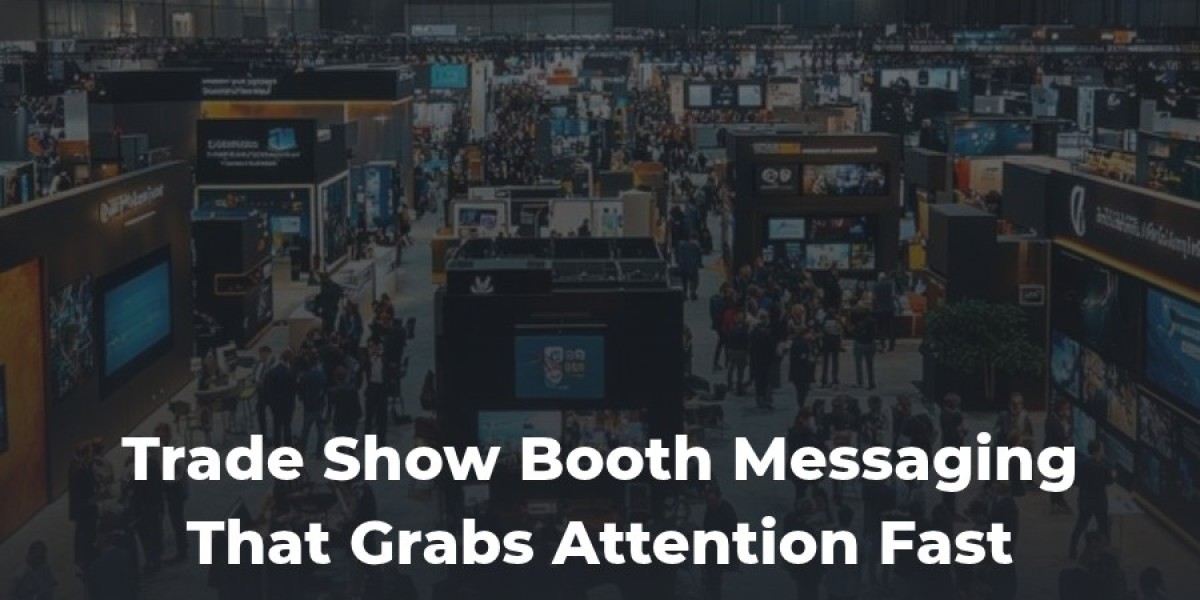


Imagine a visitor walking down a busy trade show aisle. They pass dozens of exhibitors, glance at a few displays, and stop only when something catches their attention. Your booth is one of the many competing for those few seconds.
You may have an excellent product, years of industry experience, and a solution that could genuinely help the visitor. But if your booth does not communicate its value quickly, that person may keep walking.
The challenge is not simply getting noticed. It is helping visitors understand why they should care.
Here is how to make your exhibit message clearer, more relevant, and easier to remember.
The Five-Second Test
Stand back and look at your booth as if you have never heard of your company.
Can you answer these three questions almost immediately?
What does this company offer?
Who is it designed to help?
Why should I stop and learn more?
If the answers are unclear, your booth may be communicating too much—or emphasizing the wrong things.
A common mistake is treating the booth like a company brochure. Every product, service, achievement, and brand message gets a place on the wall. The result is a display full of information but short on clarity.
Instead, identify the single most important message visitors should remember. Make that message the starting point for the entire design.
Scenario 1: Your Headline Sounds Good, but Says Very Little
Consider a booth headline such as “Innovation for a Better Tomorrow.”
It sounds positive, but it does not tell visitors what the company actually does.
Now imagine replacing it with a direct statement about the product, service, or problem the company solves. The visitor has a clearer reason to stop because the message connects to something specific.
What to do: Replace vague slogans with straightforward benefit-led messaging. Use supporting text to explain the details, rather than trying to fit your entire sales pitch into the headline.
Your booth does not need to explain everything. It needs to give the right visitor a reason to learn more.
Scenario 2: Your Booth Attracts Attention, but Visitors Do Not Know Where to Look
Large screens, bright graphics, product displays, and overhead signage can all help a booth stand out. But when every element competes for attention, visitors may not know what to focus on first.
Think of the booth as a short visual journey.
First, visitors should notice the main message. Next, they should discover the featured product or solution. Finally, they should see a clear opportunity to engage, whether through a demonstration, a conversation, or a meeting.
For companies preparing a GDC 2027 trade show booth design, this might mean giving a featured game, technology, or interactive experience priority over secondary displays. The exact presentation will depend on the exhibitor's audience and objectives, but the principle remains the same: establish a clear visual hierarchy.
Scenario 3: Your Product Is Impressive, but the Benefits Are Hidden
A product display can be visually attractive and still leave visitors wondering why they should care.
Technical specifications, product names, and feature lists are useful, but they do not always explain the value to a potential buyer.
Instead of presenting only what a product has, show what it helps customers do.
For example, a company selling industrial equipment might emphasize improved workflow, easier operation, or a specific problem the equipment addresses. A technology company might demonstrate how its solution simplifies a task that visitors already find challenging.
For exhibitors planning a Seafood Expo North America 2027 trade show booth builder project, the message might focus on product quality, sourcing capabilities, processing solutions, or another benefit relevant to the intended audience.
The most effective message depends on the customer. Start with their needs, then show how your offering responds to them.
Build Your Booth Message in Three Layers
A useful way to organize your communication is to divide it into three levels.
Layer 1: The main promise
This is the headline visitors should understand from the aisle. Keep it short, specific, and relevant to your target audience.
Layer 2: The supporting proof
Use product displays, short benefit statements, demonstrations, or graphics to show that your promise has substance. Avoid filling the booth with paragraphs that visitors are unlikely to read while walking.
Layer 3: The next step
Tell visitors how they can engage. They might try a demonstration, speak with a product specialist, scan a QR code, or arrange a meeting.
These layers should work together. If the headline attracts attention but the display does not support it, the message feels disconnected. If visitors understand the product but cannot identify the next step, an opportunity may be missed.
Give Your Graphics and Layout the Same Job
Your booth messaging and physical design should reinforce each other.
A strong headline can lose its impact if it is hidden behind furniture. A product demonstration may attract attention, but a crowded entrance can prevent visitors from approaching. Too many graphics can make even a well-written message difficult to notice.
When reviewing the design, check the following:
Is the main message visible from the aisle?
Does the featured product receive enough attention?
Can visitors approach the display without blocking others?
Is there space for a comfortable conversation?
Do the graphics and colors support the brand rather than distract from it?
Businesses considering hybrid trade show exhibits can use different elements for different purposes—for example, physical products for hands-on interaction and digital displays for information that would otherwise require additional signage.
The aim is to make every design element useful, not simply decorative.
Adapt the Message to the Audience and Location
The same booth message may not work equally well at every event. Different audiences may care about different product benefits, and the available booth space can change how information should be presented.
For example, businesses researching Trade Show Booth Design in Phoenix should consider the specific audience, venue rules, and event objectives before finalizing the display. Companies looking for a Trade Show Booth Builder in Houston should also ensure that the message, graphics, and physical layout can be delivered within the project's production and installation requirements.
A flexible approach allows exhibitors to maintain consistent branding while adjusting the emphasis for each event.
You do not necessarily need an entirely new booth each time. Sometimes, updated graphics, a revised headline, or a different featured product can make the exhibit more relevant to the audience.
Before Approving the Design, Ask One Final Question
Imagine that a potential customer has only a few seconds to look at your booth before moving on.
What is the one thing you want that person to understand?
If your team gives five different answers, the messaging probably needs more work. If everyone agrees on the main takeaway, it becomes easier to decide which graphics, products, and features deserve attention.
This simple test can help keep the design focused from the first concept through final production.
Make Every Second Count
A successful trade show booth does not need to communicate everything about your company. It needs to communicate the right thing to the right audience and make the next step easy.
Clear messaging, purposeful graphics, useful product displays, and an inviting layout can help turn a passing glance into a meaningful conversation.
Castle Exhibits helps businesses plan and deliver exhibits through design, production, graphics, shipping coordination, installation, and dismantling. Explore our trade show booth rental and other exhibit solutions at https://www.castleexhibits.us/ to start planning a booth that communicates your value clearly.






