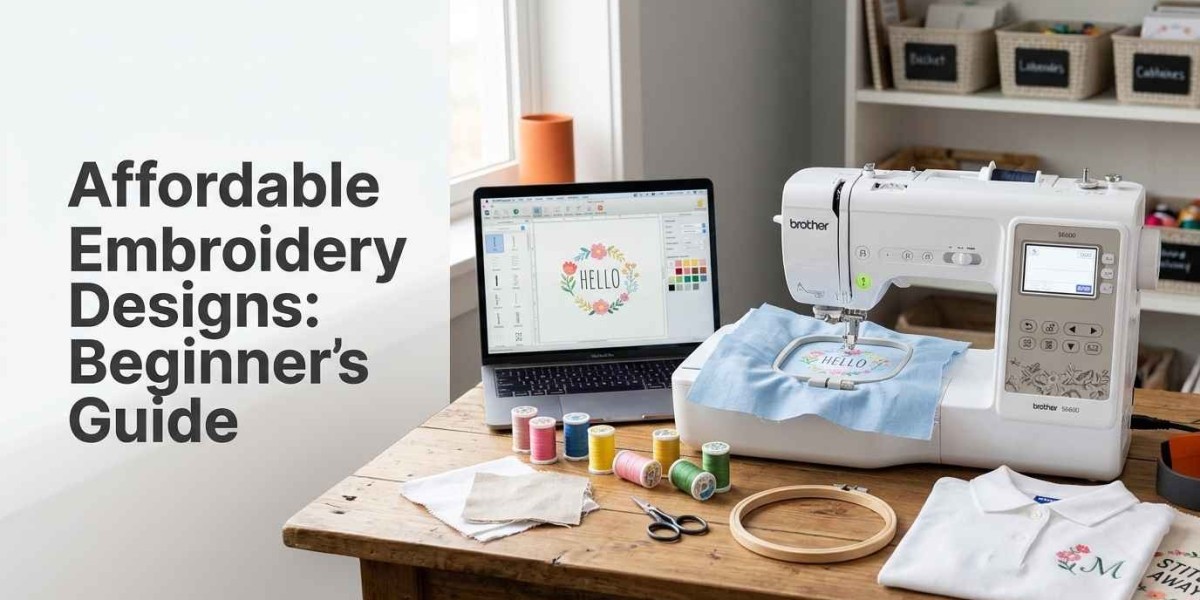


Affordable embroidery designs make it easier for beginners to start machine embroidery without spending too much on patterns, software, or custom artwork. Whether you want to personalize clothing, decorate home accessories, create gifts, or begin a small embroidery business, choosing suitable designs can help you manage costs while producing attractive results.
However, a low price does not always mean a design is a good purchase. Some inexpensive files may have poor stitch quality, limited format compatibility, unclear usage rights, or details that do not reproduce well on fabric. Beginners may also purchase designs that are too complicated for their machines or unsuitable for their intended projects.
The key is to look beyond the price and evaluate how useful a design will be for your needs. In this guide, you will learn what affordable embroidery designs are, where to find them, how to compare free and paid options, which file formats to check, and how to avoid common purchasing mistakes.
What Are Affordable Embroidery Designs?
Affordable embroidery designs are digital patterns available at a reasonable price or free of charge for use with compatible embroidery machines. These designs may include floral motifs, lettering, decorative borders, monograms, animal shapes, seasonal artwork, and patterns for clothing or accessories.
Most machine embroidery designs contain stitch instructions that tell the machine how to reproduce the artwork using thread. The file may specify stitch placement, design dimensions, color changes, and the order of stitching, depending on the format.
Affordable options are available through embroidery marketplaces, independent designers, online shops, and websites offering free downloads. Some providers also offer bundles containing multiple designs for one price.
Who Can Benefit From Affordable Embroidery Designs?
Affordable designs can be useful for several types of users.
Beginners: People learning machine embroidery can practice with simple patterns before investing in more complex projects.
Home embroidery enthusiasts: Hobbyists can personalize towels, tote bags, pillow covers, shirts, and gifts without purchasing expensive artwork for every project.
Small business owners: Embroidery businesses can use suitable designs for samples, personalized products, and selected customer projects, provided the licensing terms permit commercial use.
Craft sellers: People selling embroidered products can use properly licensed designs to develop product collections and test customer demand.
The right choice depends on your experience, equipment, project requirements, and intended use.
Benefits of Choosing Affordable Embroidery Designs
Affordable designs can help beginners manage their project budgets while gaining practical embroidery experience. They also provide opportunities to test different styles before investing in specialized artwork.
Lower Initial Costs
Beginners do not always need expensive custom designs for simple projects. A reasonably priced floral pattern, monogram, or decorative motif may be sufficient for a personal item or practice sample.
Buying designs selectively also prevents unnecessary spending on patterns you may never use.
More Design Variety
Many digital marketplaces offer collections covering different themes, sizes, and project types. A single purchase may include several related patterns, allowing you to try different looks without buying each file separately.
Before choosing a bundle, review the actual designs, available sizes, file formats, and licensing conditions.
Opportunities to Learn Machine Embroidery
Simple designs help beginners practice hooping, stabilizer selection, thread changes, and fabric preparation. As your skills improve, you can move toward more detailed artwork and complex stitching techniques.
Using affordable files for practice can help reduce the financial risk of early mistakes.
Easier Project Planning
When the design price is reasonable and the file suits your machine, it becomes easier to calculate the cost of a project. You can estimate thread consumption, fabric requirements, stabilizer costs, and production time before beginning.
Remember that the design file is only one part of the total expense. Materials, machine maintenance, and labor also affect the final cost.
Free vs. Paid Affordable Embroidery Designs
Both free and paid embroidery designs can be useful. The better option depends on the quality of the file, the intended project, the available formats, and the permissions provided by the designer.
Free Embroidery Designs
Free designs are useful for practice, personal projects, and learning how machine embroidery works. Some designers provide free samples to introduce their work or encourage customers to purchase larger collections.
Before downloading a free file, check its source, compatibility, dimensions, and usage terms. Free availability does not automatically mean the design can be used on products for sale.
A free design may also require additional testing or adjustments if it was created for a different fabric or machine.
Paid Embroidery Designs
Paid designs may offer a wider range of sizes, more detailed artwork, additional file formats, or clearer customer support arrangements. Some sellers also provide coordinated collections and instructions for particular projects.
However, a higher price does not guarantee better stitching. Review the seller's sample work, product information, licensing terms, and customer feedback where available.
Which Option Is Better for Beginners?
Free designs are a practical starting point when you want to practice without making a financial commitment. Paid designs may be more suitable when you need a particular style, reliable format options, or permission for a commercial project.
Rather than choosing solely by price, compare the file's suitability for your machine, fabric, and intended use.
How to Choose Affordable Embroidery Designs for Your Machine
Not every embroidery file works with every machine. Before purchasing or downloading a design, confirm that it meets your equipment's requirements.
Check the File Format
Different embroidery machines and software programs support different file formats. Common examples include:
PES: Used by many Brother and Baby Lock embroidery machines.
DST: Commonly used in commercial embroidery workflows.
JEF: Associated with many Janome embroidery machines.
EXP: Used in various professional embroidery systems.
VP3: Supported by selected embroidery machines and software.
Compatibility varies by model and software version, so check your machine's manual before purchasing a file.
Some sellers provide multiple formats in one package, which can be helpful if you use different machines. However, a file extension alone does not confirm that every design feature will work correctly.
Review the Design Dimensions
Check the design's width and height before ordering. Your machine has a maximum embroidery area, and the design must fit within the available hoop.
A pattern created for a large hoop may not fit a compact home machine. Although resizing may be possible in some software, significant changes can affect stitch quality and detail.
Choose a design that suits your intended project without requiring unnecessary alterations.
Confirm the Stitch Count
Stitch count gives you an indication of how much stitching the design contains. Higher stitch counts may require more thread and longer machine time, although the actual cost also depends on stitch types, density, and design dimensions.
For beginners, simple patterns with manageable stitch counts can be easier to complete and troubleshoot.
Do not assume that a lower stitch count automatically means better quality. The design must still provide suitable coverage and clear details.
Popular Types of Affordable Embroidery Designs
Choosing a design category that matches your skill level can make your first projects easier. Some patterns are suitable for quick practice, while others require careful preparation and more advanced machine handling.
Floral Embroidery Designs
<AsyncImageGroup query={["simple machine embroidered floral motif on cotton fabric","embroidered small flower design on white linen"]} aspectRatio="5:4" layout="bento" />
Floral designs include flowers, leaves, vines, and decorative botanical patterns. They work well on pillow covers, tote bags, napkins, clothing, and gifts.
Simple floral motifs are useful for beginners because they allow you to practice color changes and stitch coverage without managing too many small details.
Monogram and Lettering Designs
<AsyncImageGroup query={["embroidered monogram initials on white towel","machine embroidered name lettering on cotton fabric"]} aspectRatio="5:4" layout="bento" />
Monograms and lettering are popular for towels, bags, robes, gifts, and personalized clothing.
When choosing lettering files, check the font style, letter height, spacing, and available sizes. Very small text can become difficult to read when stitched, especially on textured fabrics.
If you need a name or set of initials that is not included in the file, confirm whether the design is editable or whether separate lettering software is required.
Animal and Children's Designs
<AsyncImageGroup query={["cute embroidered teddy bear motif on baby cotton clothing","small embroidered animal motif on fabric"]} aspectRatio="5:4" layout="bento" />
Animal designs are useful for children's clothing, nursery accessories, school bags, and personalized gifts.
Look for designs with clear shapes and suitable detail levels. Dense artwork may feel stiff on lightweight baby clothing, so fabric selection and stabilization are particularly important.
Seasonal and Holiday Designs
<AsyncImageGroup query={["small embroidered Christmas ornament motif on fabric","machine embroidered autumn leaf motif on linen"]} aspectRatio="5:4" layout="bento" />
Seasonal patterns can be used for decorations, table linens, gifts, and special-event products. Purchasing a small collection may help you prepare several related projects.
Before buying a seasonal bundle, check whether the included designs suit your machine and whether you have enough time to test and complete the projects.
Decorative Borders and Geometric Patterns
<AsyncImageGroup query={["machine embroidered decorative border on white fabric","simple geometric machine embroidery pattern on linen"]} aspectRatio="5:4" layout="bento" />
Borders and geometric motifs are useful for napkins, table runners, cushion covers, garments, and home accessories.
Check the design's repeat structure if you plan to create a long border. Repeated patterns may require careful alignment to avoid visible gaps or uneven spacing.
Where to Find Affordable Embroidery Designs
There are several ways to locate low-cost embroidery files. The best source depends on the design style, machine compatibility, support requirements, and licensing conditions.
Embroidery Design Marketplaces
Digital marketplaces often offer individual files, bundles, and collections from independent designers. Product pages may include previews, format lists, dimensions, and customer reviews.
Review these details before purchasing. A visually attractive preview does not always reveal how the design will stitch on your fabric.
Independent Embroidery Designers
Some designers sell their own collections through personal websites or online stores. Buying directly from a designer may provide access to specific styles, specialized patterns, or information about intended fabric types.
Check whether the seller offers the formats you need and explains the permitted uses of each file.
Free Design Websites
Some embroidery websites provide free samples or downloadable patterns. These can be helpful for learning and testing your machine.
Use reputable sources, scan downloaded files when appropriate, and avoid suspicious pages that request unnecessary personal information or software installations.
Design Bundles and Special Offers
Bundles can reduce the cost per design when you genuinely need several patterns from the collection. However, buying a large package solely because it is discounted may not save money if most files remain unused.
Compare the number of useful designs, format availability, licensing terms, and total price before making a decision.
How to Evaluate the Quality of an Affordable Embroidery Design
Price and appearance are only part of the decision. A suitable design must also contain workable stitch instructions and reproduce correctly on the intended material.
Examine the Preview Carefully
Look for clean shapes, readable lettering, balanced spacing, and clearly defined design elements. Check whether the preview shows the complete pattern and whether the listed dimensions match your project.
If the seller provides only a small or unclear preview, request more information before purchasing when possible.
Check the Intended Fabric
Some designs are better suited to stable woven fabrics, while others may work on knitwear, fleece, or heavier garments with suitable preparation.
If the listing specifies a recommended material, take that information into account. Designs created for one fabric may need adjustments when used elsewhere.
Review Available Sizes and Formats
Confirm that the purchase includes the size and format you need. Some sellers provide several sizes, while others offer only one version.
Also check whether the price covers the entire design collection or only a sample or individual file.
Look for Helpful Instructions
Instructions can be particularly useful for beginners. Information about hoop size, fabric preparation, stabilizers, thread colors, and stitching order can make a project easier to complete.
If the seller provides no guidance, you may need to perform additional testing before using the design on a finished product.
Tips for Getting Better Results With Affordable Embroidery Designs
Even a well-prepared file requires suitable fabric preparation and machine settings. Following a few basic practices can improve stitching quality and reduce avoidable problems.
Use the Right Stabilizer
A stabilizer supports fabric during embroidery and helps reduce movement. Tear-away stabilizers are often suitable for stable woven fabrics, while cut-away stabilizers are commonly used for stretchy materials.
Textured fabrics, such as fleece and towels, may benefit from a water-soluble topping to help keep stitches visible. Choose the stabilizer according to the fabric, design, and garment requirements.
Select Suitable Thread and Needles
Use embroidery thread and a needle appropriate for the material and machine. Inspect the needle before stitching and replace it if it is damaged or worn.
Thread quality, correct threading, and suitable tension also affect the result.
Test the Design Before Using Expensive Fabric
If you are new to machine embroidery, stitch a sample on similar material before decorating the finished item. This allows you to check the design's size, coverage, lettering, and color sequence.
Testing is especially helpful for unfamiliar files or projects involving delicate fabric.
Avoid Excessive Resizing
Changing a design's dimensions significantly can affect stitch density and detail. If a design must be much smaller or larger, use compatible embroidery software and check whether a revised version is needed.
A design that looks clear on the screen may lose detail when reduced to a small size.
Common Mistakes to Avoid When Buying Affordable Embroidery Designs
Beginners can save money by checking a few important details before completing a purchase.
Buying Without Checking Compatibility
A design may be inexpensive but unusable on your machine if the format is unsupported. Confirm the required format and hoop dimensions first.
Choosing Only by Price
A low price is less valuable if the design requires extensive corrections or produces poor results. Review the preview, seller information, and file details before deciding.
Ignoring Licensing Restrictions
Some files are permitted only for personal projects, while others allow commercial use under specific conditions. Read the license carefully if you plan to sell embroidered items.
Do not assume that purchasing a file transfers ownership of the original artwork or gives you unrestricted rights to redistribute the digital file.
Expecting Every Detail to Stitch Perfectly
Thread behaves differently from ink or pixels. Fine lines, tiny text, and crowded shapes may require simplification or a different design size.
Choose artwork appropriate for the intended embroidery area and test it before production.
Skipping Sample Testing
Going directly to a finished garment can lead to wasted materials if the file, fabric, or machine settings are unsuitable. A sample provides an opportunity to identify problems before completing the final project.
Are Affordable Embroidery Designs Suitable for a Small Business?
Yes, affordable embroidery designs can be useful for small businesses when the files meet quality requirements and the license permits the intended commercial use.
They can help businesses prepare sample products, personalize garments, develop seasonal collections, and test new product ideas without paying for custom artwork every time.
However, businesses should evaluate more than the initial file price. Consider the time needed to stitch each design, thread consumption, stabilizer costs, labor, machine maintenance, and possible rework.
When Should a Business Choose Custom Digitizing?
Ready-made designs are useful when the available artwork suits the project. Custom digitizing is more appropriate when you need a specific business logo, unique lettering, precise brand details, or a design adapted to a particular garment.
A custom file can be prepared around the required dimensions, fabric, and placement. The final result should still be tested on the intended material before large-scale production.
When comparing services, review their experience, file-format support, revision policies, and examples of completed work. The goal is to choose an option that meets your production needs without unnecessary expense.
Conclusion
Affordable embroidery designs offer beginners a practical way to learn machine embroidery, personalize everyday products, and develop new creative projects within a manageable budget. Free patterns, paid files, and design bundles each have advantages, but the best choice depends on your machine, fabric, project size, and usage rights.
Before downloading or purchasing a design, check the file format, dimensions, stitch information, preview quality, and licensing conditions. Test unfamiliar files on suitable fabric, use the correct stabilizer, and avoid resizing designs beyond what the file can support.
If you need a custom logo or a file prepared for a particular embroidery project, zdigitizing.net is one option to consider when comparing digitizing services. Choosing suitable files and preparing them carefully can help you control costs while achieving reliable embroidery results.
Frequently Asked Questions
Q1. What are affordable embroidery designs?
Affordable embroidery designs are digital patterns available at low prices or free of charge for use with compatible embroidery machines. They include floral motifs, lettering, monograms, decorative patterns, and themed artwork.
Q2. Where can beginners find affordable embroidery designs?
Beginners can look at embroidery design marketplaces, independent designer websites, reputable free-design websites, and discounted bundles. Always check the file format, dimensions, and usage terms before downloading or purchasing.
Q3. Are free embroidery designs suitable for beginners?
Yes. Free designs can help beginners practice machine setup, hooping, stabilization, and thread changes. Start with simple patterns and test each file before stitching on valuable fabric.
Q4. What file format should I choose for my embroidery machine?
The correct format depends on your machine and software. PES, DST, JEF, EXP, and VP3 are common examples, but you should confirm compatibility with your machine's documentation.
Q5. Can I sell products made with affordable embroidery designs?
You can sell embroidered products only when the design's license permits the intended commercial use. Review the seller's terms and any restrictions on finished products or digital file redistribution.
Q6. Do affordable embroidery designs always provide good quality?
No. Price alone does not determine quality. Review the design preview, stitch information, compatibility, and seller details, and test the file before using it on a finished product.
Q7. Can I resize an affordable embroidery design?
Some resizing is possible with suitable software, but major changes can affect stitch quality, density, and detail. A design created for a different size may require professional adjustment.
Q8. What stabilizer should I use with affordable embroidery designs?
The appropriate stabilizer depends on the fabric and design. Tear-away is often used with stable woven fabrics, cut-away is commonly used with stretchy knits, and water-soluble topping can help on textured materials.
Q9. Are embroidery design bundles worth buying?
Bundles can offer good value if you intend to use several included designs. Compare the total price, file formats, sizes, licensing terms, and usefulness of the collection before purchasing.
Q10. When should I choose custom embroidery digitizing instead of a ready-made design?
Custom digitizing is useful when you need a particular logo, specific dimensions, specialized lettering, or a file adapted to a certain fabric or garment. Ready-made designs are often suitable when the available artwork already meets your needs.






