

Holistic Healing Courses Online: How to Design a Personal Wellness Routine Using Reiki, Crystal Practices, Sound Meditation and Mindful Relaxation
Modern life often leaves people looking for practical ways to slow down, manage everyday stress and create more time for self-care. Between work responsibilities, family commitments and digital distractions, maintaining a consistent wellness routine can be challenging. Holistic wellness practices such as Reiki, crystal-based rituals, sound meditation and mindful relaxation offer different ways to explore calmness, self-awareness and intentional rest.
For beginners, the challenge is not simply discovering individual practices. It is understanding how to combine them into a realistic routine that fits personal preferences, available time and everyday responsibilities. A balanced wellness plan does not need to involve expensive equipment or hours of daily practice. It can begin with a few minutes of mindful breathing, a short relaxation session or a structured introduction to a new technique.
Exploring Holistic Healing Courses Online can help learners understand different wellness traditions, develop consistent self-care habits and learn how particular practices are taught. Structured learning may also be useful for people interested in exploring holistic wellness as a personal interest or a future complementary service.
The Indian Institute of Vedic Science (IIVS) offers a starting point for individuals exploring traditional and holistic learning. Prospective learners can review the available programs, compare course content and discuss their goals before choosing a learning path.
What Is Holistic Healing, and How Can It Support a Personal Wellness Routine?
Holistic wellness takes a broad view of personal well-being, considering habits, relaxation, emotional awareness, lifestyle and the ways people care for themselves. Rather than depending on one activity, a personal wellness routine may combine several practices according to individual needs.
For example, someone might begin the morning with mindful breathing, spend a few minutes journaling in the afternoon and use a guided sound meditation before bed. Another person might prefer learning Reiki techniques or incorporating crystals into a reflective ritual.
These activities can create opportunities for rest and self-awareness, but their benefits vary from person to person. Reiki, crystal healing and sound-based wellness practices should not be presented as proven treatments for medical conditions. They are not substitutes for appropriate medical care, mental health support or evidence-based treatment.
A well-designed routine should be simple enough to maintain. Learners should also consider sleep, physical activity, balanced nutrition, social connection and professional healthcare when planning their overall wellness habits.
1. Reiki: Developing a Calm and Consistent Self-Care Practice
Reiki is a Japanese-origin practice commonly described as a form of energy-based complementary wellness. Practitioners typically use gentle hand placements or hold their hands near the body during a session. Some people use Reiki as part of a relaxation ritual, while others study it as a traditional practice.
The concept of universal life energy is central to Reiki traditions, but claims that Reiki energy can diagnose, prevent or cure diseases are not scientifically established. Learners should understand the distinction between traditional beliefs, personal experiences and demonstrated clinical effects.
How Reiki may fit into a personal wellness routine
A simple session can be organised around a quiet environment, comfortable positioning and a period of focused attention. Someone exploring Reiki for personal relaxation might set aside 10–15 minutes, follow the techniques taught by a qualified instructor and reflect on how the session felt.
The purpose is to create a regular self-care opportunity rather than promise a particular physical or emotional result.
What to look for in a Reiki program
A structured reiki healing course may introduce the history of Reiki, foundational principles, hand positions, session preparation and responsible practice. Learners interested in further study should review the syllabus and understand whether the program is introductory or advanced.
Before comparing reiki healing course fees, check the course duration, live instruction, practice sessions, learning materials and certificate terms. Fees alone do not establish the quality of the teaching.
A program offering reiki healing certification should clearly explain the requirements for receiving its certificate and the organisation issuing it. Certification from a training provider does not automatically confer medical qualifications or guarantee professional recognition.
For learners who need flexible access, reiki healing certification online may be worth exploring. Confirm whether practical demonstrations, instructor feedback and supervised exercises are included.
Some students prefer interactive reiki healing classes, where they can ask questions and practise techniques under guidance. Others want to learn reiki healing at a more flexible pace. The best format depends on learning preferences, schedule and the amount of instructor support available.
People seeking the best reiki institute in delhi should compare the curriculum, trainer experience, practical learning arrangements, transparent fees and student support. Check the current location and availability of classes directly with the provider rather than relying on rankings alone.
2. Crystal Practices: Using Symbolism to Create Mindful Rituals
Crystals are used in various spiritual and wellness traditions as symbols of intention, reflection and personal meaning. Different crystals are associated with different qualities in these traditions. For example, rose quartz is often linked with compassion, while amethyst is commonly associated with calmness and reflection.
These associations are traditional or spiritual interpretations, not scientifically established properties that guarantee emotional healing, improved health or changes in another person's behaviour.
When used thoughtfully, a crystal-based ritual can serve as a reminder to pause, reflect and focus on a personal intention.
How to include crystals in a wellness routine
Choose a comfortable, quiet place and select an object that has personal meaning. You might hold it while journaling, place it near your meditation space or use it as a visual reminder to take a break.
A simple practice could involve:
Taking a few slow, comfortable breaths.
Reflecting on one intention for the day.
Spending several minutes in quiet observation.
Writing down a thought or action you want to prioritise.
The value of this activity comes from the intentional pause and personal reflection, rather than a guaranteed effect from the crystal itself.
Choosing a crystal healing course
A structured crystal healing course may cover crystal traditions, commonly used stones, symbolic associations, cleansing rituals and ways of incorporating crystals into reflective practices.
Interactive crystal healing classes may help learners discuss different interpretations and understand how practitioners organise sessions.
For flexible study, crystal healing courses online can provide access to recorded lessons or live instruction. Compare the course structure, practical activities, instructor support and certification terms before enrolling.
A crystal healing certification course should explain its learning outcomes and assessment requirements. Similarly, crystal healing certification online may be convenient for learners who cannot attend in-person sessions, but the credential's recognition should be verified independently.
Some programs offer a crystal healing diploma or a more extensive series of modules. Before selecting one, confirm what the diploma represents, who issues it and whether the course provides deeper practical training.
When reviewing courses on crystal healing, prioritise clear teaching, responsible claims and realistic expectations. The best crystal healing course for you will depend on whether you want personal enrichment, structured study or preparation for a complementary wellness role.
You may also see listings described as crystal healing courses. Compare the actual curriculum instead of assuming that similarly named programs provide equivalent instruction.
3. Sound Meditation: Creating Space for Rest and Focus
Sound meditation uses sound as a focus for attention and relaxation. Sessions may involve singing bowls, gentle instrumental music, bells, chimes or guided listening.
For some people, sound provides an accessible way to pause everyday activity and direct attention away from distractions. Experiences vary, and sound meditation should not be described as a guaranteed treatment for anxiety, insomnia, pain or other medical conditions.
How sound meditation fits into a daily routine
A beginner can start with a short session in a comfortable environment. Choose a sound that feels pleasant, keep the volume at a comfortable level and sit or lie in a safe position.
As the sound continues, notice its rhythm, duration and changes in tone. If your attention wanders, gently return to listening without judging yourself.
A short session can be used during an afternoon break or as part of an evening wind-down routine. People who are sensitive to sound should choose quieter alternatives or practise in silence.
Exploring sound healing training
A sound healing course may introduce sound-based meditation, the use of instruments, session preparation and the responsible use of sound in wellness settings.
Learners looking for a sound healing course delhi should verify current class availability, location, schedule and practical training arrangements with the provider.
A sound healing certification program should specify its syllabus, assessment process and certificate issuer. If you prefer remote learning, sound healing certification online may provide greater scheduling flexibility, although practical instruction and instrument demonstrations should be considered carefully.
A sound healing certification course may include different modules depending on the provider. Before enrolling in a certified sound healing course, ask what the certification signifies and whether it is recognised by any relevant professional body.
You may encounter a variety of sound healing certification programs. Compare their practical components, instructor qualifications, course requirements and guidance on safe sound levels.
Some learners prefer to explore sound therapy certification online because it can be studied alongside work or family commitments. However, a certificate in a complementary wellness practice should not be confused with a regulated healthcare qualification.
People searching for the best sound healing course in india should compare transparent curriculum information, instrument practice, class format and learner support rather than relying only on promotional claims.
A sound healing training retreat may offer an immersive learning environment with group sessions and dedicated practice time. Before choosing a retreat, check the instructor's background, accommodation arrangements, safety considerations and total cost.
For learners interested in sound bowls, crystal bowl sound healing training may focus on handling crystal singing bowls, exploring tones and organising sound sessions. Such training should include appropriate guidance on volume, participant comfort and the limitations of wellness claims.
When comparing the best sound healing training, prioritise a clear curriculum and responsible instruction. Likewise, sound therapy courses online and a sound therapy course online may be useful for flexible study, provided you understand how practical learning is delivered.
4. Mindful Relaxation: Making Your Routine Sustainable
Mindful relaxation involves paying attention to the present moment without trying to control every thought or feeling. It can include breathing awareness, guided meditation, gentle stretching, body scans or quiet reflection.
Unlike a complicated wellness schedule, mindfulness can be practised in short periods throughout the day.
A simple five-minute breathing practice
Sit comfortably and allow your breathing to follow its natural rhythm. Notice the movement of the breath without forcing it to become deeper or slower.
When your mind moves to a task, worry or memory, acknowledge the distraction and gently return your attention to breathing. If focusing on the breath feels uncomfortable, try noticing sounds around you or feeling your feet resting on the floor.
The aim is not to eliminate every thought. It is to practise returning attention to the present moment.
Combine mindfulness with other practices
Mindfulness can be incorporated before or after a Reiki session, crystal ritual or sound meditation. For example, you might spend two minutes setting an intention, ten minutes listening to calming sounds and three minutes writing down your observations.
Keep the routine flexible. If a particular activity becomes uncomfortable or stressful, stop and choose another approach that feels suitable.
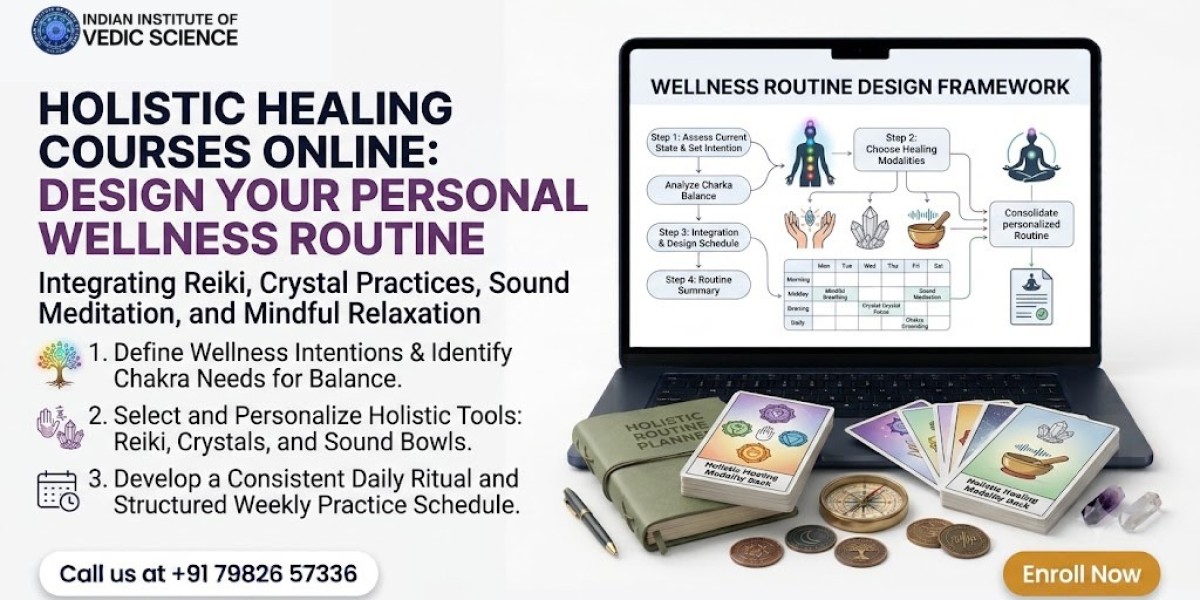
5. How to Design a Personal Wellness Routine
A useful routine reflects your daily schedule, preferences and goals. Instead of adopting every practice at once, begin with one or two activities and gradually determine what works for you.
Step 1: Identify your personal goals
Decide what you want your routine to support. Your goal might be to create a consistent pause during the workday, spend more time in reflection or develop a regular evening relaxation habit.
Choose goals that are specific and realistic. For example, committing to ten minutes of quiet practice four days a week is easier to assess than promising to transform your entire lifestyle.
Step 2: Choose suitable practices
Select activities according to your interests and comfort.
Reiki may appeal to people interested in a traditional energy-based practice.
Crystal rituals may provide a symbolic focus for intention-setting.
Sound meditation may help you create a dedicated listening and relaxation period.
Mindfulness may offer a simple, equipment-free practice.
You do not need to use all four. A routine should feel manageable rather than becoming another obligation.
Step 3: Set a realistic schedule
Choose a time when you are least likely to be interrupted. Some people prefer a short morning practice, while others find an evening wind-down more convenient.
Start with five to fifteen minutes and adjust according to your experience. Consistency is usually more practical than creating an elaborate schedule that is difficult to maintain.
Step 4: Prepare your environment
Choose a comfortable space with suitable lighting and minimal distractions. Keep any materials you need within reach, such as a journal, meditation cushion or sound instrument.
You do not need expensive products to begin. A quiet corner and a few minutes of uninterrupted time can be enough for basic mindfulness practice.
Step 5: Record your experience
After each session, make a brief note about what you practised, how long you spent and how you felt afterwards.
Avoid judging every session as successful or unsuccessful. A journal is a way to recognise your preferences and consistency, not proof that a particular practice has a medical effect.
Step 6: Review and adapt
At the end of each week, ask whether your routine fits your schedule. Remove activities that feel burdensome and retain those that you find comfortable and meaningful.
If you are experiencing persistent physical or emotional symptoms, seek appropriate professional support rather than relying on a wellness routine alone.
6. Exploring Spell Casting and Other Spiritual Learning Practices
Some learners interested in holistic wellness also explore spiritual traditions involving intention-setting, ritual and symbolism. These subjects should be approached with clear expectations and respect for personal choice.
A spell casting course may introduce ritual structure, symbolic objects, intention-setting and the cultural traditions associated with different practices. Before enrolling, review the syllabus and ask how the instructor explains the subject's history, context and ethical considerations.
A spell casting class may provide opportunities to discuss traditional rituals and their symbolic meanings. People who prefer flexible study may look for spell casting online, but should verify the provider's credentials, learning format and fees.
No ritual should be presented as a reliable way to control another person's decisions, guarantee financial outcomes or replace medical and psychological support. Responsible instruction should encourage consent, realistic expectations and personal accountability.
7. How to Choose the Right Holistic Healing Course Online
Before enrolling in a program, take time to assess whether it meets your learning needs.
Review the curriculum. Look for clearly defined modules, learning objectives, practical exercises and transparent course requirements.
Check the instructor's background. Ask about relevant training, teaching experience and the traditions the instructor follows.
Understand the delivery format. Determine whether lessons are recorded, live, in person or a combination. Check whether you can ask questions and receive feedback.
Verify certification details. A certificate of completion does not automatically represent government recognition, professional accreditation or a healthcare qualification.
Compare fees and inclusions. Confirm the total price, payment terms, learning materials, practical sessions and any additional charges.
Look for responsible claims. Avoid programs that guarantee cures, promise supernatural control or use fear to pressure students into enrolling.
People exploring healing courses online should consider their personal goals and the actual skills the course teaches. A program should be clear about the difference between traditional wellness practices and evidence-based healthcare.
8. Spiritual Classes and Holistic Learning at IIVS
For individuals interested in exploring traditional knowledge and complementary wellness practices, the Indian Institute of Vedic Science (IIVS) can be a starting point for researching available educational options.
Learners searching for spiritual classes online may want to compare the subject matter, teaching approach and practical components before selecting a program. Similarly, online spiritual classes can differ considerably in format, duration and the level of instructor interaction they offer.
Those exploring spirituality courses online or online spiritual courses should check whether the program focuses on traditional knowledge, reflective practices, symbolic systems or practical wellness methods. These categories may overlap in interest but are not interchangeable.
Before enrolling in any spiritual healing course, review the curriculum, instructor details, certification terms and boundaries of the training. People comparing online spirituality courses should also confirm the current course availability and fees directly with the provider.
Visit the IIVS website or explore the courses section to review the programs currently listed. Contact the institute to confirm whether Reiki, crystal healing, sound healing or other relevant courses are available in the format you prefer.
9. Holistic Healing Course Fees: What Should You Budget?
Course costs vary according to subject, duration, class format, practical training, instructor support and certification arrangements.
For planning purposes, ₹45,000–₹60,000 can be treated as an indicative budget range for the structured training discussed in this article. This is not a verified current IIVS price or a confirmed standard market rate for every Reiki, crystal or sound healing program.
Before enrolling, ask the provider to confirm the actual fee and whether it includes course materials, live sessions, practical exercises, assessments and certification. If the course includes instruments or additional workshops, check whether these are included in the quoted price.
Choose a program based on its learning outcomes and suitability for your goals rather than price alone.
Begin Your Holistic Wellness Learning Journey With IIVS
Creating a personal wellness routine does not require adopting every available practice. It begins with understanding your goals, choosing activities that fit your life and developing habits you can maintain.
Reiki, crystal-based rituals, sound meditation and mindful relaxation each offer different ways to explore traditional wellness practices and personal reflection. Structured education can help you understand their methods, practise responsibly and develop a more informed approach to holistic learning.
If you are interested in exploring these subjects further, review the available programs at the Indian Institute of Vedic Science and discuss your learning goals with the institute before enrolling.
Book your free counselling or Connect with the IIVS team to discuss your interests, explore available courses and confirm the latest syllabus, schedule, certification details and fees.
Frequently Asked Questions
1. What are holistic healing courses online?
They are educational programs that introduce complementary wellness practices, which may include Reiki, crystal traditions, sound meditation, mindfulness or related subjects. The curriculum varies by provider, so learners should check exactly what is included.
2. Can beginners learn Reiki, crystal healing and sound meditation?
Beginners can explore introductory concepts in these areas. A structured course may help organise learning and provide practice opportunities, but learners should understand the limitations of these practices and avoid treating them as substitutes for healthcare.
3. How much do holistic healing courses cost?
Fees depend on the provider, course depth, duration and practical support. ₹45,000–₹60,000 is an indicative planning range for the training discussed here, not a verified current IIVS price. Contact the institute for confirmed details.
4. Does online training provide a recognised certification?
Not necessarily. Certification depends on the issuing organisation and the program's terms. Ask whether the certificate represents course completion, assessment or recognition by a relevant body.
5. How long should a personal wellness routine take?
A beginner can start with five to fifteen minutes a day and adjust according to comfort and schedule. There is no universal duration that works for everyone.
6. Can holistic wellness practices replace medical treatment?
No. Reiki, crystal rituals and sound meditation should not replace professional medical care, prescribed treatment or mental health support. Seek qualified healthcare advice for health concerns.
7. How can I choose a suitable holistic healing institute?
Compare the syllabus, instructor experience, practical exercises, student support, certification terms and total fees. Verify the provider's current course details before making a payment.






