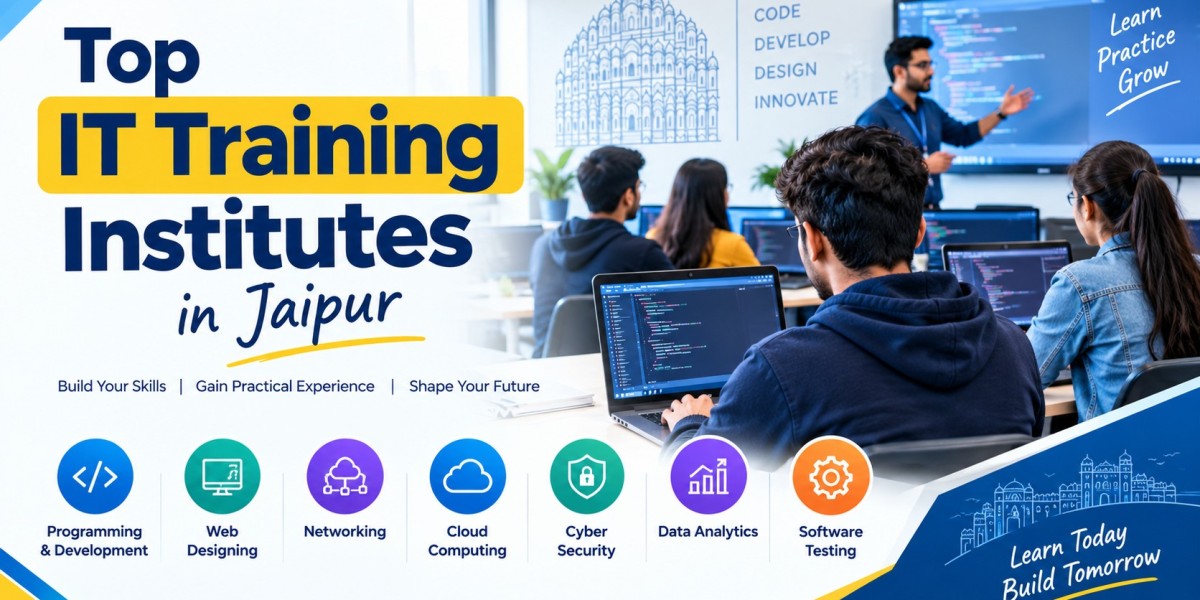


You typed "IT institutes in Jaipur" into a search bar, so you probably want names first and advice second. Fair. The five below are a good place to begin, and the rest of this guide explains how to judge them.
The city has no shortage of computer and IT training centres. What it does have is a lot of noise. Long course lists, big promises, and very little that helps you compare one place with another.
Which IT institutes in Jaipur should you look at first?
Each point below comes from what the institute's own listing says, so use it as a starting point and confirm the details yourself.
SMS Institute: in C Scheme, about ten years in business, with courses listed in artificial intelligence, digital marketing, computer networking, data analysis, data science and Python, plus 3ds Max, interior designing and Tally GST.
Prime Institute For Excellence: in Mansarovar, about 18 years in business, listing AI, data science, data analysis, Python, computer networking and digital marketing among its categories.
Om Sai Computer Institute: in Panchyawala, about ten years in business, with computer applications, computer networking, digital marketing, AI, data analysis and data science on its list.
IILM Academy: in Pratap Nagar, about 16 years in business, with networking, data analysis, data science, AI and digital marketing listed, along with Tally GST and skill development programmes.
AU Skills Academy: in C Scheme, about 16 years in business, with computer networking, AI, digital marketing, data analysis and data science listed, plus Tally GST and skill development.
None of this is a ranking. A course list tells you what an institute is associated with, not how well it teaches. Which leads to a point most people miss.
Why do all these course lists look the same?
Read enough listings and you'll notice the pattern. Nearly every institute names the same categories: AI, data science, digital marketing, networking, Tally GST, 3ds Max, and often JEE and NEET coaching too.
That doesn't mean any of them is lying. It does mean a category on a page isn't proof of a running batch with a good trainer. So when you call, don't ask "do you teach data science?" Ask better questions:
- Which of these courses is running right now, and when does the next batch start?
- Who teaches it, and what have they worked on outside a classroom?
- Is IT taught in its own batches, or squeezed in alongside other programmes?
- What will I be able to build or do by the end?
Those four answers separate real programmes from long menus.
What counts as an IT course, really?
"IT" is a wide label. Here's how the main areas break down, so you can match a course to your goal.
- Computer basics and applications: typing, office tools, internet use, accounting software. Good for beginners and anyone returning to work.
- Computer networking: how devices connect, how networks are set up and fixed. Leads to support and technician roles.
- Data analysis and Python: cleaning data, finding patterns, writing simple scripts. Popular with graduates who want an analytics path.
- Data science and AI: a step beyond analysis, involving models and prediction. It needs more maths and more time.
- Digital marketing: search, social media, ads and content. Not strictly programming, but it sits in most IT training lists.
- Design and creative tools: 3ds Max, interior design software and similar tools for visual work.
- Tally and GST: accounting software and tax filing, useful for finance and billing roles.
You don't need all of them. Pick the area closest to the job you want, and go deep.
How do you choose between two institutes?
It gets easier once you stop comparing course names and start comparing evidence.
- Ask to sit in on a class. Ten minutes in a classroom tells you more than any brochure.
- Look at the practical work. Do students build projects, or just copy notes?
- Check the computers. Enough working systems per student, and access outside class hours if possible.
- Meet the trainer. Ask about experience beyond teaching.
- Read recent reviews carefully. Look for specifics, like what was taught and how doubts were handled, not just star counts.
- Get the fee and refund terms in writing. Know what's included and what costs extra.
- Clarify placement help. Ask what it actually involves, such as resume work, mock interviews or introductions.
If an institute dodges any of these, that tells you something.
What does the fee usually depend on?
Fees vary widely, so no honest article can give you a single number. What you can do is understand what moves the price:
- Course length and the number of classroom hours
- Batch size, since smaller groups usually cost more
- Whether you get lab access outside class
- The trainer's experience
- Study material, software and certification costs, which are sometimes extra
Ask for a breakdown before you pay. A clear answer is a good sign.
Which red flags should make you walk away?
- Guaranteed jobs or fixed salary promises
- Pressure to pay the full amount on the spot
- No clear syllabus, or one that's identical for every course
- Trainers whose background can't be explained
- Rules or charges that appear only after you've paid
- Refusal to let you visit or meet the trainer first
Spot two or more, and look elsewhere.
How can you get more from the course?
The institute provides the structure. The results come from what you do outside it.
- Practise a little every day. Thirty focused minutes beats a weekend cram.
- Build small projects of your own, even simple ones.
- Keep a notebook of errors and how you fixed them.
- Ask your trainer about real workplace problems.
- Start a basic portfolio early, so you have something to show.
Employers look at what you can do. A certificate on its own rarely settles it.
Final Thoughts
Choosing an IT institute is less about finding the biggest name and more about finding the right fit: a trainer who explains well, a course that matches your goal and a place that treats you honestly. Start with the names above if they suit your area, but visit, ask and compare before you commit.
And give yourself a bit of grace. Nobody picks perfectly. If a class isn't working after a couple of weeks, say so and ask what can change.
If you'd like to compare a few more local institutes in one place before you call anyone, Service Bazzar is a handy starting point. It's a business listing platform where you can discover local service providers, read through their details and shortlist the ones worth contacting.
Frequently asked questions
1. Which IT course is best for a beginner?
Computer basics and applications are a gentle start, especially if you're new to computers. From there, you can move to networking, data analysis with Python or whichever area suits your goal.
2. Do I need a technical degree to join an IT institute?
Not usually. Many courses accept beginners, though some, like data science, are easier if you're comfortable with basic maths. Ask the institute about prerequisites.
3. How long does an IT course take?
It depends on the subject and depth. Short courses may run a few weeks, while deeper programmes can take months. Ask for the hours per week and total duration before you enrol.
4. Are online IT courses a good option?
Yes, if they include live sessions, assignments and trainer support. Some people learn better in a classroom, especially for hands-on topics like networking.
5. Will an institute guarantee me a job?
No, and anyone who promises that is overselling. A good institute can help with skills, interview practice and guidance, but the outcome depends on your effort and the job market.
6. How do I check whether an institute is genuine?
Visit in person, meet the trainer, sit in on a class and ask for the syllabus and fee details in writing. Read recent reviews for specifics, and speak to a current or former student if you can.






