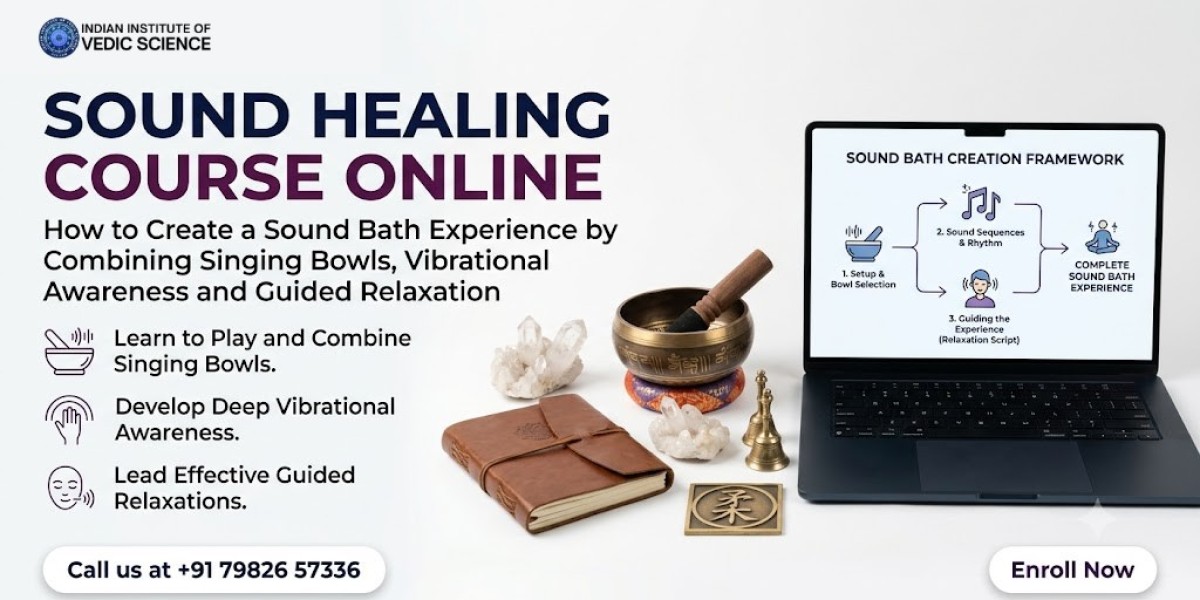


Sound Healing Course Online: How to Create a Sound Bath Experience by Combining Singing Bowls, Vibrational Awareness and Guided Relaxation
Sound has been used across cultures in meditation, spiritual gatherings and relaxation practices for centuries. Today, sound baths and sound-based relaxation sessions attract people who want to create a peaceful environment, develop mindfulness and explore the relationship between listening, attention and relaxation. Singing bowls, gentle tones, rhythmic sounds and guided breathing can be combined to create a structured experience that encourages participants to slow down and focus on the present moment.
Learning to facilitate a sound bath involves more than playing a singing bowl. A practitioner needs to understand the instruments, practise appropriate playing techniques, consider the listening environment, guide participants through relaxation and respond to individual comfort levels. A structured sound healing course can help learners develop these foundational skills while understanding the responsible use and limitations of sound-based wellness practices.
The Indian Institute of Vedic Science (IIVS) provides a learning environment for people interested in traditional and holistic subjects. If you are exploring sound healing as a personal interest or a potential wellness skill, understanding how to combine singing bowls, vibrational awareness and guided relaxation is a useful starting point.
What Is Sound Healing, and How Does a Sound Bath Work?
Sound healing is a broad term used for practices that incorporate sound, music, tones or vibration into relaxation and wellness activities. A sound bath is a guided listening experience in which participants are invited to rest comfortably while a facilitator plays instruments such as singing bowls, chimes or other suitable sound-producing tools.
The term “bath” describes the experience of being surrounded by sound rather than being immersed in water. The facilitator generally creates a sequence of sounds, pauses and periods of silence, allowing participants to listen without needing to perform a task.
People may experience a sound bath differently. Some find it relaxing, while others may prefer quieter environments or find certain tones uncomfortable. Sound baths should not be presented as guaranteed treatments for medical conditions or as substitutes for appropriate healthcare.
A structured sound healing course introduces the practical foundations of creating a session, including instrument handling, sound selection, room preparation, participant communication and relaxation guidance. These skills help practitioners design experiences that are comfortable, organised and appropriate for different settings.
How Singing Bowls Contribute to a Sound Bath
Singing bowls are commonly used in sound-based relaxation practices because they can produce sustained tones when struck or played around the rim with a suitable mallet. The sound varies according to the bowl's size, construction, playing technique and the force applied.
Learning to work with singing bowls involves careful listening and controlled movements rather than simply producing the loudest possible sound.
Understanding Different Tones
Different bowls may produce different pitches and tonal qualities. Some sound bright and clear, while others produce lower, fuller tones. A facilitator can explore these differences to develop a balanced listening sequence.
Beginners should practise with one bowl at a time before combining several instruments. This makes it easier to understand how striking force, playing position and the speed of movement influence the resulting sound.
Practising Controlled Playing Techniques
A bowl may be played with a gentle strike or by moving a suitable mallet around its rim. Each method produces a different sound, and some techniques require more practice to achieve a steady tone.
Start at a comfortable volume. Listen to how long the sound continues, how it changes as it fades and how much silence remains before the next tone.
Avoid repeatedly striking a bowl at close range or increasing the volume simply to make the experience more intense. Participants should always have a comfortable listening distance and the freedom to request a change.
Combining Bowls With Other Instruments
A sound bath may include chimes, soft percussion or other instruments, depending on the facilitator's training and the participants' preferences.
However, adding more instruments does not automatically improve the experience. A small, carefully arranged selection can be easier to follow than a complex mixture of competing sounds.
The goal is to create a coherent listening experience with a comfortable balance of tones, pauses and silence.
What Is Vibrational Awareness in Sound Healing?
Vibrational awareness refers to noticing the physical and auditory qualities associated with sound. During a sound bath, participants may notice a tone's pitch, volume, duration, texture or apparent movement through the room. They may also become aware of their own reactions, such as feeling calm, distracted or sensitive to a particular sound.
The term is used in many wellness settings, but it should not be confused with proof that a sound has a specific medical or energetic effect.
Develop Active Listening Skills
A facilitator can begin by inviting participants to notice the beginning of a tone, listen as it develops and observe how it fades. The exercise can be performed without requiring participants to interpret the sound or assign it a special meaning.
For example, a participant might notice that one bowl produces a bright tone that fades quickly, while another creates a lower sound that remains audible for longer.
These observations help practitioners become more familiar with their instruments and create better transitions during a session.
Notice Individual Responses
Not everyone responds to sound in the same way. A tone that feels soothing to one participant may be distracting or uncomfortable to another.
Encourage participants to notice their reactions without judging them. They should be able to move to a quieter area, adjust their position, use suitable hearing protection or leave the session if necessary.
This participant-centred approach is an important part of responsible sound bath facilitation.
How to Create a Sound Bath Experience Step by Step
A well-planned sound bath follows a clear structure. The following sequence can help beginners organise their practice while allowing room for individual preferences.
Step 1: Prepare the Space
Choose a quiet, comfortable environment where interruptions can be minimised. Arrange seating, cushions or mats according to the needs of the participants.
Check the room's acoustics before the session. Hard surfaces may reflect sound strongly, while soft furnishings may absorb some of it. Test the instruments at the intended playing position so that the sound remains comfortable throughout the space.
Provide enough room for participants to adjust their posture or move away from an instrument if needed.
Step 2: Welcome Participants and Explain the Session
Before beginning, explain what a sound bath involves, approximately how long it will last and which instruments you intend to use.
Ask participants whether they have sound sensitivities or preferences that could affect their comfort. Make it clear that they can keep their eyes open, change positions, pause or leave whenever they wish.
Do not assume that everyone wants to lie down or close their eyes. Offer options so that participants can choose a comfortable position.
Step 3: Introduce Gentle Grounding
Begin with a short grounding exercise. Invite participants to notice the support beneath them, observe the room and allow their breathing to settle naturally.
Avoid demanding deep breathing or requiring participants to focus on bodily sensations if they find that uncomfortable. Simple instructions such as noticing the sounds already present in the room can be sufficient.
Grounding helps establish a transition from everyday activity to focused listening without promising a particular emotional or physical result.
Step 4: Start With a Gentle Sound
Begin with one soft tone and allow it to fade naturally. Give participants time to notice the sound before introducing another instrument.
This opening helps establish the volume and pace of the session. It also gives the facilitator an opportunity to check whether the sound is comfortable for the group.
Avoid starting with sudden, intense or prolonged sounds, particularly when participants are unfamiliar with the instruments.
Step 5: Build a Balanced Sound Sequence
After the opening, introduce a small number of tones in a deliberate sequence. You might alternate between a sustained singing bowl tone and a period of silence, then introduce a second bowl with a different tonal quality.
Pay attention to the overall volume, spacing and transitions. A sound bath does not need continuous sound from beginning to end. Silence gives participants an opportunity to rest from listening and notice their own experience.
Step 6: Include Guided Relaxation
Use calm, simple language to help participants settle into the experience. For example, invite them to notice the sounds around them, allow their shoulders to relax if comfortable and return their attention to listening whenever their thoughts wander.
Avoid making promises such as “this sound will remove all stress” or “these vibrations will heal every part of your body.” Guided relaxation should support a comfortable experience, not guarantee a medical or emotional outcome.
Step 7: Gradually Reduce the Sound
Toward the end of the session, reduce the frequency of tones and allow longer periods of silence. Avoid ending abruptly with a loud strike.
Give participants time to become aware of the room again. Invite them to open their eyes when ready, move gently and sit for a moment before standing.
Step 8: Offer a Short Reflection
After the sound bath, invite participants to share their experience if they wish. They might describe a sound they enjoyed, a moment of distraction or a preference for a quieter session next time.
Do not require everyone to speak or suggest that a particular response indicates success. A useful session is one in which participants feel respected and have the freedom to describe their own experience.
Why Guided Relaxation Matters in a Sound Bath
Sound and relaxation can work together as parts of a structured wellness activity. The facilitator's instructions help participants understand what to do while the sounds provide a focus for listening.
Guided relaxation should remain simple, flexible and non-directive.
Use Short, Clear Instructions
Long explanations can distract participants from listening. Use brief prompts, leave space between sentences and avoid speaking over every sound.
For example, you might say, “Notice the tone as it begins. Allow yourself to listen as it fades. If your attention moves elsewhere, you can gently return to the next sound.”
This approach gives participants an option for focusing attention without telling them what they must feel.
Respect Different Comfort Levels
Some participants may enjoy a quiet, minimally guided experience. Others may appreciate occasional verbal prompts. A facilitator can ask for preferences before the session and adapt the amount of guidance accordingly.
Avoid using intense emotional suggestions or asking participants to revisit distressing experiences as part of a general sound bath. Such activities fall outside the scope of a basic relaxation session and may require different professional skills.
End With Present-Moment Awareness
A gentle closing can include noticing the room, listening to ordinary environmental sounds and moving at a comfortable pace.
Participants should not be rushed into conversation immediately after the final tone. A few quiet moments can help them transition back to everyday activities.
Who Should Consider a Sound Healing Course?
Sound-based relaxation may interest people who enjoy music, meditation, mindfulness and holistic wellness. It may also appeal to yoga instructors, meditation facilitators and wellness practitioners who want to explore sound as an additional activity within their existing scope of practice.
A sound healing course delhi may be relevant to learners who prefer exploring local educational options, while people seeking flexible learning may consider online programmes. Course availability, location and teaching format should be confirmed directly with the provider.
When comparing a sound healing certification, look at the curriculum, practical exercises, instrument demonstrations and assessment requirements. A certificate may document completion of a programme, but it does not automatically establish government recognition, clinical qualification or eligibility to treat medical conditions.
A sound healing certification online can offer flexibility for learners who want to study from home, depending on the programme's delivery method. Before enrolling, check whether practical instrument work, feedback and live guidance are included.
Similarly, a sound healing certification course should explain what participants will learn and what the certificate represents. Anyone seeking a certified sound healing course should verify the provider's credentials and avoid assuming that the word “certified” means the programme is regulated or clinically accredited.
When evaluating sound healing certification programs, compare course duration, syllabus depth, teaching support, instrument requirements and opportunities to practise safely. A sound therapy certification online may be suitable for theoretical learning and guided demonstrations, but learners should clarify how practical skills are assessed.
If you are researching the best sound healing course in india, consider the overall quality and transparency of the programme rather than relying only on promotional claims.
Sound Healing Training Options and Advanced Practice
Once learners understand the basics, they may wish to explore different formats of training and develop their instrument skills further.
A sound healing training retreat may combine instrument practice, group listening exercises and guided relaxation in an immersive setting. Ask about the daily schedule, instructor qualifications, participant support and whether the retreat is suitable for beginners.
For people who prefer remote learning, sound therapy courses online can provide access to lessons and demonstrations from home. Check whether the course offers opportunities to ask questions and receive feedback on practical techniques.
Learners interested in crystal bowl sound healing training may want to explore how crystal bowls differ from other singing bowls in sound, handling and playing technique. Instrument selection should be guided by practical experience, comfort and the intended session format rather than claims that a particular material guarantees a therapeutic effect.
When comparing the best sound healing training, look for a curriculum that balances instrument practice, listening skills, session planning, participant communication and safety. A sound therapy course online should also explain the limitations of sound-based wellness work and avoid promising medical outcomes.
Sound Healing Course Fees: What Should You Budget?
Course fees depend on the provider, duration, teaching format, instrument access, practical instruction and certificate arrangements.
For planning purposes, an indicative budget of ₹45,000–₹60,000 is included here as requested. This is not a verified current IIVS fee. Contact the institute directly to confirm the current price, available offers, course duration, payment conditions and what is included.
Before enrolling, ask whether the fee covers recorded lessons, live classes, instructor support, practice sessions, course materials and certificate completion. If you need to purchase singing bowls or other instruments separately, include that expense in your budget.
A more expensive course is not automatically better. Compare the quality of the curriculum, the opportunity to practise, the clarity of the teaching and the support available after lessons.
How Sound Healing Connects With Astrology Learning
Some learners explore sound healing alongside other traditional knowledge subjects. These disciplines have different foundations, so it is helpful to understand each one separately and avoid treating their claims as interchangeable.
An astrology diploma course online may cover concepts such as birth charts, planetary symbolism and traditional horoscope interpretation, depending on the provider. Before enrolling, check the course outline, teaching format, duration and certificate requirements.
An online astrology course with certificate can offer a structured learning path for people who want documented course completion. However, the certificate's recognition and value depend on the issuing institution and the programme's actual requirements.
When researching the best astrology courses, compare curriculum quality, practical exercises, instructor support and transparency around fees. The best astrology courses online for one person may not suit another, because learning preferences and goals differ.
People considering the best astrology courses in india online or the best online astrology courses in india should examine course content and support rather than relying on rankings or promotional statements alone.
Similarly, the best online astrology classes may be live, recorded or a combination of both. Choose a format that allows you to study consistently and ask questions when necessary. The best online course for astrology should match your current knowledge and learning objectives.
If your goal is to learn astrology online, begin with foundational concepts, practise interpreting examples and keep organised notes. The best way to learn astrology is to follow a structured curriculum, review what you have learned and progress at a sustainable pace.
At IIVS, prospective learners can ask about available programmes and discuss which course aligns with their interests. Confirm the latest syllabus, fees and certification details before enrolling.
Start Your Sound Healing Learning Journey With IIVS
Creating a sound bath is a thoughtful process that combines instrument familiarity, vibrational awareness, guided relaxation and participant-centred session planning. Singing bowls can provide the foundation, while careful sequencing, silence and simple instructions help create a coherent listening experience.
A structured learning programme can help you practise these skills, understand instrument techniques and develop a more responsible approach to wellness facilitation. The right course should explain its syllabus, fees, certification conditions and the limitations of sound-based practices clearly.
If you are interested in exploring sound healing or related traditional subjects, connect with the Indian Institute of Vedic Science (IIVS) to discuss the available courses and identify a learning path that suits your goals.
Book your free counselling to learn about course availability, training options, fees and enrolment requirements.
Frequently Asked Questions
What is taught in a sound healing course?
Depending on the provider, a course may cover singing bowl techniques, instrument handling, listening awareness, sound bath planning, guided relaxation, participant communication and basic session safety. Review the syllabus to confirm the actual topics.
Can I learn sound healing online?
Yes, theoretical concepts and instrument demonstrations can be taught online. However, practical competence depends on opportunities to practise, receive feedback and understand how to use instruments at comfortable volumes.
Does sound healing cure medical conditions?
Sound baths may be used as relaxation or wellness activities, but they should not be presented as proven cures for medical or psychological conditions. Participants should seek appropriate healthcare when needed.
How much does a sound healing course cost?
Fees vary by institution and course format. The ₹45,000–₹60,000 range in this article is an indicative budgeting reference, not a verified current IIVS price. Contact the institute for the latest details.
Do I need to own singing bowls before enrolling?
Not necessarily. Some programmes provide demonstrations or access to instruments during training, while others may expect students to obtain their own equipment. Confirm the requirements before purchasing anything.
Is an online sound healing certificate professionally recognised?
Recognition varies by provider and programme. Ask who issues the certificate, what assessments are required and whether any external accreditation is claimed. Do not assume that course completion establishes a clinical qualification.






