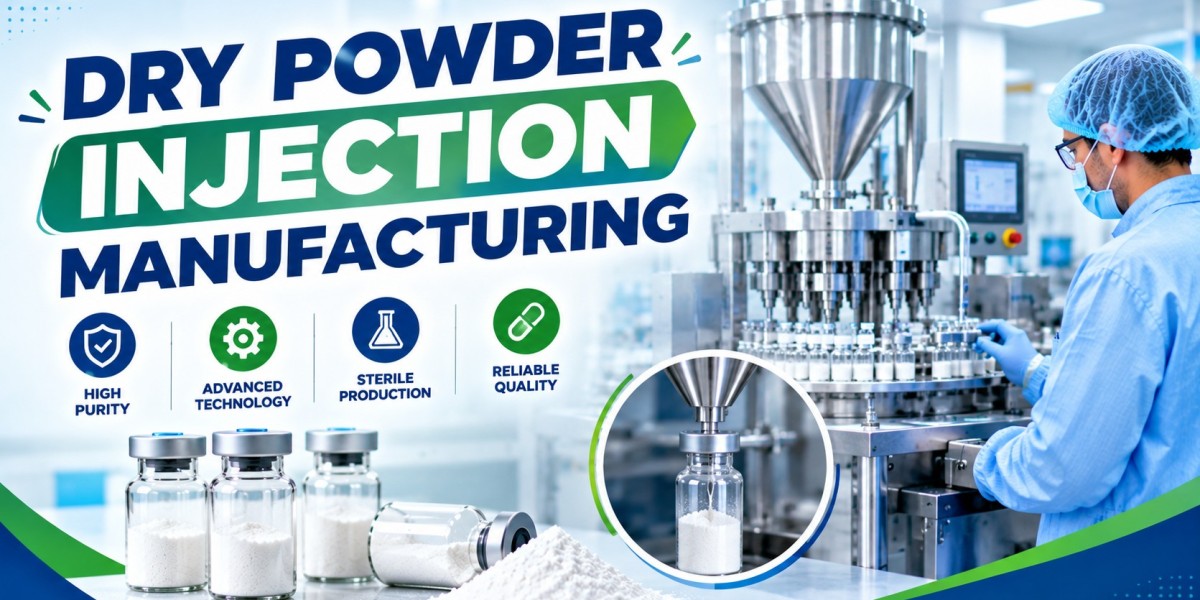


Producing injectable medicines requires careful control over ingredients, equipment, and manufacturing conditions. Dry powder injection manufacturing involves preparing pharmaceutical products in powder form while meeting the quality requirements established for each medicine. For pharmaceutical businesses, understanding this process can help with supplier evaluation, production planning, and decisions about product quality and storage.
Why Are Some Injections Supplied as Dry Powders?
Certain medicines may be more stable in powder form than in a liquid preparation. These products are often supplied in sterile vials and may need to be mixed with a specified sterile liquid before administration. The preparation method depends on the medicine and its approved instructions.
A dry formulation can help address particular stability challenges, but its suitability must be established through product development and stability studies.
Ingredient Selection and Preparation
The manufacturing process starts with selecting appropriate raw materials. Active pharmaceutical ingredients and other formulation components must meet established specifications before they are used. Supplier records and material testing help confirm their identity and suitability.
Ingredients must also be stored under appropriate conditions. Accurate documentation allows manufacturers to track materials from receipt through production and helps support consistent manufacturing practices.
Choosing the Appropriate Processing Method
The processing method depends on the formulation, active ingredient properties, and required product characteristics. Some medicines require specialised drying techniques, while others may use different validated approaches. The aim is to produce a powder that meets the required specifications and remains suitable for its intended use.
During dry powder injection manufacturing, processing conditions must be established and controlled carefully. Equipment performance, material handling, and environmental conditions should be managed according to approved procedures.
Maintaining Suitable Manufacturing Conditions
Injectable medicines require controls designed to reduce contamination risks. Depending on the product and process, manufacturing may involve controlled environments, specialised filling equipment, environmental monitoring, and validated cleaning procedures.
Personnel training is also important. Staff must understand hygiene practices, equipment operation, and the correct handling of materials. These measures support the production of medicines that meet applicable quality requirements.
Filling, Sealing, and Inspection
Once the powder is ready, it is filled into suitable containers under the required controlled conditions. Sterile products need appropriate controls throughout filling and sealing. The containers are then inspected for defects, and relevant production information is recorded.
In dry powder injection manufacturing, container and closure suitability matters because packaging must protect the product during storage and transportation. The packaging system should be compatible with the formulation and supported by appropriate stability information.
Testing and Quality Documentation
Finished products undergo testing based on their approved specifications. Depending on the medicine, this may include active ingredient content, sterility, bacterial endotoxins, particulate matter, moisture levels, and reconstitution characteristics.
Manufacturers should maintain batch records, document test results, and investigate unexpected findings through established quality procedures. Pharmaceutical companies can review relevant documentation to understand whether the required checks have been completed.
Evaluating a Manufacturing Partner
When assessing dry powder injection manufacturing services, pharmaceutical businesses should review a facility's technical capabilities, quality management system, relevant licences, and experience with similar products. It is also helpful to discuss production capacity, delivery schedules, testing responsibilities, and documentation requirements before signing an agreement.
These checks help businesses compare suppliers based on their actual product needs rather than price alone.
Conclusion
Dry powder injection manufacturing depends on suitable ingredients, controlled processing, careful filling, and appropriate quality testing. Packaging and storage also contribute to maintaining product quality. Understanding these stages helps pharmaceutical businesses evaluate manufacturing facilities and make more informed decisions about production requirements.







