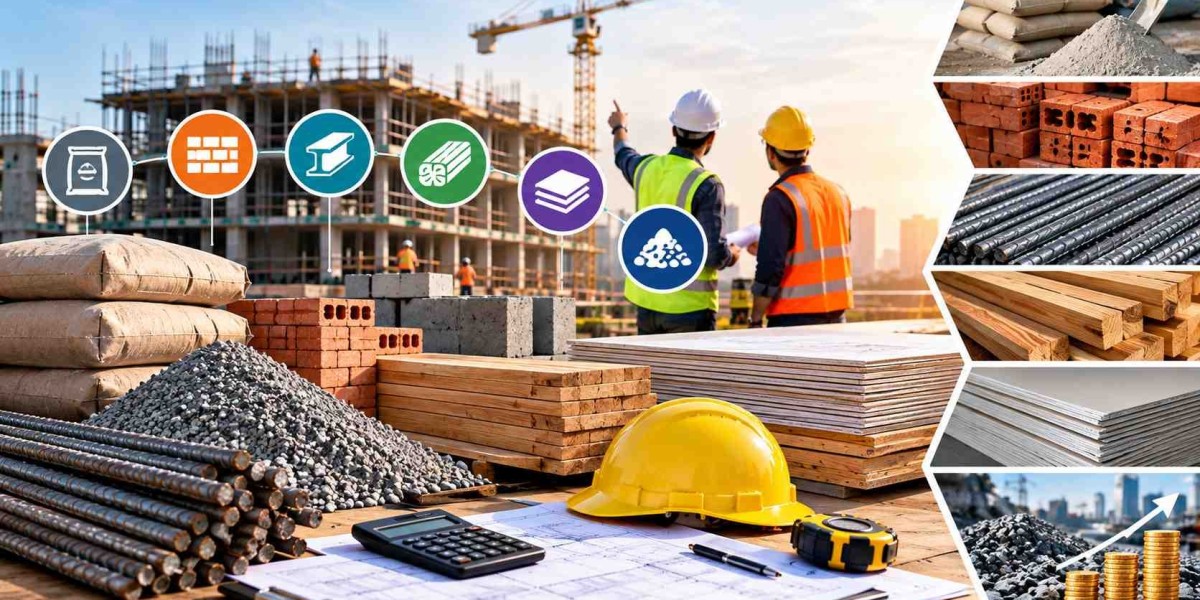


Construction materials are the foundation of every building — literally. Choosing the right materials affects cost, durability, energy efficiency, and resale value. With prices shifting and new sustainable options entering the market, knowing your materials matters more than ever. This guide covers the major material categories, their 2026 costs, and how to choose wisely.
Structural Materials: The Building's Bones
Concrete remains the workhorse of construction — versatile, durable, and relatively affordable at $125–$200 per cubic yard (poured). Reinforced concrete handles compression and, with steel rebar, tension. Structural steel dominates commercial construction for its strength-to-weight ratio, but costs $2,000–$4,000+ per ton installed and fluctuates with global markets. Timber framing is standard for residential work — renewable, easy to work with, and cost-effective, though lumber prices remain volatile. Masonry (brick, block, stone) offers durability and fire resistance at a premium labor cost. The choice depends on project type, budget, and local conditions — and accurate material takeoffs are essential, which is why professional construction estimating services price materials from current supplier quotes, not outdated databases.
Envelope Materials: Keeping Weather Out
The building envelope — roofing, walls, windows, insulation — determines energy performance and durability. Roofing options range from asphalt shingles ($4–$7/sq ft installed) to metal roofing ($8–$16/sq ft) to tile ($10–$25/sq ft, common in Florida for hurricane resistance). Insulation choices (fiberglass, spray foam, rigid board) affect both cost and energy bills for decades. Windows — double-pane vs. triple-pane, impact-rated vs. standard — can swing costs by thousands per opening. Getting envelope materials right pays dividends in energy savings and storm resilience.
Interior Materials: Where Budgets Disappear
Interior finishes are where "allowance" budgets go to die. Flooring ranges from $3/sq ft (laminate) to $15+/sq ft (hardwood, stone). Cabinetry from $100/linear foot (stock) to $500+ (custom). Countertops from $40/sq ft (laminate) to $100+/sq ft (quartz, granite). Tile and fixtures vary enormously by selection. The lesson: set finish allowances at realistic mid-range levels, not the cheapest option — the gap between allowance and actual selection is the most common budget overrun in residential work.
Sustainable Materials in 2026
Green materials have gone mainstream. Cross-laminated timber (CLT) competes with steel and concrete on mid-rise buildings. Recycled steel is standard. Low-carbon concrete cuts emissions 30–50%. Reclaimed wood, recycled glass countertops, and bio-based insulation are widely available. The premium for sustainable materials has dropped to 5–15% over conventional options, and lifecycle savings often erase it entirely. Florida builders increasingly specify hurricane-resilient sustainable materials — impact glass, cool roofing, and moisture-resistant products that serve both green and storm-performance goals. Contractors pricing Florida green projects often work with Tampa construction estimating services for accurate local material pricing.
How Material Costs Are Changing in 2026
Material price volatility remains the defining challenge of 2026. Lumber has stabilized after years of swings but remains 30%+ above pre-2020 levels. Steel and copper track global demand and tariffs. Concrete costs rise steadily with labor and transport. The practical advice: lock in prices with suppliers early, include material escalation clauses in contracts, and never estimate from last year's prices. Trade-specific material costs need specialist knowledge — concrete estimating services track the formwork, rebar, and admixture pricing that generalist estimates routinely get wrong.
How to Choose the Right Materials
Match materials to priorities: Budget — where can you save without compromising structure or durability? Climate — Florida's humidity and hurricanes demand different materials than Arizona's desert. Lifespan — a $5,000 roof lasting 15 years costs more than a $10,000 roof lasting 40. Maintenance — cheap materials that need constant upkeep aren't cheap. Resale — quality materials protect property value. The cheapest material is rarely the best value; the right material is the one that performs for its intended life at a fair price.
Frequently Asked Questions
What is the most expensive construction material? By total project cost, structural systems (concrete/steel) and MEP equipment typically dominate. By unit cost, specialty finishes (stone, custom millwork) are highest — but they represent a small share of total cost.
How do I protect against material price increases? Lock supplier quotes early, include escalation clauses in contracts, order long-lead materials at project start, and maintain a material contingency (5–10%) in the budget.
Are sustainable materials worth the premium? Increasingly yes — the premium has dropped to 5–15%, and energy savings, durability, and resale value typically recover it within the building's first decade.







