

The global Enterprise Treasury and Risk Management (ETRM) market is evolving as organizations increasingly adopt intelligent financial technologies to optimize cash flow, strengthen liquidity management, and mitigate financial risks. With growing financial uncertainty, complex regulatory requirements, and the need for real-time financial visibility, enterprises are moving beyond traditional treasury operations toward integrated, cloud-based, and AI-powered solutions.
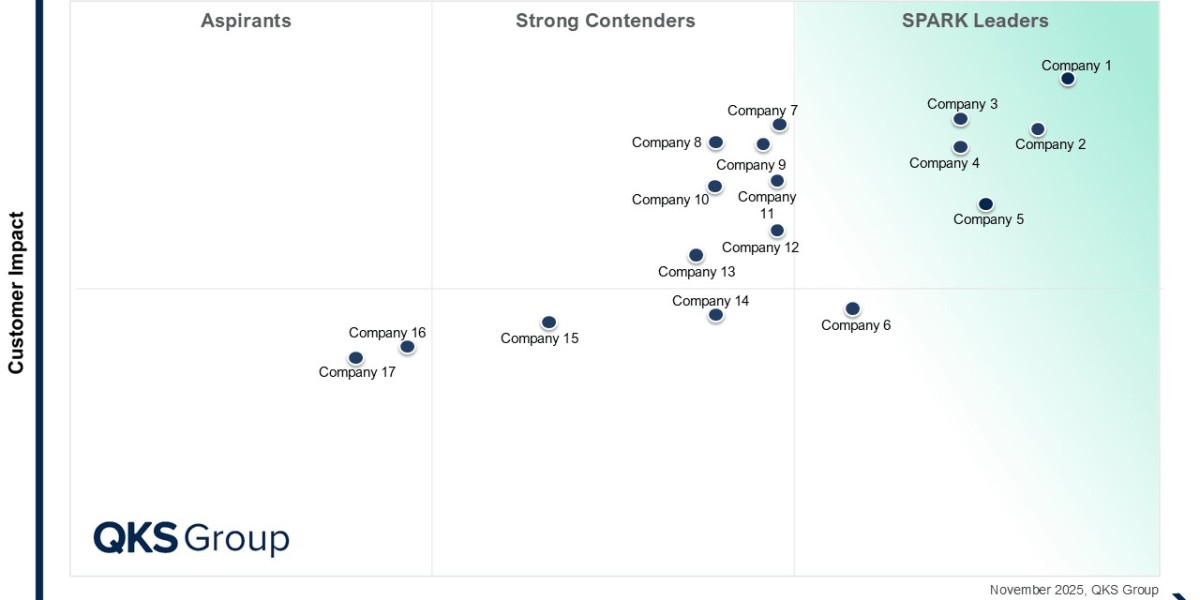
QKS Group's Enterprise Treasury and Risk Management market research provides a comprehensive analysis of emerging technology trends, competitive dynamics, and future market opportunities. Its proprietary SPARK Matrix™ analysis evaluates leading vendors, helping organizations understand technology capabilities, competitive differentiation, and market positioning.
What Is Enterprise Treasury and Risk Management (ETRM)?
Enterprise Treasury and Risk Management refers to integrated financial technology solutions that help organizations manage cash, liquidity, payments, investments, debt, and financial risk within a centralized environment.
These platforms enable finance and treasury teams to monitor financial positions, automate treasury workflows, improve cash forecasting, and manage exposure to risks such as foreign exchange fluctuations, interest rate changes, and liquidity constraints.
Modern ETRM solutions combine advanced analytics, AI-powered forecasting, ERP integration, and automated financial controls to improve operational efficiency and support informed financial decision-making.
Key Capabilities of Enterprise Treasury and Risk Management Platforms
Modern Enterprise Treasury and Risk Management solutions provide capabilities designed to strengthen financial operations and risk visibility.
- Cash and Liquidity Management: Monitor cash positions and optimize liquidity across accounts and entities.
- Cash Flow Forecasting: Improve financial planning through predictive analytics and forecasting models.
- Payment Management: Automate payment workflows and support secure global financial transactions.
- Financial Risk Management: Identify and manage foreign exchange, interest rate, and liquidity risks.
- Debt and Investment Management: Track financial obligations, investments, and funding activities.
- Bank Connectivity: Enable communication and financial data exchange with banking partners.
- Compliance and Reporting: Support regulatory requirements, financial controls, and audit readiness.
- ERP Integration: Connect treasury activities with enterprise financial and accounting systems.
These capabilities help enterprises reduce manual workloads, improve financial transparency, and strengthen treasury decision-making.
Key Market Trends Shaping Enterprise Treasury and Risk Management
1. AI-Powered Cash Forecasting and Analytics
Artificial intelligence and machine learning are transforming how organizations forecast cash flow and evaluate financial risks.
Modern ETRM platforms increasingly use predictive analytics to analyze historical transactions, identify financial patterns, and improve forecasting accuracy.
These capabilities help treasury teams make informed decisions regarding liquidity planning and fund allocation.
2. Growing Adoption of Cloud-Based Treasury Platforms
Enterprises are increasingly adopting cloud-based treasury solutions to improve scalability, accessibility, and operational flexibility.
Cloud-native platforms support centralized treasury operations, collaboration across geographically distributed teams, and integration with enterprise applications.
This transition helps organizations modernize financial workflows while reducing dependence on fragmented legacy systems.
3. Real-Time Cash and Liquidity Visibility
Organizations require immediate access to accurate financial information to manage liquidity effectively.
Advanced Enterprise Treasury and Risk Management platforms provide real-time dashboards, cash positioning, and financial analytics that enable treasury teams to monitor funds across multiple accounts, banks, and business entities.
Improved visibility supports faster financial decisions and more effective working capital management.
4. Automated Global Payment Management
The increasing complexity of international financial transactions is accelerating demand for automated payment workflows.
Modern ETRM solutions help enterprises streamline payment processing, improve transaction controls, and strengthen connectivity with banking networks.
Automation also helps reduce operational errors and improve payment efficiency.
5. Integrated Financial Risk and Compliance Management
Financial volatility and evolving regulatory requirements are increasing the importance of enterprise-wide risk management.
Modern platforms combine financial exposure monitoring, reporting, analytics, and compliance capabilities to help organizations identify potential risks and strengthen financial governance.
Strategic Importance of Enterprise Treasury and Risk Management
The Enterprise Treasury and Risk Management market is becoming increasingly important as organizations prioritize financial resilience, liquidity optimization, and operational efficiency.
According to Hetansh Shah, Analyst at QKS Group, ETRM solutions are critical financial tools that help enterprises optimize cash and liquidity management, streamline global payments, and mitigate financial risks.
AI, machine learning, and advanced analytics are improving real-time financial visibility, cash forecasting, and strategic fund allocation.
Cloud-based flexibility and seamless ERP integration further enable treasury teams to strengthen compliance, manage debt and investments, reduce funding costs, and improve operational resilience.
Competitive Landscape: SPARK Matrix™ Analysis
QKS Group's proprietary SPARK Matrix™ analysis provides a structured evaluation of leading Enterprise Treasury and Risk Management vendors based on technological innovation, competitive differentiation, global market impact, and market positioning.
The vendors covered in the study include:
3V Finance, Adenza (Nasdaq), Bottomline, Broadridge, Coupa, Deluxe, Finastra, GTreasury, Hazeltree, HighRadius, ION Treasury, Kyriba, Murex, Nomentia, Oracle, Profile Software, and SAP.
The research helps enterprises compare vendor capabilities, understand technology developments, and identify solutions aligned with their treasury modernization and financial risk management strategies.
Future Outlook
The future of the Enterprise Treasury and Risk Management market will be shaped by AI-driven forecasting, cloud-native innovation, automated global payments, real-time liquidity visibility, and deeper enterprise integration.
Organizations will increasingly prioritize platforms that combine intelligent analytics, comprehensive risk management, regulatory compliance, and scalable financial workflows.
Vendors offering advanced forecasting capabilities, seamless bank and ERP connectivity, and integrated treasury operations will be better positioned to address evolving enterprise requirements.
Conclusion
The Enterprise Treasury and Risk Management market is transitioning from traditional treasury processes toward intelligent, integrated, and data-driven financial ecosystems.
As enterprises prioritize liquidity optimization, financial risk mitigation, regulatory compliance, and operational resilience, advanced ETRM solutions are becoming essential components of modern financial management.
Through its SPARK Matrix™ research, QKS Group provides insights into leading vendors, competitive positioning, and emerging technology trends, helping organizations evaluate solutions and make informed technology investment decisions.
#EnterpriseTreasuryAndRiskManagement #ETRM #TreasuryManagement #TreasuryAndRiskManagement #TreasuryAutomation #FinancialRiskManagement #CashFlowForecasting #SPARKMatrix #QKSGroup






