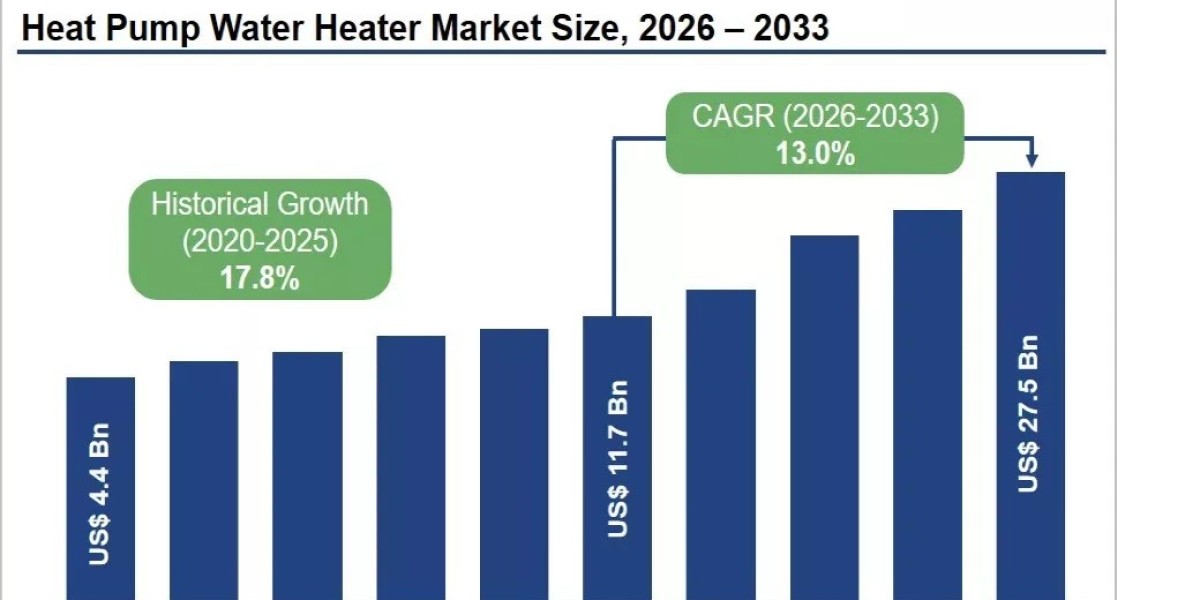


The global heat pump water heater market is experiencing significant growth as residential and commercial consumers increasingly adopt energy-efficient water heating technologies. The market is expected to be valued at US$11.7 billion in 2026 and projected to reach US$27.5 billion by 2033, expanding at a CAGR of 13.0% between 2026 and 2033. Rising electricity costs, building electrification initiatives, environmental regulations, and demand for sustainable heating solutions are supporting market expansion. Heat pump water heaters transfer heat from surrounding air into stored water, reducing electricity consumption compared with conventional electric resistance systems.
Sample Link :https://www.persistencemarketresearch.com/samples/37638
Residential applications represent a major segment because households require consistent hot water for bathing, cleaning, and everyday activities. Asia Pacific is a prominent regional market, supported by established heat pump manufacturing industries, urban development, and adoption of energy-efficient appliances in countries such as China and Japan. Increasing investment in green buildings, replacement of conventional water heaters, and improvements in heat pump performance are creating opportunities for manufacturers and technology providers worldwide.
Key Highlights from the Report
- The heat pump water heater market is projected to grow from US$11.7 billion in 2026 to US$27.5 billion by 2033.
• The global market is expected to register a CAGR of 13.0% during the forecast period.
• Residential applications represent a major source of demand for energy-efficient water heating systems.
• Asia Pacific benefits from established manufacturing capabilities and growing adoption of heat pump technologies.
• Building electrification and energy efficiency policies are supporting demand for advanced water heaters.
• Smart controls, improved refrigerants, and integrated heating technologies are shaping product innovation.
Heat Pump Water Heater Market Segmentation
The heat pump water heater market is segmented by product configuration, capacity, application, and distribution channel. Product categories include integrated systems and split heat pump water heaters. Integrated models combine the heat pump and storage tank into one unit, while split systems position the heat pump separately, providing installation flexibility.
Capacity-based segmentation covers smaller residential systems and larger commercial installations. Applications include residential buildings, hotels, hospitals, educational institutions, and other facilities requiring reliable hot water. Distribution channels include equipment distributors, professional installers, retailers, and direct manufacturer sales.
Regional Insights and Market Outlook
Asia Pacific presents significant opportunities because of extensive appliance manufacturing, residential construction, and established heat pump technology expertise. China and Japan contribute through product development, manufacturing capacity, and domestic demand.
Europe is increasingly focused on building decarbonization, energy efficiency, and reducing dependence on fossil-fuel heating. Government incentives and building renovation initiatives can support heat pump adoption, although policy conditions differ between countries.
North America offers opportunities through residential equipment replacement, utility efficiency programs, and growing consumer awareness. Latin America and the Middle East and Africa represent developing markets where affordability, climate conditions, and installation expertise influence adoption.
Market Drivers: Energy Efficiency and Building Electrification
Rising energy costs and demand for lower-emission buildings are encouraging consumers to replace conventional water heaters with high-efficiency alternatives. Heat pump water heaters can significantly reduce electricity consumption by transferring heat rather than generating it directly.
Building efficiency standards, utility incentives, and increasing awareness of operating costs further support adoption. Improved equipment reliability and smart monitoring capabilities also strengthen consumer confidence in modern water heating technologies.
Market Restraints: Installation Costs and Space Requirements
Higher upfront costs remain an important challenge, particularly for price-sensitive households. Installation may require adequate airflow, suitable electrical connections, condensate drainage, and sufficient equipment space.
Performance can also vary with surrounding air temperatures and installation conditions. Limited installer familiarity and inconsistent incentive availability may slow adoption in certain markets.
Market Opportunities: Smart Water Heating and Commercial Applications
Connected heat pump water heaters offer opportunities through remote monitoring, programmable schedules, and integration with smart home energy management systems.
Commercial buildings, hospitality facilities, and multifamily housing developments represent additional growth opportunities. Manufacturers developing compact systems, quieter compressors, and flexible installation configurations can address previously underserved applications.
Company Insights
- A. O. Smith Corporation
• Rheem Manufacturing Company
• Bradford White Corporation
• Ariston Group
• Daikin Industries, Ltd.
• Mitsubishi Electric Corporation
• Panasonic Corporation
• LG Electronics
• Rinnai Corporation
• Bosch Home Comfort
• Midea Group
• Navien, Inc.
Recent Developments in the Heat Pump Water Heater Market
February 2026: A. O. Smith announced that its Signature 900 Smart Hybrid Heat Pump Water Heater received recognition in the 2026 Good Housekeeping Home Renovation Awards. The system features connected controls, leak protection, and enhanced hot water delivery.
July 2025: Bradford White launched its AeroTherm Series G2 hybrid electric heat pump water heaters, incorporating multiple operating modes, improved energy efficiency, and smart connectivity for residential applications.
Conclusion
The global heat pump water heater market is positioned for substantial expansion as energy efficiency, building electrification, and sustainable construction influence purchasing decisions.
With projected revenue reaching US$27.5 billion by 2033, manufacturers have opportunities to develop efficient, affordable, and intelligent water heating solutions.
Continued improvements in installation flexibility, equipment performance, and consumer awareness will be essential to achieving broader adoption across residential and commercial markets.







