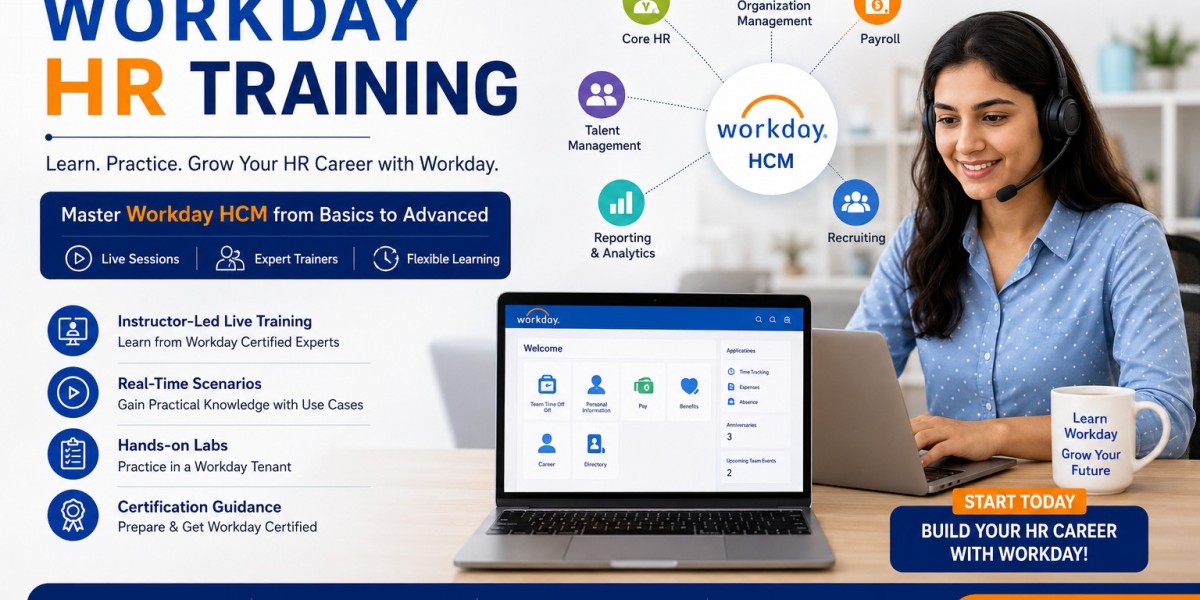


In general, organisations have different environments for development, testing and production operations. These environments allow teams to make configuration changes, evaluate business processes and deploy approved changes without unduly impacting day to day operations. A key concern for workday hcm training administrators and consultants is how configuration changes flow across environments. Workday courses assist learners grasp migration planning, configuration dependencies and testing needs.
Understanding Workday Environments
It is usual for enterprise software systems to have many environments for distinct objectives. Changes may be prepared in a development or configuration environment, and a testing environment lets teams assess whether those changes fulfil business needs. Production is the environment utilised for active business activities.
The names of specific environments, the tools available, and the migration procedures are dependent on the organization’s Workday layout and its approved configuration standards.
By keeping operations distinct you limit the possibility that untested changes may disrupt personnel, payroll, reporting or other key procedures. Workday training may provide learners with an understanding of the purpose of each environment and the responsibilities involved with transferring changes across environments.
Configuration Packages are:
Configuration package: A collection of configuration updates or a supported technique to move configuration across environments. Specific capabilities and terminology will vary with the Workday tools and processes accessible to your company.
The primary purpose is to propagate authorised config changes in a controlled, repeatable manner. This might include identifying the essential changes, verifying dependencies, preparing the migration and validating the outcome in the target environment.
It is not guarantyd that every configuration item may be moved using the same procedure. Learners need to grasp the migration technique provided for the particular kind of configuration and not assume all settings can be migrated in a one-to-one fashion.
Learning Dependencies Between Configurations
Configuration modifications may rely on other objects or settings. For example, a business process configuration may include security groups, organisational structures, condition rules, or other items that must exist and be properly set in the target environment.
If a dependency is missing or works differently, the transferred configuration may not give the desired result.
Workday courses may assist learners realise that migration planning cannot just be a matter of picking a set of modifications and identifying dependencies. Prior to starting, teams should check any associated configuration, access needs and other environment specific settings.
Planning and Testing a Migration
A migration should start with a clear statement of the business necessity. The team has to know what is changing, why the change is needed, what procedures may be impacted, and how success will be assessed.
Once modifications have been made, authorised users should utilise the organization's approved migration process. Then verify the target environment to make sure the desired configuration is applied and dependencies are resolved.
Tests should cover common business situations and exceptions. For example, a modification to an approval process should be evaluated with varied staff responsibilities, transaction kinds and approval results when relevant.
But a successful migration doesn’t mean a setup is proper. Functional testing is still important.
Production Change Management
Production migrations should be carefully planned since they may impact actual business activity. Organisations may have official authorisation, planned deployment periods, recorded test findings and a communications strategy.
Learners should also learn about contingency planning. If a change results in unanticipated behaviour, the team requires a defined strategy for analysing the situation and taking necessary remedial action. The rollback or recovery methods available rely on the settings and the supported procedures.
Why Migration Knowledge Is Important
Workday administrators, functional consultants, implementation professionals and release management teams may benefit from configuration migration expertise. They support organisations to adapt continuously and reduce unnecessary risks.
To put it simply, workday online training may assist learners learn about environment management, configuration dependencies, migration planning, testing, and production governance. A diligent method not only transfers configuration changes correctly, but also validates them against the business needs they are meant to serve.







