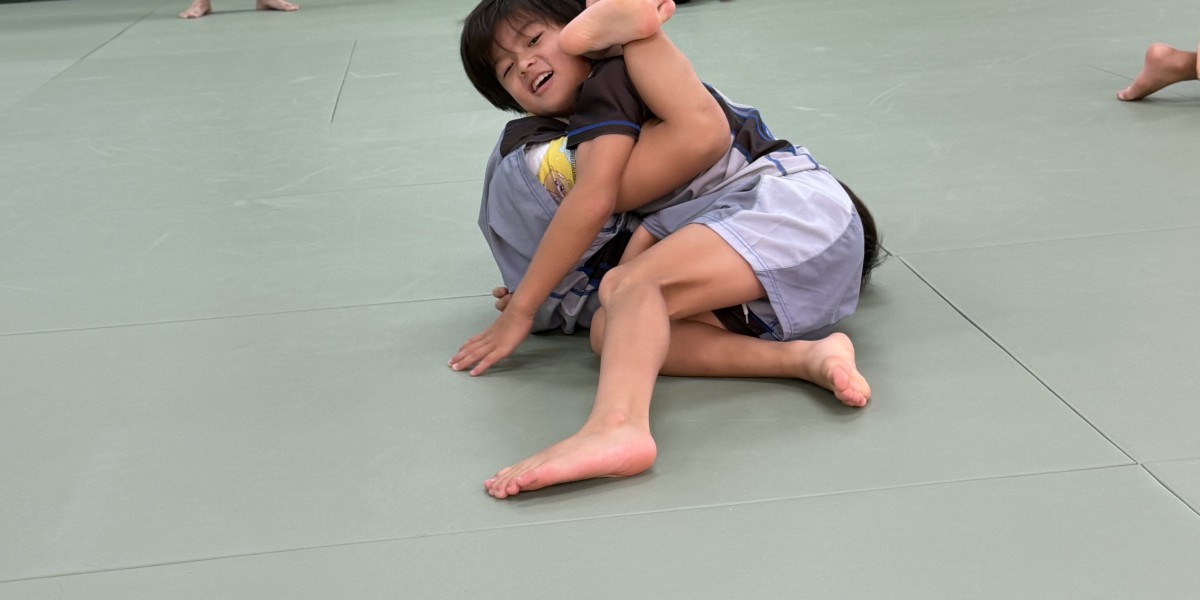


Parents comparing kids BJJ safety practices in the Dallas area are usually trying to answer one practical question: will this room teach my child without turning the hour into theater or risk. Kids jiu jitsu Farmers Branch programs and similar rooms across North Dallas, Carrollton, and Addison share the same core problem. The class has to fit an age, a school night, and a parent who can actually make pickup.
This article walks through the criteria that matter on night three, not on the brochure. It covers age lines and how children actually learn at different stages, what supervision and partner selection look like in practice, how tapping and listening transfer off the mat, the pickup math that decides attendance, and how to read a trial week without buying a story.
Age lines that match how children actually learn
A useful kids program does not put a six-year-old and a fourteen-year-old in the same scramble and call it one class. Younger children need shorter attention windows, more play, and clearer boundaries. Older children can handle longer problem-solving and more live training if the partners are matched. When those groups are mixed without care, the younger child learns to freeze and the older child learns to hold back or, worse, to rush.
Children roughly six to eight usually need shorter rounds, more demonstration, and problems that can be solved with big movements they can see. They often need the coach to reset the group more often. Children roughly nine to twelve can usually hold a problem longer, remember a reason from the previous class, and start to notice when a partner is not following the idea. Teenagers can handle more live training and more technical detail, but they also bring more ego and more size differences. Mixing those stages without a clear split creates a room where nobody is learning the right thing.
Ask what the published age bands are and then watch whether they look real on the mat. A mixed pile of children with one bow is not an age split. It is a crowd. If your child is seven and the room is mostly teenagers, the hour will not teach the body or the attention span that arrived. If your child is twelve and the room is mostly small children, the hour will feel like babysitting.
The right starting age is not a single number for every family. Many rooms begin formal kids classes around six. Some accept younger children for short, highly structured sessions. What matters is whether the coach can describe what a child of that age will actually do in the first month, not whether a flyer says “all ages welcome.” You can compare appropriate starting ages for kids against what you see in the room. If the answer is vague, the program is probably vague.
A concrete test is to ask the coach what a typical first-month class contains for your child’s age. A useful answer names a few movements the child will practice, how partners are chosen, and what happens if the child does not want to roll. A vague answer talks about confidence and discipline without describing the hour. Confidence and discipline can appear, but they appear because the hour was structured, not because the flyer promised them.
What supervision and partner selection look like
Good supervision is not a coach standing on the edge of the mat talking to parents. It is a coach who sees the child whose elbow is floating, who pairs a new student with someone who will slow down, and who steps in before a scramble becomes a contest. Group size matters. A room with one coach and thirty children will miss things. A room with smaller groups or multiple coaches can keep the problems the right size.
Partner selection is part of safety. New children should not be left to sort out who is bigger, faster, or more aggressive. A good coach assigns partners and changes them when the match is wrong. Higher-level children who train with beginners should be told to work the idea from class, not to collect submissions. If you watch a class and see older students treating new children as live toys, that is culture. Believe it on night one.
Watch for size and intensity mismatches even inside an age band. A tall, athletic nine-year-old and a smaller, newer nine-year-old are not the same problem. A good coach notices and either pairs them carefully or gives the larger child a constraint that keeps the round inside the idea from class. A coach who says “just roll” and walks away has handed the smaller child a problem the room did not design.
Parents on the wall are part of the room whether they want to be or not. Coaching from the sideline, filming without care, or arguing about positions turns the hour into a different sport. A clear rule about where parents stand and what they do is a sign that the school has thought about the environment. Ask the rule before day eight. A family membership that ignores wall manners becomes a lobby argument later.
What a kids class structure usually contains
A well-run kids class often follows a recognizable shape even when the techniques change. A short warm-up that includes movement the children can copy. A demonstration of one idea. Partner practice that stays inside that idea, with the coach moving through the pairs. A short live or semi-live segment if the age and the day allow it. A clear end so children know when the hour is finished.
The useful parts are the ones parents can see. Does the coach stop the group when the idea is lost, or does the room keep moving while half the children are doing something else. Does the coach name a reason, or only show the movement at speed. Do children know where to stand, who their partner is, and what to do when they tap. Those details are how a class teaches rather than occupies.
For younger children the live segment may be very short or may be replaced with a game that still uses the idea from class. For older children the live segment can be longer, but it should still start from a position and stay inside the problem. A kids class that begins every night with an unstructured standing scramble is teaching chaos, not the art. A kids class that ends with children who can describe one thing they practiced is teaching something they can repeat.
Tapping, listening, and the skills that actually transfer
Children gain more from jiu jitsu than a list of techniques. They practice listening to an instruction long enough to try it. They practice falling without panic. They practice tapping when a position is finished, and they practice accepting a tap from someone else without a speech. Those are quiet skills. They do not look dramatic in a highlight clip, but they show up at school and at home when a child has to stop, wait, or try again.
Kids training benefits from BJJ include confidence that comes from competence, not from a certificate. A child who can stand up from the floor without using a hand as a crutch, who can keep a frame when someone is heavy, and who can ask a question without embarrassment has gained something useful. A child who collects stripes while freezing in every live round has gained a belt and little else.
Tapping should be taught as a complete sentence, not as failure. The child taps, the partner stops, both reset, and the coach can ask what happened. Shame around tapping teaches children to hide pain or to keep fighting past the point of control. A room that treats the tap as ordinary is safer and teaches faster. Watch whether coaches model it and whether children can do it without a long explanation.
Listening shows up in small ways. The child stops when the coach says stop. The child tries the movement that was shown rather than inventing a different one. The child can answer a simple question about what the elbow or the hip was supposed to do. These are measurable. A parent can watch for them on night three. If they are missing, the class may be entertaining without teaching.
Pickup math, school nights, and the calendar that decides the program
The best curriculum in Dallas fails if the hour collides with homework, dinner, or a drive that expands on I-35E or I-635. Farmers Branch, Carrollton, Addison, and the broader North Dallas area all have different last miles. A class that starts at 5:30 works for some families and destroys others. A class that ends at 7:15 may be perfect or may make bedtime a fight. Do the math before you fall in love with the room.
Drive the route at class hour once. Note parking, the walk from the car, and how long it takes to get the child from the car to the mat and back. Sunday noon is a different city. If the last mile is ordinary on a school night, the program has a chance. If it is a project, motivation will not fix the month. Two nights you can repeat beat three nights that require a perfect week.
Ask what happens when the child does not want to roll on a given night. A good room has an answer that does not embarrass the child. Some nights are for drilling the idea from class. Some nights are for watching. Forcing a tired or upset child into live training teaches avoidance, not toughness. The answer should be specific enough that you can recognize it on night three.
Siblings add another layer. If two children train, do the hours stack or do they require two trips. Is there a place for the child who is not training. Who watches if a parent also wants to train. A family membership that ignores those questions becomes a lobby argument. Ask them before day eight. Loaner youth gis, late arrival rules, and what happens if a child arrives after school in the wrong clothes are small logistics that end memberships. Write those small answers next to the big ones.
How to read a trial week without buying a story
Night one is often kind to prospects. Coaches introduce the child, the room is tidy, and the hour feels exciting. Night three is the school. Are coaches still explaining when the room is tired. Do higher belts or older students slow down. Is anyone rushing a long contract because the lobby felt good. Write the answers in the parking lot while they are still plain.
Four questions are enough for most families. Could we reach this building twice next week after school. Did a coach include a reason for the movement. Were ages split honestly. Did anyone rush us or ignore a question about the child who freezes. If those hold, you can talk about membership length. If they do not, money will not repair them.
A free week with no contract required to try is useful when it is treated as a measurement, not as a sales event. Libre Jiu Jitsu in Farmers Branch is one example of a room that publishes kids classes for ages roughly six to fifteen and a free week without a contract. It is an example, not the only possible answer. If another honest room wins on drive time and age fit, the calendar should win.
What confidence looks like after a few months
Confidence in kids jiu jitsu is not a personality change announced at pickup. It is a child who can enter the room, find a partner, try the problem, and leave without a meltdown. It is a child who can tap and be tapped. It is a child who can listen to a correction without collapsing. Those changes are quiet. They show up in the car on the way home when the child can describe one thing that happened, not when the child recites a list of technique names.
Bullies tend to target children who look unsure. Posture and the ability to stay calm in a close space can shift after a few months of training, but only if the training is regular and the room is not teaching fear. A program that measures success by how hard the child can roll against smaller partners is measuring the wrong thing. A program that measures whether the child can repeat a reason and stay safe is measuring the art.
Parents should watch for the opposite of confidence as well. A child who freezes every week, who complains of sharp pain that is ignored, or who only wants to come when a particular friend is there may need a different room or a different night. Those signals are data. They are not reasons to push harder in the same environment.
A useful three-month check is simple. Can the child name one position. Can the child tap without a speech. Can the child describe one reason from class in the car. Is the drive still ordinary. If those hold, the program is doing its job. If they do not, the issue is usually the room, the nights, or the fit, not the child’s character.
Frequently asked questions
What age can kids start jiu jitsu in the Dallas area?
Many programs begin formal kids classes around age six. Some accept younger children for shorter, highly structured sessions. The useful question is whether the coach can describe what a child of that age will do in the first month and whether the age bands on the mat match the flyer. A six-year-old and a fourteen-year-old do not learn the same way in the same scramble.
Is jiu jitsu safe for kids?
Bruises and soreness are common. Serious injuries are less common when there is no striking, when partners are matched, and when tapping is treated as ordinary. Safety depends more on supervision, group size, and culture than on the name of the art. Watch night three. A coach who sees the child whose elbow is floating and who assigns partners is safer than a coach who stands on the edge talking to parents.
How many nights a week should a child train?
Two nights that survive school, homework, and the drive beat three nights that require a perfect week. One night is a start. Build to two when the child can describe the hour without a fight in the car. Do not buy a plan that assumes a calendar the family does not have.
What should my child wear?
Fitted shorts without zippers or pockets and a snug shirt work for many first classes. A loaner gi is common during a trial if the night is gi. Short nails and no jewelry protect both children. Wash the gear the same day. Shopping for a perfect outfit is a delay dressed as preparation.
How do I know if the coach is actually teaching?
Listen for a reason. “Your elbow floated, so the pass was free” is teaching. “Just be tougher” or “just roll” as a first-month plan is not. Watch whether the coach still explains when the room is tired and whether new children are paired with people who slow down. Night three shows more than night one.
Should parents coach from the wall?
No. Coaching from the sideline turns the hour into a different sport and teaches the child to look at the parent instead of the problem. Ask what the school’s rule is about where parents stand and what they do. A clear rule is a sign the school has thought about the environment. Filming children without care is another signal worth watching.
What if my child does not want to roll?
A good room has an answer that does not embarrass the child. Some nights are for drilling the idea from class. Some nights are for watching. Forcing a tired or upset child into live training teaches avoidance, not toughness. Ask the question before day eight and watch whether the answer looks real on the mat.
How can I tell if age groups are real?
Watch a class. If six-year-olds and teenagers share the same scramble with one bow, the split is not real. Ask the coach what happens when a younger child and an older child would otherwise be paired. A specific answer about separate groups or careful pairing is better than a general claim that everyone trains together.
Parents who evaluate kids jiu jitsu programs in Dallas and Farmers Branch on age lines, supervision, tapping, and the real drive will make better decisions than parents who buy the lobby. The hour has to fit the child and the calendar. Everything else is secondary.







