

In today's competitive business environment, verifying a company's background before entering into a financial or commercial relationship is essential. Banks, NBFCs, fintech companies, investors, suppliers, and corporate organizations need accurate business information to evaluate potential partners, understand financial health, and identify possible risks.
However, company verification and due diligence can become time-consuming when information is scattered across multiple databases, government portals, financial records, and regulatory sources. Manually collecting and reviewing this information can create delays and make it difficult to develop a complete picture of a company's credibility.
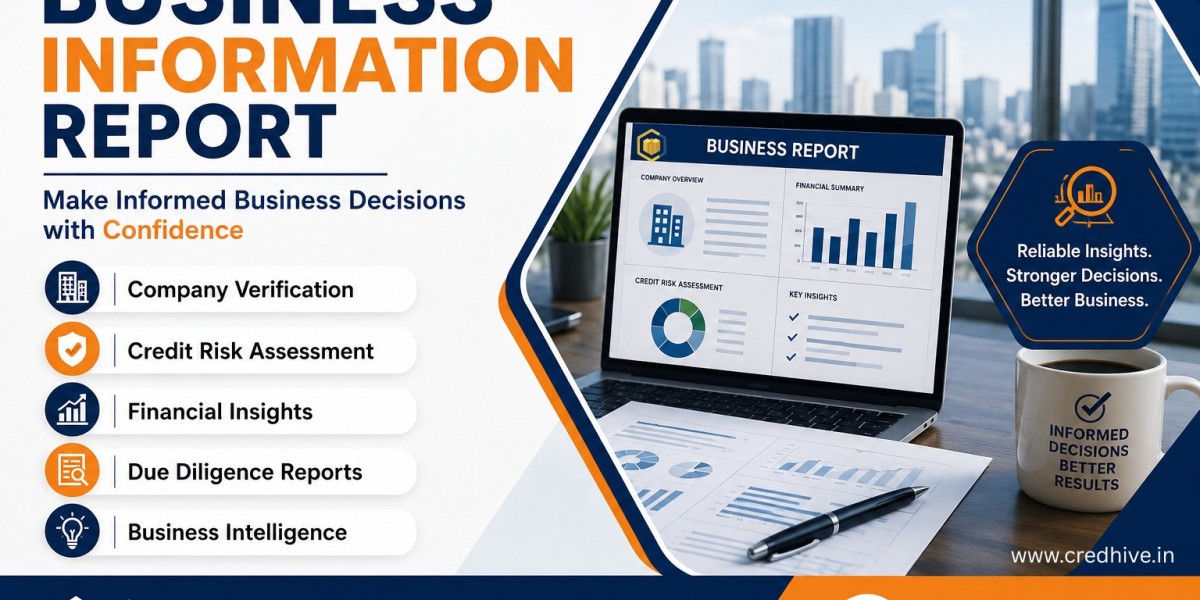
This is where a Business Information Report (BIR) becomes valuable. It consolidates relevant company information into a structured report, helping organizations review business profiles, examine financial indicators, understand management structures, and identify potential risk factors.
In this article, we explore how Business Information Reports simplify company verification and due diligence, their key components, benefits, and importance for modern businesses.
What Is a Business Information Report?
A Business Information Report is a comprehensive document that provides insights into a company's identity, corporate background, financial position, management, regulatory filings, and available risk indicators.
It helps organizations understand the overall profile of a business before making important financial or commercial decisions.
A typical Business Information Report may include:
Company Registration Details: Legal name, Corporate Identification Number (CIN), incorporation date, registered address, and business activities.
Financial Information: Available balance sheet details, profit and loss statements, revenue trends, and financial indicators.
Director and Promoter Information: Details of company directors, management structure, and associated business entities.
MCA Filings: Available annual returns, financial statements, and statutory filing information.
GST Information: Registration details and available GST-related information.
Litigation Records: Available legal cases and litigation-related information.
Registered Charges: Details of registered charges and secured borrowing indicators.
Compliance Information: Available statutory and regulatory compliance signals.
By bringing these details together, a Business Information Report helps decision-makers assess companies more efficiently.
Why Is Company Verification Important?
Company verification is an essential part of business due diligence. Before approving a loan, onboarding a vendor, entering a partnership, or extending credit, organizations need to establish whether a business is genuine, financially stable, and suitable for the proposed relationship.
Without proper verification, organizations may face several challenges.
1. Risk of Working with Unverified Businesses
Organizations may unknowingly enter into relationships with companies that have incomplete documentation, questionable business backgrounds, or inconsistent registration information.
Verifying corporate identity and registration details helps reduce this risk.
2. Limited Financial Visibility
A company's basic profile does not necessarily reveal its financial condition. Reviewing available financial statements, revenue trends, profitability indicators, and registered charges can provide additional context about its financial position.
3. Hidden Management and Ownership Risks
Director and promoter information can reveal business associations and connections with other companies. These relationships may be relevant when evaluating potential conflicts, governance concerns, or connected-party exposure.
4. Regulatory and Compliance Concerns
Incomplete statutory filings, compliance gaps, and other regulatory concerns may affect a company's credibility. Reviewing available corporate and compliance information helps organizations identify issues requiring further investigation.
5. Time-Consuming Manual Verification
Collecting company details from multiple sources requires time and effort. A consolidated Business Information Report simplifies this process by presenting relevant information in a structured format.
How Business Information Reports Simplify Company Verification and Due Diligence
Business Information Reports support a more organized approach to company verification by bringing together different categories of business information.
Here are the major ways they simplify the due diligence process.
1. Simplifies Corporate Identity Verification
The first step in due diligence is confirming the identity and legal existence of a business.
A Business Information Report provides important corporate identification details, including:
Legal company name.
Corporate Identification Number (CIN).
Date of incorporation.
Registered office address.
Company status, where available.
Business activity and industry classification.
These details help organizations verify whether the business information provided by a prospective borrower, vendor, or business partner is consistent with available corporate records.
For banks and NBFCs, this information is particularly useful during borrower onboarding and preliminary credit evaluation.
2. Provides Better Financial Transparency
Financial information is an important component of business verification. A company may have a valid registration and an established business presence, but its financial position still needs to be evaluated.
A Business Information Report can provide access to available financial statements and indicators that help organizations understand:
Revenue and turnover trends.
Profitability performance.
Assets and liabilities.
Financial obligations.
Changes in financial performance.
Overall financial position.
For example, if a company shows declining revenue or increasing liabilities over multiple reporting periods, the information may indicate the need for additional financial investigation.
This helps lenders and business partners make decisions based on a broader understanding of financial performance.
3. Improves Director and Promoter Verification
The management team plays an important role in a company's operations, governance, and financial decisions.
Business Information Reports provide director and promoter information that can help organizations understand who manages the business and identify relevant corporate associations.
This information may include:
Director names and identification details.
Appointment and resignation information.
Director-company associations.
Promoter-related information, where available.
Connections with other registered entities.
For example, while evaluating a new borrower, a lender may review the directors' associations with other companies to identify relevant business connections or potential areas requiring further due diligence.
This provides additional context beyond the company's registration and financial details.
4. Helps Identify Legal and Litigation Risks
Legal disputes and litigation records can provide important insights into potential business risks.
A Business Information Report may include available litigation-related information that helps organizations identify whether a company is involved in reported legal proceedings.
Reviewing such information can support:
Identification of ongoing legal disputes.
Evaluation of potential financial or operational exposure.
Better understanding of corporate risk.
Additional verification before entering into business agreements.
It is important to examine the nature, status, and relevance of each case rather than treating the presence of litigation as automatic evidence of financial distress.
5. Makes Corporate Compliance Verification Easier
Regulatory compliance is another important consideration during company due diligence.
Organizations need to understand whether a company maintains its statutory filing responsibilities and whether relevant compliance concerns require further review.
Business Information Reports can consolidate available information from corporate and regulatory records, including:
MCA annual return filings.
Financial statement filings.
Company registration information.
Available GST registration details.
Relevant statutory compliance indicators.
This helps compliance teams and financial institutions review important company information without independently collecting every detail from multiple sources.
6. Provides Insights into Registered Charges and Borrowings
A company's registered charges can offer useful information about secured borrowing arrangements and assets used as security.
Business Information Reports may include details such as:
Registered charge information.
Charge creation dates.
Charge amounts, where available.
Charge holders.
Charge satisfaction records.
This information is relevant for lenders evaluating existing financial commitments and understanding the company's secured borrowing position.
For example, if a company has multiple registered charges, a lender may investigate its existing financial obligations and collateral arrangements before considering additional credit exposure.
7. Supports Faster Vendor and Supplier Due Diligence
Vendor verification is essential for organizations that depend on external suppliers, distributors, and service providers.
Working with an unreliable vendor can affect business continuity, financial stability, and operational performance.
A Business Information Report helps procurement and risk teams review important vendor details, including:
Corporate registration and identity.
Financial performance indicators.
Director and management information.
Available litigation records.
Corporate filings and compliance signals.
Registered charges and business associations.
These insights help organizations conduct more informed vendor evaluations and establish appropriate verification procedures before onboarding new suppliers.
8. Strengthens Ongoing Business Monitoring
Due diligence should not end once a company has been approved or onboarded.
Businesses can experience changes in financial performance, management, ownership, regulatory status, and legal circumstances over time.
Business Information Reports and associated monitoring solutions help organizations review relevant company developments periodically.
For banks and NBFCs, this is particularly important when monitoring existing borrowers and identifying potential early warning signals.
Changes in director associations, registered charges, financial indicators, or corporate filings may require additional investigation.
Business Information Reports for Different Industries
Business Information Reports are useful across several industries because organizations regularly need to verify companies and assess business relationships.
Industry | How Business Information Reports Help |
|---|---|
Banks | Borrower verification and credit evaluation |
NBFCs | Business due diligence and loan assessment |
Fintech Companies | Digital business verification and risk assessment |
Insurance Companies | Corporate background and counterparty evaluation |
Manufacturing | Supplier and distributor verification |
Corporate Enterprises | Vendor onboarding and business partner due diligence |
Investors | Company background and financial evaluation |
Supply Chain Finance | Buyer, supplier, and counterparty assessment |
Role of Business Information Reports in Banking and NBFCs
For banks and NBFCs, company verification is a critical part of the lending process.
Financial institutions need to understand a borrower's financial position, corporate structure, management background, and potential risk exposure before extending credit.
A Business Information Report helps credit teams access relevant company information in one structured format.
It can support:
Preliminary borrower verification.
Corporate background checks.
Financial performance analysis.
Director and promoter verification.
Compliance and litigation reviews.
Credit risk assessment.
Periodic borrower monitoring.
Combining these insights with credit bureau information, financial analysis, and internal lending policies can help financial institutions strengthen their overall credit assessment process.
Business Information Report vs Traditional Company Verification
Traditional company verification often involves checking individual government portals, collecting documents, reviewing financial statements, and manually comparing company details.
Although these methods remain important for source-level verification, they can become time-consuming when dealing with multiple businesses.
A Business Information Report simplifies the process by consolidating relevant information into a structured format.
Verification Parameter | Traditional Verification | Business Information Report |
|---|---|---|
Company Details | Collected from separate sources | Presented in a consolidated format |
Financial Information | Reviewed manually | Available financial data organized together |
Director Information | Requires individual searches | Director details and associations presented together |
MCA Filings | Checked separately | Available filing information consolidated |
Litigation Information | Separate searches required | Available litigation records presented together |
Risk Assessment | Depends on manual analysis | Provides multiple information points for evaluation |
Time and Effort | Can require significant manual work | Helps streamline information review |
A Business Information Report does not replace official document verification or professional investigation. Instead, it helps organizations organize their initial assessment and identify areas requiring deeper examination.
Key Benefits of Using Business Information Reports
Using Business Information Reports as part of a structured due diligence process offers several advantages.
1. Saves Time and Operational Effort
Consolidated company information reduces the need to search multiple sources individually, helping teams complete preliminary business verification more efficiently.
2. Supports Informed Decision-Making
Access to financial, corporate, management, and compliance-related information provides additional context for evaluating businesses.
3. Improves Risk Identification
Multiple information points help organizations identify potential financial, legal, operational, and compliance concerns that may require further investigation.
4. Strengthens Business Transparency
Structured company information improves visibility into corporate backgrounds and helps decision-makers understand business entities more clearly.
5. Supports Scalable Due Diligence
Organizations dealing with large numbers of borrowers, vendors, suppliers, and business partners can use standardized reports to improve consistency across their verification processes.
6. Enables Better Credit and Business Evaluation
Financial institutions can combine company information with credit history, internal financial analysis, and other relevant data to develop a more comprehensive assessment.
How to Choose the Right Business Information Report Provider
Choosing a reliable Business Information Report provider is important because the quality, coverage, and relevance of information directly affect the due diligence process.
Before selecting a provider, organizations should consider the following factors:
1. Data Coverage: Check whether the provider covers company registration, MCA filings, GST information, financial indicators, director details, and available litigation records.
2. Data Accuracy: Information should be sourced from reliable records, with clear references and appropriate verification practices.
3. Comprehensive Company Profiles: Choose reports that provide a broader view of company background, financial performance, management, and compliance.
4. Ease of Access: A structured and easy-to-understand report helps credit, compliance, and business teams review information efficiently.
5. Regular Information Updates: Company records and financial information change over time. Providers should clearly communicate data freshness and update frequency.
6. Integration Capabilities: For organizations managing large volumes of business assessments, API access and integration capabilities can improve operational efficiency.
7. Risk Intelligence Features: Additional capabilities such as director linkages, financial indicators, and portfolio monitoring can support more advanced business risk assessment.
How Credhive Simplifies Company Verification and Due Diligence
Credhive is a business intelligence and Credit Decision Engine platform designed to help banks, NBFCs, fintech companies, and financial institutions make informed decisions through structured company information and risk intelligence.
Credhive brings together business information from sources such as MCA filings, GST data, financial indicators, litigation records, director linkages, and compliance-related information to support comprehensive company evaluation.
Its Business Information Reports help organizations access relevant company details without relying entirely on scattered information sources.
With Credhive, organizations can:
Access comprehensive company profiles and registration details.
Review available financial information and business indicators.
Examine director, promoter, and company linkages.
Evaluate available litigation and compliance signals.
Review registered charges and corporate filings.
Support borrower, vendor, and counterparty due diligence.
Strengthen company risk assessment and credit evaluation.
In addition to Business Information Reports, Credhive offers Portfolio Monitoring capabilities that help financial institutions track relevant changes in companies and identify potential early warning signals.
By combining business intelligence with credit assessment capabilities, Credhive helps organizations simplify company verification, improve due diligence workflows, and make more informed business decisions.
Conclusion
Company verification and due diligence are essential for building reliable business relationships and managing financial risks. However, manually collecting company information from multiple sources can make the process complicated and time-consuming.
Business Information Reports simplify this process by bringing together important company details, financial information, director profiles, corporate filings, litigation records, and compliance indicators in a structured format.
For banks, NBFCs, fintech companies, and enterprises, these reports provide valuable insights for borrower evaluation, vendor verification, corporate due diligence, and counterparty risk assessment.
As businesses increasingly rely on data-driven decisions, Business Information Reports are becoming an important resource for improving transparency, strengthening risk management, and supporting smarter business decisions.
Frequently Asked Questions (FAQs)
1. What is the purpose of a Business Information Report?
A Business Information Report provides comprehensive information about a company's background, registration details, financial position, directors, corporate filings, and available risk indicators. It helps organizations verify businesses and conduct due diligence before making financial or commercial decisions.
2. How does a Business Information Report help in company verification?
It consolidates relevant company information, including registration details, financial records, director information, and compliance indicators. This allows organizations to review important business details more efficiently.
3. Why is a Business Information Report important for due diligence?
It helps organizations examine company backgrounds, understand financial indicators, review management information, and identify potential legal or compliance concerns before entering into business relationships.
4. Can Business Information Reports help banks and NBFCs?
Yes. Banks and NBFCs use Business Information Reports to support borrower verification, financial evaluation, corporate due diligence, and credit risk assessment.
5. What information is included in a Business Information Report?
A typical report may include company registration details, financial statements, director information, MCA filings, GST information, litigation records, registered charges, and compliance-related indicators.
6. How often should companies conduct business due diligence?
Due diligence should be conducted before establishing a new business relationship and repeated periodically based on the relationship's risk level. Higher-risk borrowers, suppliers, and counterparties may require more frequent reviews.
7. How can Credhive help with business due diligence?
Credhive provides Business Information Reports, company intelligence, director linkages, financial indicators, and Portfolio Monitoring capabilities to help financial institutions and enterprises strengthen company verification and business risk assessment.







