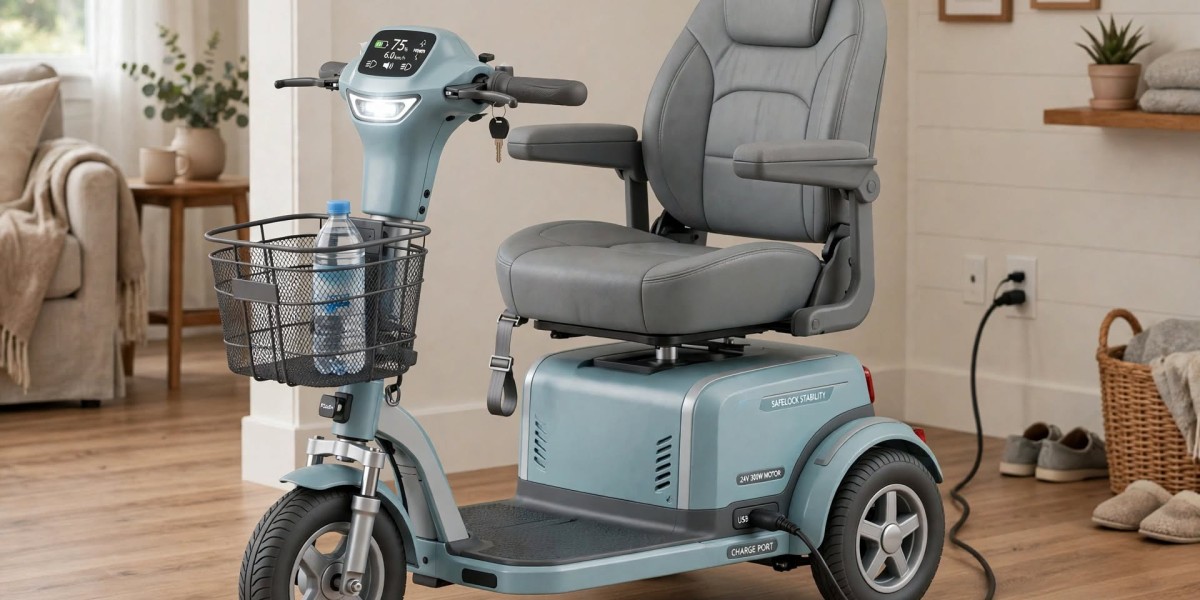


A three-wheeled mobility scooter is a battery-powered vehicle with one wheel at the front and two at the back. You steer it with a handlebar called a tiller, and you control speed with a thumb lever. It is built for people who can walk short distances but find longer trips tiring or painful.
For many older adults, this type of scooter is the difference between staying home and getting to the pharmacy, the park, or a grandchild’s school play on their own.
How a Three-Wheeled Scooter Differs From a Four-Wheeled Model
The single front wheel changes how the scooter handles. Most three-wheeled mobility scooter models have a turning radius of around 40 to 50 inches. A comparable four-wheeled scooter often needs 55 inches or more. That gap matters inside a home, where you have to turn between a couch and a coffee table or back out of a narrow hallway.
Four-wheeled scooters are more stable on rough ground, curbs, and steep slopes. Three-wheeled models suit smooth surfaces better: indoor floors, store aisles, sidewalks, and paved paths. If most of your trips happen indoors or on flat pavement, a three-wheeler is usually the better fit.
Benefits for Elderly Users
Easier Movement in Tight Spaces
The tighter turning circle lets you move through kitchens, doorways, and crowded shops without a three-point turn every few feet. A 30-inch interior doorway is easy to clear with most compact three-wheeled models.
More Legroom
With only one wheel at the front, the floor area widens toward the tiller. You can stretch your legs out instead of keeping your knees bent. This helps if you have stiff knees, arthritis, or long legs.
Lighter and Easier to Transport
Many travel-size three-wheeled scooters break down into four or five pieces. The heaviest piece often weighs 35 to 45 pounds, so a family member can lift it into a car trunk. Some fold in a single motion. This makes trips to visit relatives or take a short vacation far simpler.
Independence for Daily Errands
A scooter lets you shop, run errands, and meet friends without depending on someone else’s schedule. Typical models reach 4 to 5 mph and travel 8 to 15 miles on a full charge, which covers most errands in a neighborhood. Staying active outside the house also cuts down on the isolation many older adults face.
Less Strain and Lower Fall Risk
Walking long distances with a cane or walker raises the chance of a fall once you get tired. A scooter lets you save energy for the moments you need to stand, such as reaching a shelf or climbing a few steps.
What to Check Before You Buy
Look at these numbers on the spec sheet:
- Weight capacity: Most models carry 250 to 350 pounds. Pick one rated at least 50 pounds above your body weight plus anything you carry.
- Range: Measure your usual round trip and choose a range with a buffer of a few miles. Cold weather and hills drain the battery faster.
- Seat height and swivel: A seat that swivels makes getting on and off much safer.
- Ground clearance: Two to three inches is normal. If you cross thresholds or cracked sidewalks often, look for more.
- Tiller adjustment: You should reach the handlebar with relaxed arms and a straight back.
Try the scooter in person if you can. Sit on it, turn it in a tight space, and test the brakes on a slight slope.
Is a Three-Wheeled Scooter Right for You
A three-wheeled scooter works best if you have good upper-body strength to steer, can sit upright without support, and spend most of your time on smooth ground. If you need to ride over grass, gravel, or steep driveways, a four-wheeled scooter is the safer choice. Talk to your doctor or physical therapist before you buy. In the US, Medicare Part B may cover part of the cost when a doctor documents that you need a scooter to move around your home.
Pick the model that matches your daily routine, and you get back the freedom to come and go on your own terms.







