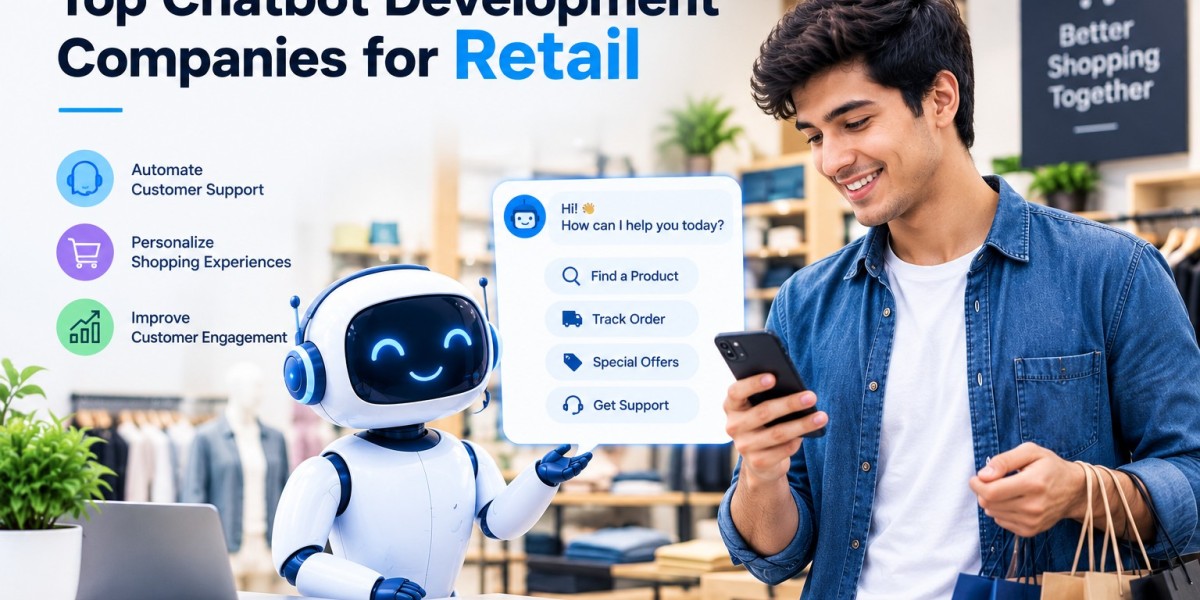


Every online retail conversation contains intent. A shopper asking about size may be close to purchasing. A customer checking delivery time may be comparing retailers. Someone questioning the return policy may need reassurance before completing checkout.
However, many retailers still treat these interactions as isolated support requests. Customers receive generic answers, move between disconnected channels and are often directed to another page or department before their problem is resolved. Each additional step creates friction—and another opportunity for the sale to disappear.
AI Agents change this model by turning conversations into guided, actionable shopping journeys. They can understand what customers want, retrieve information from trusted retail systems and help complete tasks such as comparing products, checking availability, tracking orders or initiating returns.
Choosing the right retail ai agent development company therefore involves more than selecting a conversational technology provider. Retailers need a partner capable of connecting intelligence with commerce systems, customer data, business rules and secure transactional workflows. The real objective is not to make a chatbot sound more human, it is to help customers move confidently from question to purchase and from purchase to long-term loyalty.
Moving Beyond Question-and-Answer Automation
Traditional retail bots were designed primarily to answer frequently asked questions. They could explain store hours, return policies or delivery charges, but often failed when customers asked follow-up questions or wanted to perform an action.
AI Agents represent a more practical stage of automation. They can understand customer intent, retrieve relevant information and complete approved tasks across connected systems.
For example, an agent should not merely tell a customer how returns work. It should be able to verify the order, confirm return eligibility, initiate the request, generate a label and communicate the next step.
The difference is important: answering a question creates convenience, while completing a task creates measurable business value.
Integration Determines the Agent’s Real Value
An AI Agent can only be as useful as the information and systems it can access.
A polished conversational interface may perform well during a controlled demonstration but become unreliable when asked about live inventory, regional pricing, delayed shipments or customer-specific loyalty benefits.
A production-ready retail solution may need connections with:
E-commerce platforms
Product information management systems
Inventory and warehouse systems
Customer relationship management platforms
Order management applications
Payment gateways
Loyalty programs
Contact-centre software
Store and point-of-sale systems
These integrations allow the agent to provide current information and execute permitted actions. Without them, it remains another layer between the customer and the systems that actually operate the business.
Accuracy Must Be Designed Into the Workflow
Retail errors can have an immediate commercial impact. Incorrect product information may cause a return. An inaccurate delivery promise can damage customer trust. A fabricated discount may create conflict between the customer and support team.
Accuracy therefore cannot depend solely on selecting a powerful language model.
Reliable agents should retrieve answers from approved business sources, check live systems when information changes frequently and follow deterministic rules for sensitive transactions. Guardrails should prevent the agent from inventing prices, policies, availability or refund decisions.
High-risk actions may require additional controls, including customer authentication, confirmation steps, transaction limits or human approval.
A capable AI agent company should be able to explain how responses are grounded, how actions are validated and what happens when confidence is low. A provider that discusses only conversational fluency may be overlooking the harder—and more important—parts of enterprise implementation.
Omnichannel Should Mean Continuous Context
Many providers describe their solutions as omnichannel because the same agent can appear on several platforms. True omnichannel service requires more than availability.
The customer should be able to begin a conversation on one channel and continue it elsewhere without repeating the issue. Product preferences, previous questions and completed actions should remain available where consent and privacy requirements allow.
This continuity is especially valuable when customers move between:
Websites and mobile applications
WhatsApp and SMS
Instagram and Facebook Messenger
Email and live chat
Voice support and contact centres
Online stores and physical locations
The objective is not to deploy more interfaces. It is to create one coherent customer journey across them.
Personalization Should Help, Not Manipulate
Retailers possess valuable signals such as browsing behaviour, purchase history, preferred categories and loyalty activity. AI can use these signals to make product discovery more relevant.
However, effective personalization is not simply a stream of recommendations. The agent should understand the customer’s immediate need.
A shopper looking for a laptop for university has different priorities from someone buying a device for professional video editing. Asking a few thoughtful questions about budget, intended use and essential features can produce better recommendations than relying only on previous purchases.
Retailers must also establish clear boundaries. Customers should understand when personalization is being used, and sensitive information should not be inferred or exposed unnecessarily.
Human Support Remains Essential
Even an advanced agent will encounter situations requiring judgement, empathy or exception handling.
A distressed customer, a disputed payment or a complicated warranty claim may need a human representative. The transfer should include the conversation history, verified customer details, identified intent and actions already attempted.
A poorly designed handoff forces customers to explain everything again. A strong handoff allows the representative to enter the conversation with context and move directly toward resolution.
The goal is not to remove people from retail service. It is to automate repetitive work so employees can focus on interactions where human judgement creates greater value.
Measure Outcomes Instead of Conversation Volume
A high number of automated conversations does not automatically indicate success. Retailers should connect the implementation to specific commercial and service metrics.
Depending on the use case, these may include:
Product-discovery-to-cart conversion
Cart recovery rate
Average order value
First-contact resolution
Order-status inquiry reduction
Return-processing time
Human escalation rate
Customer satisfaction
Cost per resolved interaction
Revenue influenced by assisted journeys
Measurement should begin during the pilot, not after deployment. Establishing a baseline allows teams to determine whether the agent is producing genuine improvement.
Select a Partner for Production, Not Just the Pilot
A pilot can demonstrate that an AI Agent understands sample questions. Production reveals whether it can handle real customers, unpredictable language, seasonal traffic, incomplete data and exceptions across connected systems.
Retailers should evaluate potential partners based on retail experience, integration depth, security, governance, testing, scalability and post-launch optimization. They should also ask who owns the data, where conversations are processed and how models are monitored after deployment.
The right development partner will challenge unclear requirements, recommend a focused first use case and define measurable outcomes before building. It will treat the AI Agent as part of the retailer’s operating environment—not as a standalone website feature.
Ultimately, successful retail AI is not determined by how human the conversation sounds. It is determined by whether the agent can provide trusted information, complete useful tasks and make shopping easier for customers while operating within the retailer’s rules.







