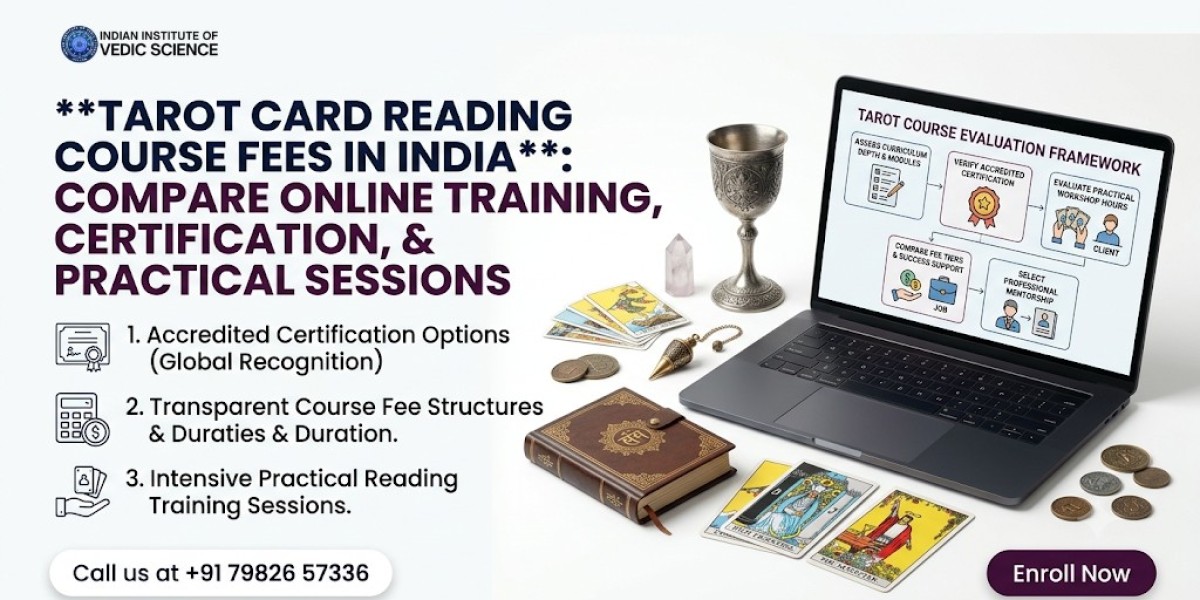


Tarot Card Reading Course Fees in India: Compare Online Training, Certification and Practical Reading Sessions
Tarot card reading has become an area of interest for people who want to explore symbolic interpretation, intuitive learning and traditional card-reading practices. Many beginners start by learning the meanings of individual tarot cards, but developing a systematic understanding requires more than memorising descriptions. Students need to understand the structure of a tarot deck, explore different card combinations, practise spreads and learn how to communicate interpretations responsibly.
For anyone planning to study tarot, understanding course fees is an important part of selecting the right educational programme. However, the lowest-priced course is not necessarily the most suitable option. The curriculum, teaching methodology, instructor guidance, practical reading sessions, learning materials and certification conditions should also be considered.
People searching for tarot reading course fees or tarot course fees often want to know how much training costs, what is included in the programme and whether online learning can provide sufficient practical experience. They may also want to understand whether a certificate is provided and how much practice is required before they feel comfortable interpreting cards.
A structured tarot card reading course can introduce learners to the fundamentals of tarot, the Major and Minor Arcana, card symbolism, spreads, interpretation techniques and practical reading exercises. Choosing the right programme can help students follow a clear learning path instead of trying to understand disconnected concepts independently.
This guide explains the factors that influence tarot course fees in India, how to compare online training options, what certification means, why practical reading sessions matter and how to select a programme that matches your learning objectives.
Understanding Tarot Card Reading Before Choosing a Course
Tarot is a card-based interpretative system that uses symbolic imagery, themes and card arrangements as part of a reading. A standard tarot deck generally contains 78 cards divided into two main sections: the Major Arcana and the Minor Arcana.
Each card has its own imagery, traditional associations and interpretative possibilities. The meaning of a card may also be considered in relation to its position in a spread and the surrounding cards.
For beginners, learning the structure of a tarot deck is an important first step.
A structured learning programme may introduce:
The composition of a tarot deck.
Major Arcana cards and their symbolism.
Minor Arcana cards and their suits.
Court cards and number cards.
Upright and reversed card interpretations, where included.
Different tarot spreads.
Card combinations and contextual interpretation.
Practical reading exercises.
Responsible communication during readings.
Students should understand that tarot interpretation is not simply about memorising individual card meanings. It involves learning how to examine imagery, consider the context of a spread and communicate an interpretation thoughtfully.
What Are Tarot Card Reading Course Fees in India?
The cost of tarot education can vary depending on the institute, course duration, syllabus, teaching format and level of practical support.
Some programmes may focus on introductory card meanings, while others may offer a more comprehensive curriculum with guided reading sessions, assignments and instructor interaction.
Therefore, when researching tarot reading course fees, students should compare the complete learning experience rather than looking at the advertised price alone.
Factors That Influence Tarot Course Fees
Several factors can influence the fee structure of a tarot training programme.
1. Course Curriculum
A short introductory programme covering the basics of tarot may have a different fee structure from a comprehensive course covering the entire deck, spreads, combinations and practical interpretation.
Before enrolling, check the number of modules and the depth of each subject.
2. Course Duration
The duration of a programme can influence its overall structure. Some courses are designed for introductory learning, while others provide a longer learning pathway with additional practice.
However, a longer course is not automatically better. The important consideration is whether the duration is appropriate for the subjects being taught.
3. Live or Recorded Classes
Live instructor-led sessions may provide opportunities to ask questions and discuss examples directly.
Recorded lessons may offer greater flexibility and allow learners to revisit topics.
Some institutes combine both formats. Understand exactly what is included before comparing fees.
4. Practical Reading Sessions
Practical training is an important part of tarot education.
A programme that includes guided reading sessions, sample spreads, interpretation exercises and instructor feedback may offer a different learning experience from one focused only on theoretical lessons.
5. Study Materials
Check whether the programme includes notes, digital learning resources, practice assignments or additional reference material.
These resources can support revision and help students organise their learning.
6. Certification
Some institutes provide a certificate after students fulfil their course-completion requirements.
Understand whether the fee includes certification and whether attendance, assessments or assignments are required.
7. Instructor Support
The availability of doubt-clearing sessions, individual feedback or additional academic support can also influence the overall value of a programme.
How to Compare Tarot Course Fees Effectively
Before selecting a programme, ask the institute for a complete fee breakdown.
Check:
What subjects are included?
How many classes are conducted?
Are live sessions available?
Are recorded lessons provided?
Are practical reading sessions included?
Is instructor guidance available?
Are study materials included?
Is certification provided?
Are there any additional charges?
The right programme should match your learning objectives, available time and budget.
Do not assume that a higher fee guarantees better education or that a lower fee means the course lacks quality. Evaluate the actual course structure before deciding.
What Should You Learn in a Tarot Card Reading Course?
A well-organised tarot programme should introduce the subject progressively. Beginners should first understand the deck and its symbolism before moving towards combinations and more detailed reading techniques.
Here are the important modules to look for.
1. Introduction to Tarot
The introductory module should explain the basic structure of tarot and how cards are used within a reading.
Students should become familiar with the deck, its sections and the general approach to interpretation.
Topics may include:
Introduction to tarot reading.
Structure of a standard tarot deck.
Understanding card imagery.
Basic symbolism.
The role of questions in a reading.
Introduction to different reading approaches.
This foundation helps beginners understand the subject before exploring individual cards.
2. Understanding the Major Arcana
The Major Arcana consists of 22 cards that are commonly associated with significant themes, experiences and symbolic lessons within tarot traditions.
Students should learn the imagery, traditional associations and interpretative themes of each card.
A structured programme may cover:
Individual Major Arcana card meanings.
Symbolic elements and imagery.
Traditional associations.
Upright interpretations.
Reversed interpretations, where included.
How card meanings change according to context.
The purpose should be to develop an understanding of the cards rather than simply memorising short definitions.
3. Understanding the Minor Arcana
The Minor Arcana contains 56 cards divided into four suits. These suits are commonly known as Wands, Cups, Swords and Pentacles.
Each suit is associated with different symbolic themes within tarot traditions.
Students should understand the general characteristics of the suits and how number cards are interpreted.
This section may include:
Introduction to the four suits.
Understanding Ace through Ten.
Number-based symbolism.
Suit-related themes.
Card combinations.
Contextual interpretation.
Learning the Minor Arcana requires regular revision because students need to understand how individual cards relate to the wider reading.
4. Understanding Court Cards
Court cards are another important part of the tarot deck.
A programme may introduce the Page, Knight, Queen and King within each suit and explain their traditional interpretations.
Students should learn how these cards may be understood within different reading contexts.
Practical examples can help learners understand how court cards are interpreted without depending on rigid or overly general descriptions.
5. Tarot Spreads and Card Placement
A tarot spread refers to the arrangement of cards used during a reading.
Different spreads may be used for different reading objectives.
A beginner-friendly programme should introduce simple arrangements before progressing towards more detailed spreads.
Possible learning areas include:
Single-card readings.
Three-card spreads.
Past, present and future arrangements.
Situation-based spreads.
Relationship-related spreads.
General guidance spreads.
Understanding card positions.
Students should learn why card placement matters and how the position of a card influences its interpretation.
6. Card Combinations and Contextual Reading
One of the challenges beginners face is interpreting multiple cards together.
A single card may have several traditional associations, but its interpretation within a spread depends on the surrounding cards and the question being considered.
Students should practise identifying connections between cards and explaining how the overall spread creates a broader interpretation.
This is an important step in moving beyond individual card memorisation.
7. Practical Tarot Reading Sessions
Practical reading sessions allow learners to apply the concepts covered in theoretical lessons.
A structured programme should provide opportunities to practise different spreads, explain interpretations and review their approach.
Practical activities may include:
Selecting cards for sample readings.
Preparing simple spreads.
Identifying individual card meanings.
Examining combinations.
Explaining card positions.
Comparing different interpretations.
Receiving feedback from instructors.
Students should also understand how to frame questions and communicate readings responsibly.
Why Choose Tarot Reading Online Training?
Online education can make specialised tarot learning accessible to people across different locations.
A structured tarot reading online programme may be useful for beginners, working professionals and individuals interested in exploring tarot as a personal learning subject.
1. Learn Without Relocating
Online classes allow students to access learning opportunities from different cities.
People can compare institutes and programmes without necessarily travelling to attend regular physical classes.
This can be helpful for individuals who have limited time or live away from specialist training centres.
2. Flexible Learning Formats
Online programmes may include live classes, recorded sessions or a combination of both.
Live sessions can provide direct interaction, while recorded resources may help learners revise lessons.
Before enrolling, understand the schedule and access conditions.
3. Structured Instructor Guidance
Learning tarot independently can sometimes become confusing because different sources may explain card meanings differently.
Instructor-led education can provide a consistent learning framework and help students understand the methodology followed by the programme.
Students can ask questions and receive clarification on difficult concepts, depending on the support included.
4. Opportunities to Practise
A useful online programme should not be limited to watching lessons.
Students should get opportunities to practise spreads, discuss card combinations and apply interpretation methods.
The availability of guided exercises can make the learning experience more organised.
5. Suitable for Different Learning Objectives
Some learners study tarot out of personal interest, while others want to develop a foundation for future consultation-related activities.
A structured programme can help students understand the subject and identify areas where they need more practice.
However, completing an online course should not be treated as an automatic guarantee of professional competence.
How to Choose the Right Tarot Card Reading Course
Selecting a course requires more than comparing fees and promotional claims.
Students should examine the actual curriculum, learning experience and support available throughout the programme.
1. Review the Complete Syllabus
The syllabus should clearly explain the subjects covered.
Check whether the course includes the Major Arcana, Minor Arcana, court cards, spreads, combinations and practical reading sessions.
A programme should provide a logical progression from introductory concepts to applied learning.
2. Understand the Teaching Methodology
Find out how lessons are conducted.
Ask whether the programme includes live instructor-led classes, recorded lessons, demonstrations or interactive exercises.
The teaching format should match your availability and preferred learning style.
3. Check Practical Reading Opportunities
Practical reading sessions are important for understanding how card meanings work together.
Look for a programme that includes sample readings, spread exercises and opportunities to discuss interpretations.
Also check whether students receive feedback.
4. Evaluate Instructor Support
Beginners may have questions about card symbolism, reversed meanings, spread selection and combinations.
Understand whether the programme offers doubt-clearing sessions or other forms of learning support.
5. Verify Certification Details
Before enrolling, ask what the certificate represents.
Check the issuing organisation, completion requirements and whether assignments or assessments are necessary.
A certificate may provide a record of course completion, but it does not automatically guarantee professional expertise or employment.
6. Compare Fees and Inclusions
Compare course fees alongside the curriculum, duration, teaching format, practice opportunities and instructor support.
Ask whether study materials, recordings and certification are included in the advertised amount.
Always request the latest fee structure directly from the institute.
7. Research the Institute
Review the institute's official website, course details, contact information and educational programmes.
Look for clear explanations of the learning process and transparent enrolment conditions.
An informed decision is better than selecting a programme based only on advertisements or promotional statements.
Tarot Certification: What Should Students Know?
Certification is an important consideration for many learners, particularly those who want a structured record of their education.
However, students should understand the difference between completing a course and developing the ability to interpret cards confidently.
What Does a Tarot Certificate Represent?
A course certificate generally records that a learner has completed a programme according to the institute's requirements.
The exact meaning depends on the organisation issuing it and the conditions associated with the course.
Before enrolling, check:
Who issues the certificate?
Is attendance required?
Are assignments included?
Is an assessment conducted?
What are the completion requirements?
Is the certificate included in the course fee?
Is Certification Enough to Develop Tarot Reading Skills?
No. Certification and practical ability are different aspects of learning.
Students need to understand card meanings, practise spreads, examine combinations and improve their communication skills.
Regular practice can help learners become more comfortable with the reading process.
A responsible approach also requires understanding the limitations of tarot interpretations and avoiding guaranteed predictions.
How Practical Reading Sessions Help Beginners
Practical learning is one of the most important elements to evaluate when choosing a tarot programme.
Students may understand individual card meanings but still struggle when several cards appear together in a spread.
Guided practice can help them connect the concepts.
1. Understanding the Reading Process
Students should learn how to prepare for a reading, understand the question and select a suitable spread.
A structured method can make the process more organised.
2. Interpreting Individual Cards
Learners should practise identifying the traditional associations and imagery of each card.
They should also understand how interpretation changes according to the question and card position.
3. Connecting Multiple Cards
A reading often involves examining several cards together.
Practice helps learners identify relationships between different cards and understand the overall arrangement.
4. Developing Communication Skills
A tarot reader should be able to explain interpretations clearly and respectfully.
Students should learn to avoid absolute statements, exaggerated predictions and language that creates unnecessary fear.
5. Building Confidence Through Revision
Regular practice, feedback and revision can help students improve their understanding over time.
Confidence should develop through knowledge and experience rather than unsupported claims about instant mastery.
Common Mistakes to Avoid When Selecting a Tarot Course
Before enrolling, be aware of common mistakes that can affect the learning experience.
Choosing only by course fees: Price is important, but it should be compared with the syllabus, practical sessions and support.
Ignoring the curriculum: Always check whether the course covers the complete deck and relevant reading techniques.
Assuming certification guarantees expertise: A certificate does not replace practical experience and continued study.
Skipping practical exercises: Reading tarot requires applying concepts, not just memorising card descriptions.
Expecting immediate professional success: Developing interpretation and communication skills takes consistent effort.
Not checking the teaching format: Understand whether classes are live, recorded or blended.
Overlooking ethical communication: Tarot interpretations should not be presented as guaranteed outcomes or substitutes for professional advice.
Should You Also Explore Online Astrology Courses?
Learners interested in tarot sometimes explore other traditional knowledge subjects, including astrology.
Although tarot and astrology have different foundations, both may appeal to individuals interested in symbolic interpretation and traditional learning systems.
Before enrolling in an additional subject, understand its curriculum and learning requirements.
Understanding Online Astrology Education
People searching for online astrology courses may be interested in learning traditional astrological concepts through structured programmes.
An astrology course online can provide access to organised lessons, depending on the institute's teaching methodology.
Students researching online astrology courses in india should compare the actual curriculum, teaching format and instructor support instead of relying only on promotional descriptions.
Comparing Astrology Classes Online
Learners looking for astrology classes online should understand whether the programme includes live sessions, recorded resources and opportunities to ask questions.
Similarly, those searching for online classes for astrology should check the class schedule and learning support before enrolling.
Students who want to learn astrology online should begin with foundational concepts and progress towards more advanced subjects systematically.
Understanding Astrology Certification
People comparing astrology certification courses should check the certificate issuer, syllabus, course duration and completion requirements.
An astrology certificate course online may provide a structured learning experience, but students should understand what the certificate represents.
Likewise, an astrology diploma course online should be evaluated according to its actual curriculum and learning requirements.
An online astrology course with certificate may suit learners looking for organised astrology education, provided the programme matches their interests and expectations.
Choosing a Suitable Astrology Programme
When comparing the best astrology courses, focus on the quality and clarity of the learning structure.
Consider:
Course syllabus and module sequence.
Live or recorded class availability.
Practical demonstrations.
Instructor interaction.
Learning resources.
Assessments and assignments.
Certification requirements.
The right educational programme should match your learning objectives rather than simply make broad promotional claims.
Why Consider IIVS for Tarot and Vedic Science Learning?
The Indian Institute of Vedic Science (IIVS), a unit of Vedant FaithTech Group Pvt. Ltd., provides educational opportunities for individuals interested in Vedic sciences and related subjects.
For learners exploring tarot education, selecting a suitable programme should begin with understanding the syllabus, class format and practical learning opportunities.
Prospective students should review the available course details and discuss their objectives before enrolling.
When comparing programmes, consider whether the learning structure matches your current knowledge and whether the teaching format suits your schedule.
IIVS encourages prospective learners to understand the available educational options and make informed decisions based on their interests.
You can also connect with the institute to discuss your learning goals and understand the relevant course information.
Conclusion: Compare Tarot Training, Certification and Practical Learning Before Enrolling
Choosing a tarot programme requires more than comparing course fees. Learners should understand the curriculum, teaching methodology, certification conditions and availability of practical reading sessions before making a decision.
A well-structured tarot card reading course can introduce beginners to the Major and Minor Arcana, card symbolism, spreads and interpretation methods. Online training can also make specialised education accessible to learners across different locations.
When comparing tarot course fees, focus on the overall learning experience and understand what is included in the programme. Practical exercises, instructor guidance and regular revision can help students build a stronger foundation.
If you are interested in learning tarot and want to understand the available educational options, explore the programmes offered by the Indian Institute of Vedic Science (IIVS).
Book your free counselling. Connect with the IIVS team to discuss your learning objectives, understand the course structure and explore a suitable programme.
Frequently Asked Questions
1. What are tarot card reading course fees in India?
Tarot course fees vary according to the institute, course duration, syllabus, teaching format, practical reading sessions and certification conditions. Contact the institute for the latest fee details.
2. What is included in a tarot card reading course?
A structured programme may include tarot fundamentals, Major and Minor Arcana, court cards, card symbolism, spreads, combinations and practical reading exercises.
3. Can beginners learn tarot card reading online?
Yes. Beginners can study tarot through online programmes that introduce the deck, explain individual cards and provide guided practice.
4. Is tarot certification necessary?
Certification may provide a record of course completion, but it is not a substitute for subject knowledge and practical experience. Students should review the certificate requirements before enrolling.
5. How long does it take to learn tarot card reading?
The learning period depends on the course structure, number of classes and time spent practising. Understanding the fundamentals and developing interpretation skills require consistent study.
6. Are practical reading sessions important in tarot training?
Yes. Practical sessions help students apply card meanings, understand spreads, examine combinations and improve their communication skills.
7. What is the difference between the Major Arcana and Minor Arcana?
The Major Arcana contains 22 cards associated with broader symbolic themes, while the Minor Arcana contains 56 cards divided into four suits. Both sections contribute to tarot interpretation.
8. Can I learn tarot without prior astrology knowledge?
Yes. Tarot can be studied as an individual subject. Prior astrology knowledge is not necessarily required for an introductory tarot programme.
9. How should I compare tarot course fees?
Compare the curriculum, teaching format, course duration, practical sessions, study materials, instructor support and certification conditions instead of considering only the advertised price.
10. Can tarot training help me develop professional skills?
A structured course can provide foundational knowledge and practical learning opportunities. Continued practice, clear communication and responsible interpretation are important for further skill development.







