

Art is often a reflection of the world in which it is created. It captures people's experiences, surroundings, beliefs, celebrations, and everyday activities. In India, folk art has long served as a way for local communities to express their cultural identity and preserve stories passed down through generations.
From scenes of farming and village celebrations to depictions of animals, nature, family life, and religious traditions, Indian folk art offers a glimpse into the lives of the people who create it. These paintings are not simply decorative works. They often carry memories, customs, and shared experiences that connect individuals with their communities.
Different regions have developed their own artistic traditions based on local lifestyles and cultural influences. Warli paintings from Maharashtra, Madhubani paintings from Bihar, and Gond paintings associated with central India are examples of how artistic expression can communicate the relationship between people, nature, and society.
Understanding these traditions helps us appreciate Indian folk paintings beyond their visual appeal and recognise the cultural stories they preserve.
What Is Indian Folk Art?
Indian folk art refers to artistic traditions that develop within local communities and reflect their cultural practices, beliefs, surroundings, and ways of life. These traditions are often passed from one generation to another through observation, participation, and practice.
Unlike art forms that are primarily associated with formal institutions or academic training, many folk art traditions have developed through everyday community activities. People have created paintings to decorate homes, mark important occasions, communicate stories, and express their understanding of the world.
The materials, techniques, colours, and subjects often vary according to the region. Some communities traditionally used natural pigments, handmade brushes, mud walls, cloth, or handmade paper. Others developed distinctive patterns and visual styles that became closely associated with their cultural identity.
What makes Indian traditional art particularly interesting is the connection between artistic expression and everyday experiences. A painting may represent a harvest celebration, a family ceremony, an animal found in the surrounding environment, or a story connected with local beliefs.
These details make folk art an important part of India's cultural heritage.
How Folk Art Represents Everyday Community Life
Indian folk paintings often draw inspiration from activities and experiences that are familiar to the communities where they originate. Several themes appear across different regional traditions, although their visual representation and cultural meanings can vary.
1. Agriculture and Rural Occupations
Agriculture has influenced the everyday lives of many rural communities in India. Farming activities, seasonal changes, harvesting, fishing, and the relationship between people and their land have therefore become important subjects in several folk art traditions.
Artists often represent people working in fields, gathering crops, tending animals, or participating in activities connected with agriculture. These scenes communicate the importance of land, weather, and natural resources in community life.
Warli painting provides a particularly clear example. Traditional Warli compositions include scenes of farming, hunting, fishing, and other village activities. Simple geometric figures are used to represent people, animals, and their surroundings.
Through these visual elements, Warli art captures the connection between everyday work and the natural environment. It also helps viewers understand how agricultural activities influence the rhythm of community life.
2. Festivals, Rituals, and Religious Celebrations
Festivals and rituals are important parts of many Indian communities. They bring people together, strengthen social connections, and preserve cultural practices.
Folk art frequently represents these occasions through scenes of dancing, music, religious ceremonies, traditional decorations, and community gatherings.
For example, certain Warli paintings depict the Tarpa dance, in which community members participate in a traditional group dance. These compositions reflect the importance of collective celebration and cultural expression.
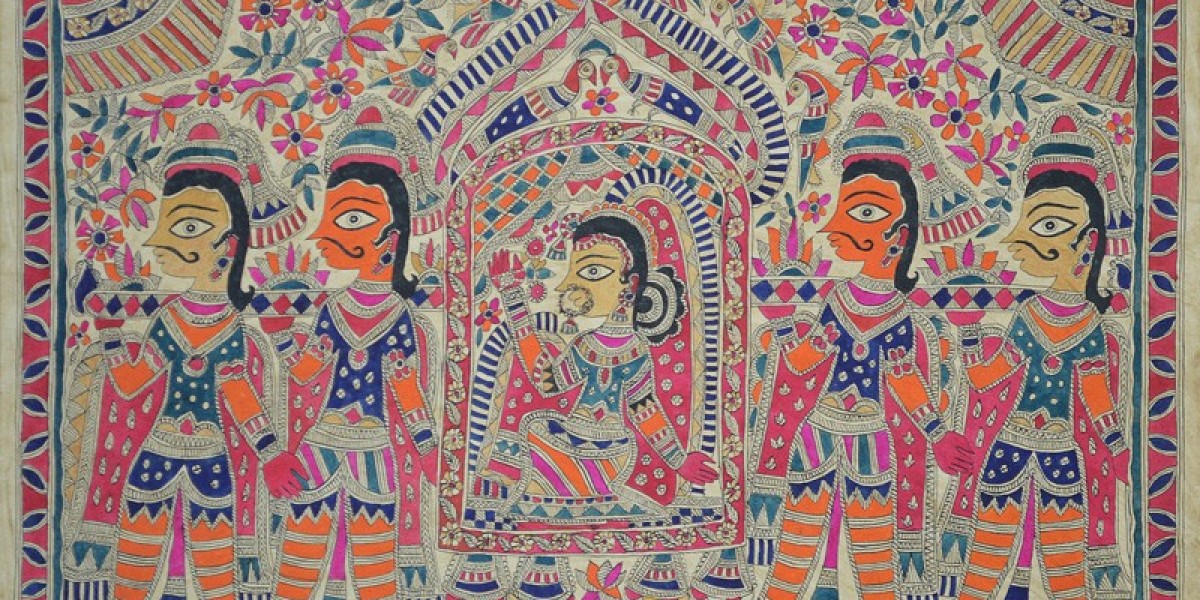
In Madhubani painting, religious themes and ceremonial occasions have a strong presence. Traditional paintings have been associated with weddings, festivals, and important family events. Figures from Hindu mythology, sacred symbols, and decorative motifs often appear in these works.
Such paintings help preserve cultural practices by presenting them through visual storytelling. They also show how art can become part of an occasion rather than remaining separate from everyday life.
3. Family Life and Social Relationships
Community life is shaped by relationships between family members, neighbours, and different generations. These connections can also become subjects of folk paintings.
Some traditional artworks portray weddings, family celebrations, daily responsibilities, and interactions between people. Others communicate stories about relationships, shared values, and community traditions.
In many regional art practices, women have played an important role in preserving painting traditions. Their artistic knowledge has often been passed through family and community settings, particularly during ceremonies and household activities.
Madhubani painting, for instance, has a long association with women artists from the Mithila region of Bihar. Traditional wall paintings were created for ceremonial occasions, including weddings. Over time, the practice also developed across other materials and formats.
These artworks provide insight into how artistic knowledge, family customs, and cultural practices can remain connected across generations.
4. Nature, Animals, and the Surrounding Environment
The natural environment is another recurring subject in Indian folk art. Trees, birds, animals, rivers, flowers, and other elements of nature appear in paintings from different regions.
These subjects are not always included for decoration. In many traditions, they communicate the relationship between communities and the natural world around them.
Gond art, for example, frequently features animals, trees, birds, and other elements of nature. These subjects are connected with the cultural stories, beliefs, and traditions of Gond communities.
The relationship between people and nature is also central to Warli art. Its visual compositions often include animals, trees, farming activities, and scenes from village life.
By representing these subjects, folk artists communicate how the surrounding environment influences local customs, livelihoods, and cultural understanding.
Exploring Everyday Life Through Different Indian Folk Art Traditions
India's folk art traditions are diverse, and each has its own visual language and cultural background. Exploring individual styles helps us understand how different communities represent their experiences.
1. Warli Art and Village Life
Originating among the Warli community of Maharashtra, Warli art is recognised for its simple geometric figures and distinctive visual compositions.
Traditionally, artists created paintings on the walls of houses using a background prepared from mud and cow dung, along with white pigment made from rice paste. The figures were often drawn using simple shapes such as circles, triangles, and lines.
Despite their simplicity, these figures can communicate a wide range of activities. People working in fields, animals moving through the landscape, village gatherings, hunting scenes, and group dances are common subjects.
One of the recognisable features of Warli paintings is the circular arrangement of dancers around a central musician during the Tarpa dance. It represents a collective activity in which people participate together.
Warli paintings demonstrate how everyday experiences can become meaningful artistic compositions without relying on complex visual details.
2. Madhubani Art and Cultural Traditions
Madhubani painting, also known as Mithila painting, comes from the Mithila region of Bihar. It is recognised for its detailed patterns, decorative borders, vibrant colours, and distinctive treatment of figures and natural elements.
Traditional Madhubani paintings have been associated with household walls and ceremonial occasions, particularly weddings and religious celebrations.
The subjects often include figures from mythology, nature, sacred symbols, and scenes connected with cultural traditions. Flowers, birds, fish, trees, and other motifs frequently appear in its compositions.
Although many Madhubani paintings focus on religious or ceremonial themes rather than ordinary occupations, they still offer insight into the cultural environment of the communities that practise this tradition.
The art form also demonstrates how women have contributed to the preservation and development of regional artistic knowledge.
3. Gond Art and the Relationship Between People and Nature
Gond painting is associated with the Gond communities of central India. Nature plays an important role in its visual language, with animals, birds, plants, trees, and other natural subjects appearing frequently.
Many Gond artworks use patterns, dots, lines, and repeated marks to build detailed compositions. These techniques give the paintings a distinctive visual character.
The cultural traditions of Gond communities include stories, myths, songs, dances, and beliefs connected with the natural environment. These relationships can also be seen in their artistic expressions.
For example, trees and animals may carry cultural or spiritual associations rather than simply representing elements of a landscape.
Gond art therefore provides an interesting way to explore how communities understand their surroundings and express their cultural relationships with nature.
4. Other Regional Folk Art Expressions
Beyond Warli, Madhubani, and Gond painting, India has many other regional artistic traditions that reflect local histories and cultural practices.
Pattachitra, associated particularly with Odisha and parts of West Bengal, is known for its narrative compositions and mythological themes. Kalamkari, practised in parts of Andhra Pradesh and Telangana, uses painted or printed textile traditions to communicate stories and decorative designs.
Phad painting from Rajasthan is another example of narrative art. Traditionally, these painted cloth scrolls have been used to represent stories connected with regional deities and heroic figures.
Each tradition has its own artistic techniques, subjects, and historical background. Together, they demonstrate how Indian folk art reflects the cultural diversity of different regions.
Why Storytelling Is Important in Indian Folk Art
Storytelling is one of the most meaningful aspects of Indian folk art. Before printed material and modern communication became widely accessible, visual representations played an important role in sharing stories, beliefs, and community memories.
Paintings could communicate a religious narrative, describe a local legend, represent a festival, or capture an event from everyday life.
In some traditions, artworks were also connected with oral storytelling, music, and performance. This meant that the meaning of a painting could be understood through both its visual details and the stories shared by members of the community.
For example, Gond artistic traditions are closely connected with myths, legends, and stories about nature. Similarly, Warli compositions can communicate everyday activities and collective experiences through groups of simple figures.
Storytelling gives these artworks a deeper cultural context. It encourages viewers to look beyond colours and patterns and consider the experiences, beliefs, and memories represented in each composition.
How Indian Folk Art Preserves Local Identity
Folk art plays an important role in preserving the cultural identity of local communities. It provides a way to maintain traditional knowledge, artistic practices, and regional stories even as lifestyles and surroundings change.
Passing Artistic Knowledge Between Generations
Many folk art traditions have been maintained through family and community learning. Younger generations observe experienced artists, practise traditional techniques, and gradually develop their own understanding of the art form.
This process helps preserve knowledge about materials, patterns, symbols, and cultural subjects.
Keeping Regional Traditions Visible
Folk paintings represent customs, festivals, stories, and artistic practices that may be closely connected with a particular region.
By continuing to create and display these artworks, artists help keep regional traditions visible to wider audiences.
Supporting Traditional Artists
Recognition and appreciation can create opportunities for traditional artists to continue their work and share their knowledge.
When people explore Indian folk paintings, learn about their origins, and understand the communities behind them, they contribute to a more informed appreciation of these artistic traditions.
It is equally important to recognise the artists as creative individuals. Folk art is not simply a collection of inherited patterns; it continues to develop through the ideas, skills, and interpretations of the people who practise it.
Appreciating Indian Folk Art Today
Indian folk art continues to attract attention from people interested in traditional painting, regional culture, and artistic expression. Its presence in contemporary spaces also creates opportunities to introduce these traditions to new audiences.
However, appreciating folk art involves more than choosing a painting based on its colours or decorative appearance.
Before exploring or purchasing Indian folk paintings, consider the following:
Understand the region: Learn where the art form originated and which community has traditionally practised it.
Explore its subject: Identify whether the painting represents nature, mythology, festivals, occupations, or community life.
Learn about its techniques: Notice the materials, patterns, brushwork, and visual elements used by the artist.
Recognise the cultural context: Understand the meaning behind important symbols and traditional motifs.
Value the artist's contribution: Consider the knowledge, creativity, and effort involved in preserving the art form.
For those interested in exploring Indian artworks, Archer Art Gallery offers an opportunity to discover different expressions of Indian art. Learning about the cultural background of a painting can make the experience of exploring an art gallery in India more meaningful.
Whether someone is building a personal collection or simply developing an interest in traditional Indian paintings, understanding the stories behind the artwork can create a stronger connection with it.
Conclusion
Indian folk art offers a valuable glimpse into the everyday lives, cultural practices, and shared experiences of local communities. Through representations of agriculture, festivals, family relationships, nature, and traditional stories, these artworks communicate aspects of life that might otherwise remain undocumented.
Warli, Madhubani, and Gond paintings demonstrate how different communities have developed distinctive ways of expressing their surroundings and cultural identities. Their artistic techniques may differ, but each tradition reflects the creativity and knowledge of the people who continue to practise it.
As interest in Indian traditional art grows, understanding its cultural background becomes increasingly important. Appreciating folk art means recognising not only the beauty of the paintings but also the communities, histories, and stories that give them meaning.







