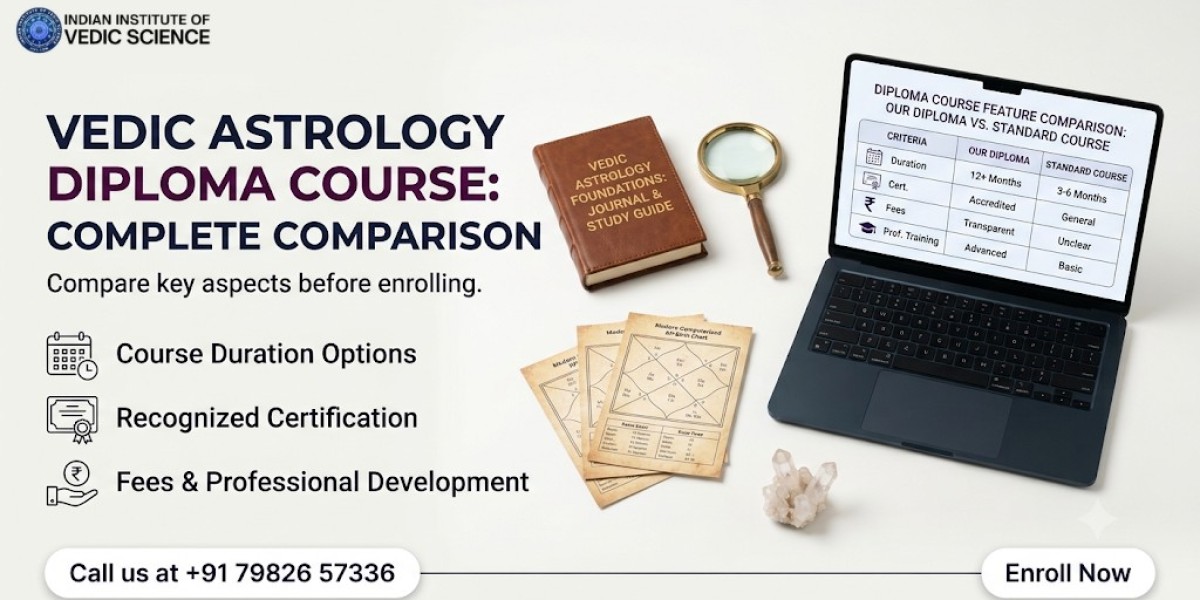


Vedic Astrology Diploma Course Online: Compare Course Duration, Certification, Fees and Professional Training
Choosing the right Vedic Astrology programme is an important step for anyone interested in understanding traditional Indian astrology and developing structured horoscope interpretation skills. However, with different institutes offering online classes, certificate programmes, diploma-level courses and professional training, beginners may find it difficult to decide which option is suitable for their learning goals.
A well-structured vedic astrology course should introduce students to the foundations of Jyotish, explain planetary positions and house significations, and gradually develop their understanding of horoscope analysis. Students interested in professional learning should also look for practical exercises, faculty guidance, revision support and a clearly defined curriculum.
An online programme can make traditional astrology education accessible to learners across India. However, the quality of a course depends on more than its delivery format or advertised certificate. Course duration, syllabus coverage, teaching methodology, faculty interaction and practical training all deserve careful consideration.
If you are exploring a vedic astrology diploma course online, this guide will help you understand what to compare before enrolling. It covers course structure, duration, fees, certification, online learning formats, professional training and the factors that distinguish a suitable institute from other available options.
The guide also explains how the Indian Institute of Vedic Science (IIVS) can help learners explore structured education in traditional knowledge systems.
1. What Is Vedic Astrology and Why Should You Study It?
vedic astrology, also known as Jyotish, is a traditional Indian system of astrology that studies planetary positions, zodiac signs, houses, nakshatras and their relationships within a horoscope.
It is a subject that combines traditional concepts, interpretative methods and detailed chart study. Students generally begin by understanding the basic structure of a birth chart before progressing towards planetary analysis and more advanced interpretation techniques.
A structured programme may introduce learners to:
The foundations and traditional background of Jyotish.
The twelve zodiac signs and their characteristics.
The twelve houses and their significations.
The nine traditional astrological planets, or Navagraha.
Nakshatras and their importance.
Ascendant or Lagna analysis.
Planetary placements and relationships.
Aspects and conjunctions.
Divisional charts, where included in the syllabus.
Dasha systems and their traditional interpretation.
Basic horoscope analysis and practical exercises.
A systematic approach helps learners understand how different elements of a horoscope are connected.
For beginners, the objective should be to develop conceptual clarity before attempting advanced interpretation. Students should learn the terminology, understand the structure of a birth chart and practise identifying relevant planetary and house-related factors.
2. What Should a Vedic Astrology Diploma Course Online Include?
A vedic astrology diploma course online should provide a structured learning experience with clearly defined subjects and learning objectives.
The word "diploma" can refer to different types of programmes depending on the institution. Therefore, students should not assume that every diploma-level course has the same academic status or recognition.
Before enrolling, request the complete syllabus and understand the course level, duration, teaching format and certificate arrangements.
A comprehensive learning programme may cover the following areas.
Introduction to Jyotish
The introductory module should explain the background of Vedic Astrology and introduce the basic principles used in horoscope interpretation.
Students should become familiar with common astrological terminology, the structure of a birth chart and the role of different chart components.
Zodiac signs and their characteristics
The twelve zodiac signs form an important part of traditional horoscope interpretation.
Students should understand their basic characteristics, elements, modalities and traditional associations. This knowledge provides a foundation for studying planetary placements.
Planets and their significations
A structured curriculum should explain the traditional significance of the nine planets and how their positions are considered during horoscope analysis.
Learners should explore planetary characteristics, relationships, dignity and other foundational concepts included in the programme.
Houses and their meanings
The twelve houses represent different areas of life within traditional astrological interpretation.
Students should understand house significations and learn how planetary placements are examined in relation to these houses.
Nakshatras
Nakshatras are another important component of Vedic Astrology. A course should introduce their structure, traditional significance and relationship with planetary interpretation.
Ascendant and birth chart analysis
Students should learn how the Lagna or Ascendant is identified and how it forms part of the overall horoscope.
This topic can help beginners understand the basic process of reading a birth chart.
Dasha systems
Depending on the curriculum, students may be introduced to traditional planetary period systems, including their structure and role in horoscope interpretation.
The institute should explain the depth of coverage and whether the subject is introductory or advanced.
Practical horoscope interpretation
The programme should include guided examples and opportunities to apply theoretical concepts.
Students should be encouraged to understand the reasoning behind an interpretation rather than simply memorising isolated planetary meanings.
3. Vedic Astrology Course Duration: How Long Does It Take?
Course duration is one of the first things students compare when selecting a programme.
A vedic astrology course may run for a few weeks, several months or longer depending on its syllabus, teaching schedule and level of detail.
A short introductory programme may focus on foundational concepts, while a more comprehensive programme may include additional modules, practical exercises and advanced topics.
Before enrolling, consider the following factors.
Number of teaching sessions
The total number of classes gives students a clearer idea of how much instructional time is available.
Ask whether the programme includes regular weekly sessions and how the teaching hours are distributed.
Curriculum coverage
A course covering planets, houses, signs and basic chart interpretation will have different learning requirements from one that also includes nakshatras, divisional charts, dasha systems and advanced analysis.
Practical training time
Practical exercises require time for demonstrations, assignments, discussions and feedback.
A programme that includes guided horoscope practice may have a different schedule from one focused mainly on theoretical lessons.
Revision and doubt-solving
Students may need additional sessions to revisit complex topics. Check whether revision or doubt-solving support is included.
Batch schedule
The schedule should suit your availability. Working professionals and students may prefer programmes with predictable class timings and access to recordings, where provided.
The Vedic Astrology course duration previously shared by IIVS is four months. Students should confirm the current batch schedule, syllabus and teaching format directly with the institute before admission.
4. Online Vedic Astrology Course: Is It Suitable for Beginners?
An online vedic astrology course can be a convenient option for people who want to study from home or cannot regularly travel to an institute.
Online education allows learners from different cities and regions to access specialised subject training. It can also help students balance their studies with work, family responsibilities or other commitments.
However, a convenient schedule does not automatically mean a course provides a complete learning experience.
Before selecting an online programme, examine its teaching approach and student support.
Structured online lessons
A well-organised programme should divide the syllabus into modules and explain what students will learn in each stage.
Beginners should be introduced to basic terminology before moving towards complex chart interpretation.
Live interaction
Live sessions provide opportunities to ask questions, participate in discussions and observe instructor-led demonstrations.
This can be particularly useful when learning topics such as planetary relationships, house analysis and dasha interpretation.
Recorded lessons
Recorded classes can help students revise lessons and revisit difficult topics.
However, check whether recordings are actually included and how long students can access them.
Study material
Notes, presentations and supporting resources can help learners revise concepts outside scheduled classes.
Ask the institute whether these resources are included in the programme.
Practical learning
Online education should not be limited to watching presentations. Students should also have opportunities to work through examples and receive guidance.
5. Vedic Astrology Online Classes: What Should You Check?
When comparing vedic astrology online classes, beginners should evaluate the quality of instruction and the amount of interaction available.
A useful online learning experience should combine concept-based teaching, practical demonstrations and revision support.
Faculty knowledge
Ask who will conduct the classes and whether the instructor has relevant knowledge of Vedic Astrology.
A good instructor should explain concepts clearly, answer questions and demonstrate how traditional principles are applied during chart interpretation.
Teaching methodology
The teaching approach should match the learner's experience level.
Beginners may need simple explanations and step-by-step demonstrations, while students with prior knowledge may prefer more detailed discussions.
Doubt-solving support
Students should understand how they can clarify difficult topics during the programme.
Ask whether questions can be discussed during live sessions or through a separate academic support process.
Class recordings
Recordings can be useful for revision, especially when students are learning technical concepts.
Confirm whether they are available and whether access is time-limited.
Practical assignments
Assignments can help students apply what they learn. Ask whether instructors review these activities and provide feedback.
These factors can help you compare different online programmes more effectively.
6. Online Vedic Astrology Classes: Live Learning or Recorded Lessons?
Students comparing online vedic astrology classes should understand the difference between live sessions and recorded lessons.
Both formats can support learning, but they offer different advantages.
Live online classes
Live sessions allow students to interact with instructors at scheduled times.
They can provide opportunities to:
Ask questions during the lesson.
Participate in discussions.
Observe horoscope demonstrations.
Clarify difficult concepts.
Follow a regular learning schedule.
For beginners, interaction can make unfamiliar concepts easier to understand.
Recorded learning
Recorded lessons allow students to revisit topics at their own pace.
They can be useful for revision, especially when a lesson covers multiple concepts or detailed chart examples.
However, students should check whether academic support is available if they have questions after watching the recording.
Hybrid learning
Some programmes combine live sessions with recorded resources and additional learning support.
This can offer flexibility while maintaining interaction with instructors.
Before enrolling, confirm exactly which learning format the institute provides.
7. How to Learn Vedic Astrology Step by Step
People who want to learn vedic astrology should follow a structured approach instead of trying to understand advanced concepts immediately.
A gradual learning process can help beginners build confidence and avoid gaps in their understanding.
Step 1: Understand the foundations
Start with basic terminology, zodiac signs, planets and houses.
These concepts form the foundation for further horoscope study.
Step 2: Learn birth chart structure
Understand how a traditional birth chart is organised and how the Ascendant, houses and planetary placements are represented.
Step 3: Study planetary significations
Explore the traditional meanings and characteristics associated with planets.
Learn how planetary placements are examined in different houses and signs.
Step 4: Understand nakshatras
Study nakshatras and their traditional associations as part of the broader interpretation framework.
Step 5: Explore dasha concepts
Once the basics are clear, progress towards planetary periods and other topics included in the curriculum.
Step 6: Practise with sample horoscopes
Apply the concepts through guided exercises and instructor demonstrations.
Step 7: Revise and discuss
Revisit earlier lessons, maintain notes and ask questions when concepts are unclear.
A structured course can make this learning process more organised by arranging subjects in a logical sequence.
8. Why Practical Horoscope Training Matters
Practical learning is essential for students who want to understand how theoretical principles are applied during horoscope interpretation.
Reading about planets, houses and nakshatras is only one part of the learning process. Students also need opportunities to observe chart analysis and practise identifying relevant factors.
A programme with practical components may include:
Instructor-led chart demonstrations
The instructor can demonstrate how to examine a sample horoscope and explain the traditional principles being considered.
For example, students may first study planetary placements and house significations, then observe how these elements are examined together during an interpretation exercise.
Sample horoscope exercises
Students can practise identifying the Ascendant, planets, houses and other chart components.
Starting with basic examples can help beginners become familiar with chart structures before attempting more detailed analysis.
Guided assignments
Assignments encourage students to revise the concepts introduced during class.
They can also help instructors understand which topics require further explanation.
Case-based discussions
Sample chart discussions can demonstrate how multiple factors are considered together.
Students should understand that interpretations require context and that individual placements should not be treated as guaranteed explanations of real-life events.
Faculty feedback
Feedback can help learners identify gaps in their understanding and improve their approach to chart interpretation.
Before admission, ask whether the programme includes assignments, demonstrations and opportunities for academic discussion.
9. Vedic Astrology Certification: What Does It Mean?
Many learners consider certification an important part of their education.
A vedic astrology certification may confirm that a student has completed a particular programme according to the institute's stated requirements.
However, students should understand the difference between a course-completion certificate and a formally recognised academic qualification.
A certificate issued by a private training institute should not automatically be treated as a university degree, government licence or statutory professional accreditation.
Vedic Astrology certification course
A vedic astrology certification course generally provides structured learning in selected astrology topics.
Before enrolling, students should check the syllabus, course level, duration, assessment requirements and issuing organisation.
What should a certificate include?
Students should understand:
The name of the issuing institution.
The programme or course title.
The stated completion requirements.
Whether attendance or assignments are required.
Whether an assessment is conducted.
Whether the certificate is included in the course fee.
Does certification guarantee professional expertise?
No. Certification can document course completion, but it does not automatically establish advanced practical ability.
Continued study, practice, subject knowledge and responsible communication remain important for further development.
10. Vedic Astrology Course Fees: What Influences the Cost?
Course fees can vary according to the institute, duration, curriculum and learning support.
When comparing programmes, students should look beyond the advertised price and understand what is included.
Factors that may influence fees include:
Course duration: Programmes with more teaching sessions may have different fee structures from shorter introductory courses.
Curriculum depth: Courses covering additional topics or advanced modules may require more instructional time.
Faculty interaction: Live classes, doubt-solving and personalised academic guidance can influence the overall learning structure.
Practical training: Guided horoscope exercises, assignments and feedback may involve additional teaching resources.
Study material: Notes, presentations and recordings may be included depending on the programme.
Certification: Check whether course-completion certification is included or whether separate requirements or charges apply.
How to compare course fees
Before making a payment, request a complete fee breakdown.
Ask whether study materials, recordings, assessments and certification are included. Also confirm whether there are additional charges.
A lower-priced course may not provide the level of practical support you expect. Similarly, a higher fee does not automatically guarantee better teaching.
The right programme should offer a suitable balance of curriculum, faculty support, practical training and affordability.
11. How to Choose the Best Vedic Astrology Course Online
Finding the best vedic astrology course online requires comparing the actual learning experience rather than relying only on advertisements.
Students should first identify their learning goals. A complete beginner may need a programme that starts with foundational concepts, while an existing learner may prefer a more detailed curriculum.
When evaluating the best online vedic astrology course, consider the following factors:
Does the syllabus explain the subjects covered?
Is the course suitable for beginners?
Are faculty members available for questions?
Are live classes provided?
Are recordings available for revision?
Does the programme include practical horoscope exercises?
Is the course duration clearly communicated?
Are fees and additional charges explained?
Are certificate requirements transparent?
Is student support available?
A programme should help learners understand the subject progressively and provide realistic expectations about what they can achieve.
Why curriculum matters more than promotional claims
A course described as the best may not necessarily suit every learner.
Compare the module structure, teaching methodology and practical components. Check whether the course matches the knowledge level you want to develop.
The best vedic astrology course is ultimately the one that meets your educational requirements and provides a suitable learning environment.
12. Online Astrology Courses in India: How to Compare Your Options
Students exploring online astrology courses may find programmes covering several traditional systems, including Vedic Astrology, KP Astrology, Lal Kitab, Numerology and other subjects.
Before choosing a programme, decide whether you want to study a general introduction to astrology or focus on a particular system.
When comparing online astrology courses in india, examine:
Subject coverage
Understand whether the course focuses on Vedic Astrology or introduces multiple systems.
Course structure
Look for a syllabus that arranges subjects in a logical learning sequence.
Teaching format
Compare live sessions, recordings, study resources and practical activities.
Faculty support
Ask how students can interact with instructors and clarify doubts.
Certification
Understand the credential offered and the requirements for completion.
Fee transparency
Confirm the total cost and any additional charges before admission.
A specialised programme may be more suitable when your objective is to develop a deeper understanding of one traditional system.
13. Astrology Course Online: What Should Beginners Compare?
An astrology course online can introduce learners to traditional concepts through digital lessons and instructor-led sessions.
However, the term covers a wide range of programmes. Some are introductory, while others offer detailed subject-specific training.
Before selecting an astrology course online india programme, consider your current knowledge, available study time and preferred learning format.
A suitable programme should provide:
Clearly explained course objectives.
A structured syllabus.
Beginner-friendly teaching.
Practical exercises.
Access to study material.
Opportunities for doubt-solving.
Transparent fee and certification information.
Astrology classes online
astrology classes online can be convenient for students who prefer learning remotely. However, the quality of instruction and availability of practical support should be evaluated before admission.
Online classes for astrology
online classes for astrology may be live, recorded or hybrid. Confirm the teaching format and whether students can interact with instructors.
Learn astrology online
People who want to learn astrology online should look for consistency, structured lessons and opportunities to practise. Regular revision and guided exercises can support better understanding.
14. Vedic Astrology Institute: What Should You Look For?
Selecting a suitable vedic astrology institute requires checking its course information, faculty, teaching methodology and student support.
A reliable educational experience should begin with transparent information about the programme.
Before enrolling, ask the institute:
What is the complete syllabus?
Who will conduct the classes?
Is the programme designed for beginners?
What is the course duration?
Are live online sessions available?
Are recordings provided?
Does the course include practical horoscope training?
How are student doubts addressed?
What are the total course fees?
What certificate is provided after completion?
Students should also review the institute's official website and verify that the available programme information matches what is discussed during counselling.
Avoid choosing a course based only on promotional claims about guaranteed prediction accuracy, instant expertise or assured professional success.
15. Jyotish Course in Delhi: How to Select the Right Institute
Students searching for a jyotish course in delhi should compare both classroom-based and online learning options.
Delhi and the wider NCR region offer different educational choices, but the suitability of an institute depends on its course structure, faculty and practical learning approach.
Before choosing a local programme, consider:
Location and accessibility
If you prefer classroom learning, check the institute's location and travel convenience.
Course schedule
Understand the class timings, weekly frequency and total duration.
Curriculum
Request the complete syllabus and confirm whether it covers the subjects you want to study.
Practical training
Ask whether students receive guided horoscope exercises and feedback.
Online alternatives
If travelling is difficult, compare online programmes that offer structured teaching and interactive sessions.
Astrologer course in Delhi
People searching for an astrologer course in delhi should distinguish between introductory astrology education and programmes designed for more detailed subject learning.
A course should clearly communicate its learning objectives and avoid implying that completing a short programme automatically establishes professional expertise.
Students in Delhi NCR can also explore institutes located in nearby educational and business hubs, including Noida, depending on their travel preferences and available course formats.
16. Why Consider the Indian Institute of Vedic Science (IIVS)?
The Indian Institute of Vedic Science (IIVS), a unit of Vedant FaithTech Group Pvt. Ltd., provides learning opportunities for individuals interested in astrology and traditional knowledge systems.
Students exploring a Vedic Astrology programme can review the available course information and discuss their educational requirements with the institute before enrolling.
When considering IIVS, prospective learners should clarify:
The current Vedic Astrology syllabus.
Course duration and batch schedule.
Online class arrangements.
Faculty and teaching methodology.
Practical horoscope training.
Availability of study material.
Doubt-solving support.
Current course fees.
Certificate eligibility and completion requirements.
The Vedic Astrology course duration previously shared by IIVS is four months. Students should confirm the latest batch schedule, course fee and detailed curriculum directly with the counselling team before admission.
IIVS is based in Noida and provides an option for learners in the wider Delhi NCR region to explore its available educational programmes.
17. How to Prepare Before Enrolling in a Vedic Astrology Programme
Preparing before admission can help beginners make better use of their learning experience.
You do not necessarily need advanced astrology knowledge to begin an introductory programme. However, having a clear learning objective can make course selection easier.
Identify your learning goal
Decide whether you want to understand the basics, explore traditional Jyotish in greater detail or develop structured horoscope interpretation skills.
Check your available study time
Consider how many hours you can dedicate to classes, revision and practice each week.
Review the syllabus
Understand which subjects are included and whether the course begins with foundational concepts.
Ask about practical work
Find out whether sample charts, assignments and guided exercises are part of the programme.
Confirm fees and certification
Understand the total course cost and the nature of the certificate before making a payment.
Discuss your questions with the institute
A counselling conversation can help clarify the learning format, course requirements and suitability of the programme.
Conclusion: Choose a Vedic Astrology Course with Structured Learning and Practical Guidance
Choosing a Vedic Astrology diploma-level programme requires more than comparing course titles or advertised fees. Students should evaluate the syllabus, course duration, teaching methodology, faculty support, practical horoscope training and certification details before enrolling.
A structured programme should help beginners understand the foundations of Jyotish and gradually develop their knowledge through guided lessons and practice exercises.
Whether you prefer classroom learning or an online programme, focus on the quality of instruction, accessibility of learning resources and opportunities to clarify doubts. A suitable course should match your educational goals and provide transparent information about its curriculum and completion requirements.
The Indian Institute of Vedic Science (IIVS) provides an opportunity to explore structured learning in astrology and traditional knowledge systems. Review the available programme details and speak with the counselling team to understand whether the course matches your learning requirements.
Interested in learning Vedic Astrology through structured training?
Explore the available courses at IIVS, understand the curriculum, confirm the current batch details and discuss your learning goals with the counselling team or Book your free counselling.
Frequently Asked Questions
1. What is a Vedic Astrology diploma course online?
A Vedic Astrology diploma-level online programme is a structured learning course that may cover traditional Jyotish concepts such as planets, houses, zodiac signs, nakshatras, planetary placements and horoscope interpretation. The course level and academic status depend on the issuing institution, so students should verify the details before enrolling.
2. How long does a Vedic Astrology course take?
Course duration varies according to the syllabus, number of teaching sessions and depth of the programme. The Vedic Astrology course duration previously shared by IIVS is four months. Confirm the current batch schedule before admission.
3. Can beginners enrol in an online Vedic Astrology course?
Yes. Many introductory programmes are designed for beginners and start with basic terminology, planets, houses and zodiac signs. Check whether prior knowledge is required before enrolling.
4. What is included in a Vedic Astrology course?
A programme may include the fundamentals of Jyotish, zodiac signs, planets, houses, nakshatras, Lagna, planetary relationships, dasha concepts and practical horoscope exercises. The actual syllabus varies between institutes.
5. Are Vedic Astrology online classes suitable for working professionals?
Online classes can be convenient for working professionals because they reduce the need to travel. Students should check the timetable, recording availability, class frequency and expected practice time.
6. What is the difference between a certificate course and a diploma course in astrology?
A certificate course generally confirms completion of a defined programme. A diploma-level programme may offer broader or more detailed subject coverage, depending on the institute. Students should verify the credential's issuing organisation and academic status.
7. Does a Vedic Astrology course include practical horoscope training?
Practical training depends on the institute and syllabus. Students should look for sample chart demonstrations, guided exercises, assignments and opportunities to receive faculty feedback.
8. How much does a Vedic Astrology course cost in India?
Fees vary according to the institute, duration, curriculum, faculty support, learning format and certification arrangements. Request a complete fee breakdown before enrolling and confirm whether additional charges apply.
9. Is online learning better than classroom learning for Vedic Astrology?
Both formats can be useful. Online learning offers convenience and access from different locations, while classroom learning provides direct interaction. The right choice depends on your schedule, learning preferences and the quality of instruction.
10. Can I learn Vedic Astrology without prior experience?
Yes. Beginners can start with foundational concepts and gradually progress towards more detailed horoscope interpretation. A course with structured lessons and practical guidance can make the process easier to follow.
11. Does completing a Vedic Astrology course make someone a professional astrologer?
Completing a course provides structured subject learning, but professional development requires continued study, practice, experience and responsible communication. A certificate alone does not guarantee professional expertise.
12. How do I choose the best Vedic Astrology course online?
Compare the syllabus, faculty, practical training, online class format, course duration, fees, learning resources and certification details. Select a programme that matches your knowledge level and learning objectives.
13. Can students in Delhi enrol in online Vedic Astrology courses?
Yes. Online programmes can allow students in Delhi and other locations to attend classes remotely. Students can also compare nearby institutes in Delhi NCR if they prefer classroom-based learning.
14. What should I check before enrolling in a Vedic Astrology institute?
Check the institute's syllabus, faculty, course duration, teaching methodology, practical exercises, student support, fees and certification requirements. Request clear information before making a payment.







