

Introduction
The Artificial Intelligence (AI) in Retail Market Insights highlight how intelligent technologies are transforming retail operations, customer engagement, inventory management, and business decision-making. Retailers are increasingly adopting artificial intelligence to improve operational efficiency, understand changing consumer preferences, and deliver personalized shopping experiences. From online marketplaces to physical stores, AI-powered solutions are becoming essential tools for businesses seeking to remain competitive in a rapidly evolving retail environment.
The integration of machine learning, predictive analytics, natural language processing, computer vision, and generative AI is changing how retailers interact with customers and manage their operations. These technologies enable businesses to process large volumes of information, identify purchasing patterns, automate repetitive tasks, and make more informed decisions.
Growing Adoption of AI Across Retail Operations
One of the most important insights into the market is the increasing adoption of AI across different retail functions. Retailers are moving beyond basic automation and implementing advanced intelligence systems that support multiple business activities.
AI-powered platforms help retailers analyze customer transactions, monitor product performance, forecast demand, and optimize supply chains. These capabilities allow businesses to respond more effectively to changing market conditions while reducing manual workloads.
Large retail chains are investing in integrated AI platforms to coordinate operations across physical stores, warehouses, and digital channels. Meanwhile, small and medium-sized retailers are gaining access to cloud-based AI solutions that reduce infrastructure requirements and implementation costs.
Personalized Shopping Experiences Drive Technology Adoption
Personalization represents a significant application area within the AI-powered retail ecosystem. Consumers increasingly expect shopping experiences that reflect their individual preferences, purchasing histories, and interests.
Retailers use machine learning algorithms to recommend products, customize promotional offers, and deliver relevant advertisements. AI-powered recommendation engines analyze browsing behavior, previous purchases, product interactions, and customer preferences to suggest suitable items.
Virtual shopping assistants and intelligent chatbots also improve customer engagement. These systems provide product information, answer common questions, recommend alternatives, and assist customers throughout their purchasing journeys.
Generative AI is expanding these capabilities by enabling conversational shopping experiences. Customers can describe their requirements using natural language and receive relevant product suggestions without navigating multiple product categories.
Predictive Analytics Improves Inventory and Demand Planning
Another important insight is the growing role of predictive analytics in retail inventory management. Maintaining appropriate stock levels is essential because excess inventory increases storage costs, while shortages can result in lost sales and dissatisfied customers.
AI-based forecasting systems analyze historical sales, seasonal demand, promotional activities, regional preferences, and external market conditions. By identifying potential changes in purchasing patterns, these systems help retailers make more accurate replenishment decisions.
Intelligent inventory management also supports automated ordering and warehouse coordination. Retailers can identify fast-moving products, monitor stock availability, and allocate merchandise across locations according to expected demand.
These capabilities are particularly valuable for grocery retailers, fashion businesses, electronics sellers, and large e-commerce platforms where demand fluctuations can significantly affect profitability.
Computer Vision and Smart Store Technologies
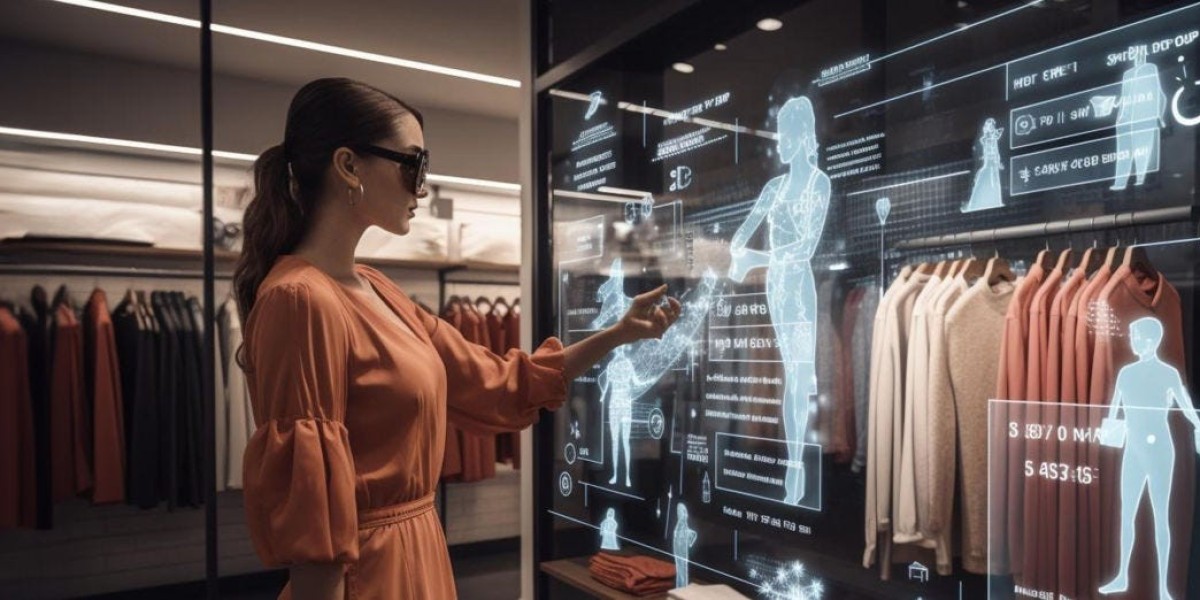
Computer vision is creating new opportunities for AI adoption in physical retail environments. Using cameras, image recognition, and analytical software, retailers can monitor store activities and gain insights into customer behavior.
Smart checkout technologies can identify products automatically, helping reduce waiting times and improve the shopping experience. Computer vision can also support shelf monitoring by identifying misplaced products, empty spaces, and pricing discrepancies.
Retailers are exploring cashierless shopping systems that combine cameras, sensors, and AI algorithms to recognize product selection and calculate purchases. These solutions demonstrate how intelligent technologies can transform conventional store operations.
However, implementation requires careful attention to customer privacy, data protection, and system accuracy.
Generative AI and Automation Reshape Retail Strategies
Generative AI is emerging as an important technology influencing retail innovation. Retail businesses are using these tools to generate product descriptions, marketing content, promotional campaigns, and customer communication materials.
AI-powered content generation can reduce the time required to create product listings and support consistent communication across digital sales channels. Retail marketing teams can also use generative AI to develop personalized campaigns for different customer segments.
Automation is extending into customer service, merchandising, pricing, and back-office operations. Intelligent systems can assist with repetitive administrative activities, enabling employees to focus on customer relationships and strategic responsibilities.
The combination of generative AI and predictive analytics is expected to support more responsive and data-driven retail business models.
Data Security and Responsible AI Adoption
Despite its advantages, AI adoption introduces important challenges. Retailers process sensitive information, including customer identities, payment details, shopping histories, and behavioral data. Protecting this information is essential for maintaining consumer confidence.
Data breaches, unauthorized access, algorithmic bias, and inaccurate automated decisions can create financial and reputational risks. Businesses must establish effective cybersecurity measures, transparent data policies, and appropriate governance frameworks.
Responsible AI implementation also requires human oversight. Retailers should regularly evaluate algorithm performance, monitor potential biases, and ensure that automated decisions comply with applicable regulations.
Companies that prioritize ethical AI practices can strengthen customer trust while building sustainable technology strategies.
Regional Adoption and Competitive Opportunities
AI adoption in retail varies across regions depending on digital infrastructure, technology investment, consumer behavior, and regulatory environments.
North America benefits from advanced retail technology ecosystems, strong digital commerce activity, and substantial investment in artificial intelligence. Europe is emphasizing responsible AI deployment, data protection, and intelligent retail automation.
Asia-Pacific presents considerable opportunities due to expanding e-commerce markets, mobile shopping adoption, digital payment infrastructure, and growing technology investments. Countries such as China, India, Japan, and South Korea are developing increasingly sophisticated digital retail environments.
Emerging markets are also creating opportunities for affordable, cloud-based AI platforms that help smaller retailers improve customer engagement and operational efficiency.
Future Opportunities and Market Insights
The future of the Artificial Intelligence (AI) in Retail Market will be influenced by continuous advancements in machine learning, generative AI, robotics, and intelligent automation. Retailers are expected to increasingly integrate AI across their entire business ecosystems rather than deploying isolated applications.
Potential opportunities include autonomous inventory management, advanced personalization, intelligent pricing, automated warehouses, virtual shopping assistants, and AI-powered fraud prevention.
Businesses that successfully combine human expertise with intelligent technologies will be better positioned to respond to changing consumer expectations. Partnerships between retailers, software providers, cloud platforms, and technology developers will further support innovation.
Conclusion
The Artificial Intelligence (AI) in Retail Market Insights demonstrate that artificial intelligence is becoming a central component of modern retail transformation. Its applications extend across customer experience management, demand forecasting, inventory optimization, marketing automation, and smart store operations.
Although data privacy, integration costs, cybersecurity, and implementation complexity remain important considerations, continuous technological progress is creating new opportunities for retailers of different sizes. Organizations that adopt scalable, secure, and customer-focused AI strategies will be better equipped to improve operational performance and maintain competitiveness in the evolving retail industry.







