

Jewelry trends ebb and flow with every passing decade. We have witnessed eras defined by the elaborate geometric filigree of the Art Deco movement, the bold halo settings that dominated the early 2000s, and recent surges in colorful gemstones, toi-et-moi dual-stone silhouettes, and asymmetric cluster rings. Yet through every artistic shift, cultural movement, and stylistic renaissance, one setting has continuously held its place at the pinnacle of bridal jewelry: the classic solitaire.
A solitaire setting strips away unnecessary ornamentation, relying entirely on harmony, proportion, and craftsmanship. It represents an enduring commitment through a visual language that has never gone out of style. Whether viewed on the hand of a bride from a century ago or on someone celebrating a modern engagement today, the design conveys an immediate sense of elegance and refined intention. Understanding why this deceptively simple aesthetic continues to command universal admiration reveals the thoughtful balance of art, engineering, and personal expression at its core.
The Philosophy of Focus: The Center Gemstone as the Narrative
The word "solitaire" comes from the Latin solitarius, meaning alone or solitary. In fine jewelry, the term designates any ring that features a single, uninterrupted focal stone.
Because there are no side stones, pavé halos, or intricate shoulder accents to draw the eye away, the center stone must speak entirely for itself. This architectural honesty places a high premium on the stone's inherent characteristics. When selecting loose Diamonds, aspects such as precision cut, facet symmetry, optical performance, and internal clarity are brought into sharp relief. In multi-stone settings, surrounding gems can sometimes disguise modest light leakage or slight color tints. In a solitaire, however, every facet catches and refracts light in plain view.
This design places total confidence in the stone. A solitaire does not mask the natural fire and brilliance of a gemstone behind visual noise; instead, it provides a quiet stage upon which light, proportions, and craftsmanship can shine unhindered.
The Architectural Evolution of a Classic
While the solitaire appears straightforward, its development is rooted in significant metallurgical and optical innovations. Before the late 19th century, gemstones were primarily set in closed-back collets or deep bezel mounts that shielded the pavilion (the lower portion of the diamond) from light. These traditional mountings kept stones secure, but they significantly limited light entry, muting the diamond’s potential sparkle.
The breakthrough arrived in the late 1880s with the invention of the elevated prong setting. By lifting the stone cleanly above the band using slender, precisely engineered metal prongs, light was suddenly able to enter the gem from multiple angles, bouncing through the internal facets and returning to the viewer's eye as brilliant scintillation.
Modern jewelers have expanded this fundamental concept into a rich variety of sub-styles:
Four-Prong Mountings: These create a sleek, open framework that allows maximum light transmission and gives square or rectangular cuts a clean, geometric silhouette.
Six-Prong Mountings: Offering an extra measure of physical security and a classic, rounded appearance, this style accentuates the organic curvature of round brilliant stones.
Bezel and Half-Bezel Settings: A thin ribbon of precious metal envelops the outer perimeter of the stone, delivering a smooth, snag-free profile ideal for active lifestyles and modern, architectural tastes.
Tension and Semi-Tension Settings: These use the tensile strength of the metal band itself to hold the gem in place, creating the dramatic visual illusion of a floating center stone.
This structural versatility explains why expertly designed solitaire engagement rings continue to appeal to couples across different generations. The style is not a rigid template; it is a foundational concept capable of endless refinement.
Unmatched Versatility Across Every Diamond Shape
A common misconception is that a solitaire ring must strictly feature a traditional round brilliant cut. In reality, the solitaire setting acts as a universal canvas for every conceivable diamond shape, adapting effortlessly to different tastes:
Oval Cuts: Elongate the finger while delivering exceptional brilliance and an elongated, flattering profile.
Emerald and Asscher Cuts: Showcase clean, step-cut parallel facets that project an understated, mirror-like hall of mirrors effect.
Pear and Marquise Cuts: Bring dramatic vintage-inspired movement and distinctive tapering lines to the hand.
Cushion and Radiant Cuts: Bridge the gap between antique romance and modern brilliance with softened corners and intense sparkle.
Because the band remains minimal, the distinctive geometry of the selected cut becomes the ring's signature feature. Changing the shape of the center stone fundamentally transforms the mood of the piece—from sleek and modern to romantic or distinctly antique—without ever leaving the classic solitaire framework.
The Perfect Partner for Wedding Band Stacking
One of the most practical reasons brides gravitate toward the solitaire is its unmatched compatibility with wedding bands. Elaborately shaped engagement rings—such as wide halos or sprawling vintage clusters—frequently require custom-curved or notched wedding rings to sit flush against each other. While these pairings can be beautiful, they often bind the wearer to a specific combination and may look incomplete if the wedding band is worn on its own.
A solitaire, by contrast, pairs smoothly with virtually any wedding ring design:
Classic Metal Bands: A plain polished yellow gold, rose gold, or platinum band creates an understated, iconic two-piece bridal set.
Diamond Eternity Bands: Pairing a minimal solitaire with a shared-prong or channel-set eternity band introduces rich texture and contrast without competing for attention.
Contoured and Chevron Bands: A gentle point or curve hugs the base of the solitaire’s basket, creating an eye-catching nested frame.
Eclectic Multi-Ring Stacks: The streamlined profile of a solitaire makes it easy to add anniversary bands, textured stackers, or colored gemstone accents over time.
This styling flexibility ensures that your bridal set can grow and evolve alongside your personal aesthetic through different milestones.
The Subtle Art of Bespoke Craftsmanship
Because a solitaire features so few components, every minute detail matters. In complex jewelry pieces, elaborate surface engraving or dozens of micro-pavé accents can distract from slight structural imbalances. In a minimal design, however, any flaw in symmetry, prong alignment, or metal finishing is immediately noticeable.
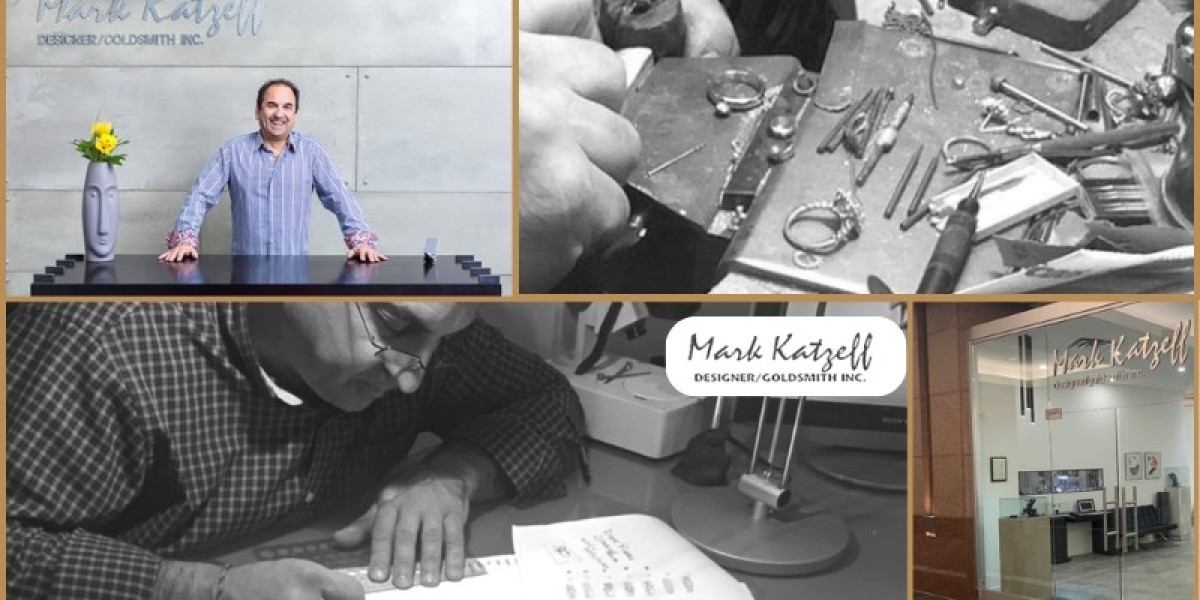
This is where true custom jewelry design proves essential. Working alongside a dedicated fine jewelry atelier like Mark Katzeff Designs ensures that every element of the setting is balanced to the exact millimeter dimensions of your selected gem. An experienced artisan carefully considers:
Prong Geometry: Choosing between rounded, claw, petite talon, or tab prongs to complement the diamond's edge.
Under-Gallery Detailing: Introducing intimate, wearer-facing details such as a hidden halo of micro-diamonds, delicate filigree, or a flush-set birthstone tucked beneath the center setting.
Band Profile: Shaping the shank into a comfort-fit interior, a knife-edge crest, or a flat architectural contour that feels natural on the finger day in and day out.
Metal Selection: Harmonizing the warmth of 18k yellow or rose gold with the cool durability of platinum to bring out the fire in the stone.
When exploring the wider world of custom Engagement Rings, bespoke craftsmanship transforms what could otherwise be a generic mount into an intimate, one-of-a-kind heirloom designed for lifetime durability.
An Heirloom That Defies Time
Beyond visual balance and styling flexibility, the enduring appeal of the solitaire rests on its ability to transcend generational shifts. Engagement rings are among the few personal items intended to be worn every single day across decades, and eventually passed along to future generations.
Heavily trend-driven designs often become inextricably linked to the precise decade in which they were purchased. While nostalgic, they can feel dated as aesthetics change. The solitaire avoids this pitfall entirely. It remains as fresh, contemporary, and emotionally resonant on a fiftieth wedding anniversary as it was on the day the proposal took place.
By focusing on pure form, balanced proportions, and exceptional center stones, the solitaire engagement ring continues to prove that true sophistication does not require complication. In a world of fast-moving trends and shifting styles, simplicity remains the ultimate expression of lasting luxury.







