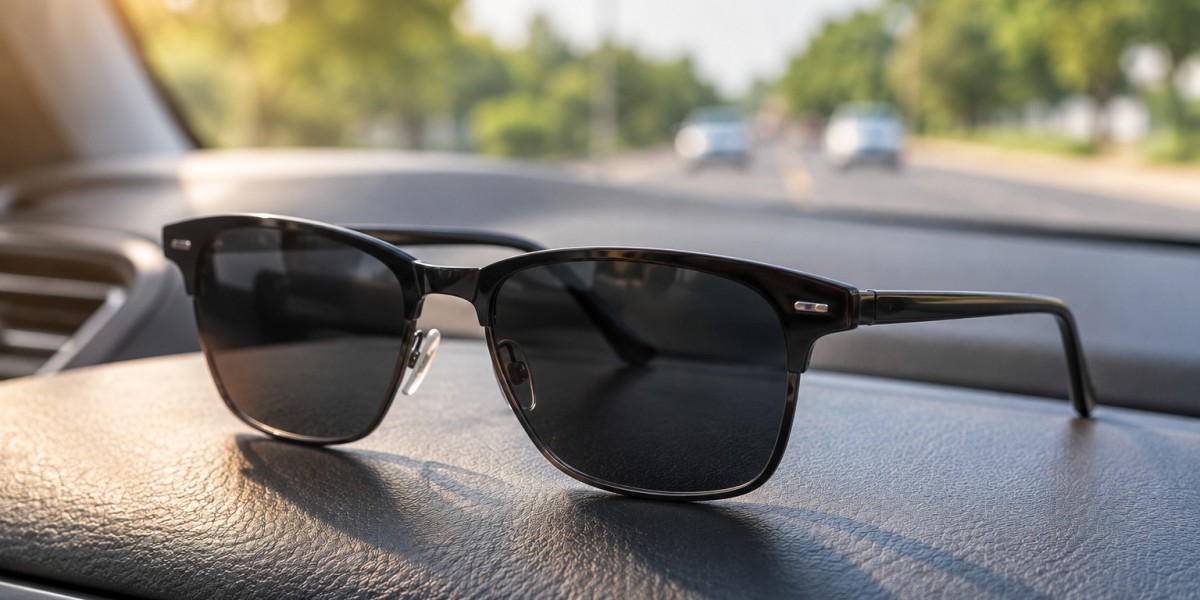


Imagine driving through Karachi in the afternoon. Sunlight reflects from the bonnet of the car ahead, traffic moves slowly, and the brightness makes it difficult to look comfortably towards the road. You reach for your sunglasses, expecting them to make the journey easier. However, after putting them on, you notice that the road looks unusually dark and some details are harder to distinguish.
This situation shows why choosing Stylish Sunglasses for driving requires more thought than selecting an attractive design. Sunglasses should help manage bright light without interfering with the driver's ability to recognise traffic signals, judge distances, or notice other vehicles. Their lens quality, tint, fit, and suitability for road use matter more than their appearance alone.
What Makes Sunglasses Suitable for Driving?
Driving requires clear vision across different distances and changing light conditions. A suitable pair should reduce uncomfortable sunlight while allowing the driver to recognise road markings, pedestrians, signs, and traffic signals.
The lenses should not make the surroundings excessively dark or distort important colours. Drivers also need to see clearly when moving between direct sunlight and shaded roads. A pair that works well during a bright afternoon may become unsuitable as daylight fades.
Before purchasing sunglasses for driving, check whether the manufacturer identifies them as suitable for road use. Product descriptions should provide information about lens performance rather than relying only on terms such as fashion, dark tint, or glare reduction.
Why Can Reflected Sunlight Become a Driving Problem?
A driver may find direct sunlight uncomfortable, but reflections can create another challenge. Light bouncing from wet roads, vehicle windows, polished surfaces, and other objects can enter the eyes from different directions.
This reflected brightness is commonly called glare. It can make it harder to view details comfortably, particularly when the sun is low, or the road surface is wet.
Polarised lenses can reduce certain types of reflected glare by filtering horizontally reflected light. The American Academy of Ophthalmology identifies driving as one activity where polarised sunglasses can be useful. However, polarisation does not automatically mean a lens provides UV protection, so both features should be checked separately.
Does Lens Darkness Determine Driving Safety?
A very dark lens may appear suitable for bright weather, but darkness alone does not establish whether sunglasses are safe for driving. Excessive tint can reduce the amount of visible light reaching the eyes, making it harder to see details when lighting conditions change.
Lens categories provide useful information about light transmission and intended use. For example, category 4 sunglasses are designed for extremely bright conditions and should not be used for driving. Category 2 and 3 lenses are generally associated with ordinary and bright sunlight, but the product's road-use guidance should still be checked.
Drivers should also avoid using tinted sunglasses at night, during twilight, or in poorly lit conditions. The Australian Competition and Consumer Commission explains that very dark category 4 lenses are unsuitable for driving, while category 1 fashion lenses are not suitable for night driving.
How Should Men Choose Frames for Driving Around Karachi?
A driver travelling through Karachi may encounter bright coastal sunlight, crowded intersections, shaded streets, and sudden changes in visibility. In these conditions, the frame should remain secure without restricting the driver's view of surrounding traffic. When comparing a men's sunglasses frame for regular driving, pay attention to the width of the side arms, the position of the lenses, and how comfortably the frame sits during head movements.
Very wide or bulky side sections may obstruct some peripheral vision, particularly when checking traffic approaching from the sides. A frame that slips down the nose can also become distracting because the driver may repeatedly adjust it instead of concentrating on the road.
Try the sunglasses while turning your head naturally. They should remain in place, allow a broad field of view, and avoid pressing uncomfortably around the ears or nose.
Which Lens Colours Are Practical Behind the Wheel?
Lens colour can influence how the surroundings appear, so it deserves attention when selecting driving sunglasses. Grey lenses generally reduce brightness without greatly changing the appearance of colours. Brown lenses can provide a warmer view, while other tints may affect colour perception differently.
The important consideration is whether traffic signals, brake lights, road signs, and other visual information remain easy to recognise. A fashionable colour should never take priority over clear visibility.
The darkness of a lens and its UV protection are separate properties. The US Food and Drug Administration explains that dark-tinted lenses do not necessarily block more ultraviolet radiation than lighter ones. Check the UV protection information on the product rather than judging it by appearance. <Cite refs={["turn906466search4"]} />
Are Polarised Sunglasses Always the Best Option for Drivers?
A driver who regularly faces reflections from wet roads or vehicle surfaces may appreciate polarised lenses. They can reduce distracting reflected light and make bright outdoor journeys more comfortable.
However, there is one detail worth considering before choosing them. Some vehicle dashboard displays, navigation screens, and other LCD or LED displays may appear dim or difficult to read at certain viewing angles through polarised lenses. The American Academy of Ophthalmology notes this possible limitation for electronic displays.
If you are considering polarised sunglasses, test them with your vehicle's dashboard and navigation system. Their usefulness depends on the driving environment and the equipment inside the car, not just the amount of sunlight outside.
Can Prescription Sunglasses Help People Who Wear Regular Glasses?
Drivers who need vision correction should not sacrifice prescription accuracy for a particular sunglass design. Wearing non-prescription sunglasses over an incorrect or outdated prescription may leave important vision problems unresolved.
Prescription sunglasses combine the required vision correction with suitable sun protection. Another option may be prescription lenses with an appropriate sun tint, depending on the individual's needs and the advice of an eye-care professional.
Before ordering, confirm that the prescription is current and that the lenses are suitable for the chosen frame. People who experience blurred vision, difficulty judging distances, or discomfort while driving should arrange an eye examination rather than assuming sunglasses will solve the problem.
What Happens When Daylight Changes During a Journey?
A drive rarely takes place under one consistent lighting condition. Someone leaving home in bright sunshine may later enter a shaded road, an underground parking area, or a tunnel. Sunglasses that are comfortable in direct sunlight can reduce visibility in these darker surroundings.
Photochromic lenses change their tint in response to light exposure, but their performance behind a vehicle windscreen can vary. Some types rely on ultraviolet light to darken and may not become as dark inside a car as they do outdoors. Their transition back to a lighter state also takes time.
For drivers who regularly move between bright and dim environments, it is important to understand how the selected lenses respond to changing conditions. Keep a clear pair of glasses available when necessary, and remove tinted sunglasses when light levels become too low.
How Can You Check Sunglasses Before Driving?
A pair may look attractive in a shop window but still have optical or fitting problems. Before using new sunglasses on the road, check their basic condition and suitability.
Use these checks:
- Road-use information: Read the manufacturer's guidance and any warnings about driving.
- Lens clarity: Look at straight lines through each lens and check for visible distortion.
- Traffic colours: Make sure important signal colours remain distinguishable.
- Frame position: Confirm that the glasses stay secure when turning your head.
- Lens condition: Avoid scratched, cracked, or damaged lenses that interfere with vision.
- Dashboard visibility: If the lenses are polarised, check whether vehicle displays remain readable.
The FDA's guidance for non-prescription sunglasses also advises checking optical quality and ensuring that the frame positions the lenses correctly in front of the eyes.
When Should You Avoid Wearing Sunglasses While Driving?
There are situations where tinted eyewear can create more problems than it solves. Night driving, heavy rain, fog, and poorly lit roads reduce the available light, so additional tint may make it harder to recognise hazards.
Very dark special-purpose lenses should not be used for road driving. Sunglasses with damaged lenses or frames that interfere with side vision should also be replaced or assessed before use.
If visibility becomes poor, remove the tinted glasses when it is safe to do so. Drivers should never continue wearing sunglasses simply because they match an outfit or are part of their usual appearance. Clear vision must take priority over personal style.
Frequently Asked Questions
Are stylish sunglasses safe for daytime driving?
Yes, provided the lenses are suitable for road use, offer clear vision, and do not excessively reduce visible light. Appearance alone cannot establish driving suitability.
Are polarised sunglasses good for driving?
They can reduce reflected glare from roads and other smooth surfaces. However, they may affect the visibility of certain dashboard or navigation displays, so test them in your vehicle.
Can I wear dark sunglasses while driving at night?
No. Tinted lenses reduce the light reaching your eyes and can make it harder to identify road hazards in low-light conditions.
Do sunglasses need UV400 protection for driving?
UV400 or equivalent full UVA and UVB protection is a useful feature for outdoor eye protection. It is separate from the lens's suitability for driving, which also depends on visible light transmission and optical performance.
Are oversized sunglasses suitable for driving?
Some oversized designs can be comfortable, but bulky side sections may restrict peripheral vision. Choose a frame that allows you to check surrounding traffic without obstruction.
Conclusion
Stylish sunglasses can be suitable for driving, but their appearance should never be the main selection factor. Clear lenses, appropriate tint, UV protection, glare control, and an unobstructed field of view all contribute to a safer visual experience.
For drivers in Pakistan, where bright sunlight can make daytime journeys uncomfortable, choosing eyewear according to actual road conditions is particularly useful. Check the manufacturer's driving guidance, test the frame and lenses, and avoid tinted glasses when visibility is poor. The right pair should support clear vision rather than become another distraction behind the wheel.







