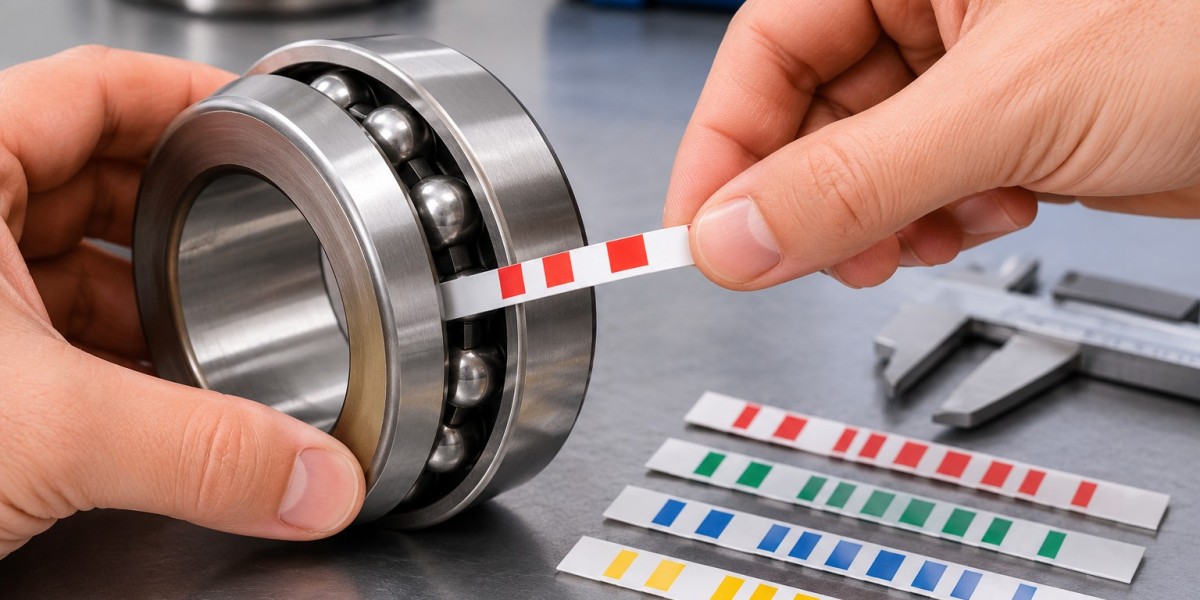


Accurate bearing clearance measurement is essential for maintaining engine performance, reducing friction, and preventing premature component wear. Selecting the wrong Plastigauge range can lead to unreliable readings and incorrect maintenance decisions. Therefore, technicians should understand the available ranges and match them to the expected clearance before starting an inspection.
Whether you are checking crankshaft main bearings or connecting rod bearings, choosing the correct measuring range helps ensure dependable results. Workshops looking to buy plastigauge bearing clearance gauge Dubai should also consider their typical engine applications and measurement requirements. Khokhawala Trading LLC supports industrial and workshop equipment needs, including precision measuring tools.
Table of Contents
What Is a Plastigauge Bearing Clearance Gauge?
Why Does Selecting the Correct Range Matter?
Understanding Different Plastigauge Ranges
How to Select the Correct Plastigauge Range
Steps for Accurate Bearing Clearance Measurement
Common Selection Mistakes
FAQs
1. What Is a Plastigauge Bearing Clearance Gauge?
A Plastigauge bearing clearance gauge is a simple measuring material used to check the clearance between two fitted surfaces, particularly engine bearing journals and bearing shells.
A small strip is placed across the bearing surface. When the component is assembled and tightened to the specified torque, the strip is compressed. Its resulting width is compared with a printed scale to estimate the clearance.
It is commonly used for checking:
Crankshaft main bearing clearance.
Connecting rod bearing clearance.
Engine bearing oil clearance.
Other suitable clearance applications specified by the manufacturer.
2. Why Does Selecting the Correct Range Matter?
Different engines and bearing assemblies operate with different clearance specifications. A Plastigauge range that is too broad or too narrow may make the reading difficult to interpret.
Choosing the correct range helps technicians:
Obtain more useful measurement readings.
Compare results with manufacturer specifications.
Identify excessive or insufficient bearing clearance.
Reduce the risk of incorrect engine assembly.
Make better maintenance and repair decisions.
3. Understanding Different Plastigauge Ranges
Plastigauge products are available in different measurement ranges. Each range is designed for a particular clearance interval.
Common product ranges include:
Fine clearance range: Suitable for applications requiring measurement of very small clearances.
Medium clearance range: Used for many general engine bearing clearance checks.
Larger clearance range: Intended for applications where the expected clearance is comparatively greater.
Exact measurement intervals vary by product and manufacturer. Always check the scale and specifications printed on the packaging before use.
4. How to Select the Correct Plastigauge Range
Follow these considerations before choosing a range.
Step 1: Check the Manufacturer's Clearance Specification
Find the recommended bearing oil clearance in the engine service manual. This specification provides the starting point for selecting a suitable Plastigauge product.
Step 2: Estimate the Expected Clearance
Consider the engine's condition, previous inspection results, and bearing specifications. The expected measurement should fall comfortably within the selected product's range.
Step 3: Compare Available Measurement Ranges
Review the measurement intervals printed on the available Plastigauge products. Select a range that includes the expected clearance and provides a readable scale.
Step 4: Consider the Engine Application
Main bearings, connecting rod bearings, and other assemblies may have different clearance requirements. Choose the product according to the specific application rather than assuming one range suits every engine.
Step 5: Check Product Specifications
Before purchasing, confirm the measurement range, scale units, packaging details, and manufacturer instructions. Workshops comparing the dial bore gauge set price UAE should also remember that a dial bore gauge measures internal dimensions, while Plastigauge checks clearance through compression.
5. Steps for Accurate Bearing Clearance Measurement
After selecting the correct range, follow the proper measuring procedure:
Clean the crankshaft journal and bearing surface thoroughly.
Cut a suitable strip of Plastigauge.
Place it across the bearing surface, following the product instructions.
Assemble the bearing cap and tighten fasteners to the manufacturer's specified torque.
Remove the cap carefully without rotating the crankshaft.
Compare the flattened strip with the supplied measurement scale.
Record the reading and compare it with the engine manufacturer's clearance limits.
Always follow the service manual and product instructions. Plastigauge should not be used as a substitute for proper dimensional inspection when additional measurements are required.
6. Common Selection Mistakes
Avoid these mistakes when choosing a Plastigauge range:
Selecting a range without checking the engine specification.
Choosing a product that does not cover the expected clearance.
Ignoring the measurement units on the scale.
Assuming all Plastigauge products have identical ranges.
Using a damaged, expired, or improperly stored product.
Confusing bearing clearance measurement with internal diameter measurement.
Careful selection and correct handling help improve measurement reliability.
7. FAQs
Q1. How do I know which Plastigauge range to use?
Check the engine manufacturer's bearing clearance specification and select a product range that comfortably covers the expected measurement.
Q2. Can one Plastigauge range be used for every engine?
No. Different engines and bearing applications may require different measurement ranges.
Q3. Why is bearing clearance important?
Correct bearing clearance allows an appropriate oil film to form, helping reduce friction, heat, and premature wear.
Q4. Can Plastigauge measure crankshaft bearing clearance?
Yes. It is commonly used to check main and connecting rod bearing oil clearance when applied according to the manufacturer's instructions.
Q5. Is Plastigauge better than a dial bore gauge?
They perform different tasks. Plastigauge checks assembled bearing clearance, while a dial bore gauge measures internal diameters and helps inspect bore dimensions.
Conclusion and CTA
Selecting the correct Plastigauge range is essential for obtaining reliable bearing clearance measurements. By checking manufacturer specifications, comparing available ranges, and following the correct measuring procedure, technicians can identify clearance issues and support accurate engine maintenance.
For workshop measuring equipment and industrial tools, contact Khokhawala Trading LLC to explore suitable options. If you plan to buy plastigauge bearing clearance gauge Dubai, compare product specifications carefully. You can also review the dial bore gauge set price UAE when selecting complementary tools for precision engine inspection.







