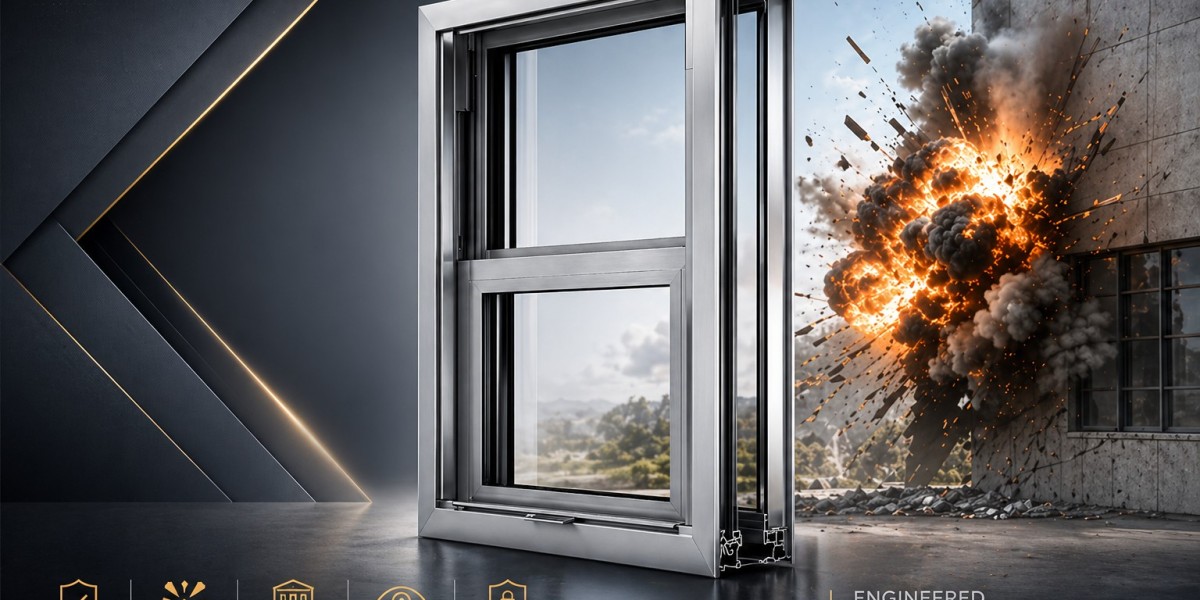


A defence services housing colony near an ordnance depot underwent a mandatory infrastructure audit two years ago. Structural walls passed. Electrical systems passed. The windows — original single-pane glazing from the building's construction decades earlier — failed the updated blast exposure assessment outright.
The retrofit that followed became the template several other colonies now use when planning safety upgrades. It's also a useful case study for any homeowner wondering whether a blast window for home upgrade is worth the investment, or just an extra line item for facilities that clearly need it.
Most home safety upgrades focus on locks, alarms, and structural repairs. Glazing rarely makes the list — until an incident makes the omission obvious.
Why Glazing Is the Weak Point Homeowners Overlook
Walls and roofs are built to carry structural load. Standard windows are built to keep weather out and let light in — nothing about their design anticipates a pressure wave.
When overpressure hits ordinary glass, it doesn't just crack, it fragments into fast-moving shards. Blast resistant glass solves this through lamination: multiple glass layers bonded to a flexible interlayer that stretches instead of shattering apart, holding fragments together within the frame.
This single change in failure behaviour is what separates a survivable incident from an unnecessary casualty event, and it's the entire engineering premise behind residential-grade blast proof windows.
Blast Window Design That Fits a Home, Not a Bunker
The biggest hesitation homeowners have about upgrading is aesthetic — nobody wants a house that looks like a hardened facility. Good blast window design solves this by keeping the visible frame profile, glass clarity, and thermal performance close to standard residential glazing.
The blast engineering sits in the laminate build-up and the frame anchoring system, both of which are invisible once installed. A well-designed upgrade should be indistinguishable from a standard window at a glance.
Anchoring deserves particular attention during retrofit projects. Fitting blast-rated glass into an existing frame that wasn't engineered for the load transfers risk to the weakest point in the wall opening.
Engineering Behind the Upgrade
Blast pressure mitigation depends on the glazing absorbing and redistributing energy across the pane and into a properly reinforced frame, rather than transmitting the full force to the interior. Modern interlayer chemistry — typically PVB or SGP-based — has improved energy absorption significantly over older laminate technologies.
Compliance testing against recognised blast curves ensures a given product performs predictably at its stated rating rather than on assumption. This is non-negotiable for any upgrade intended to meet current safety standards.
Features That Justify the Upgrade
Blast resistance verified against a specific charge weight and standoff distance
Fragment retention through interlayer strength, not glass thickness alone
Structural reinforcement at every frame-to-wall connection
Long service life with minimal degradation from UV or moisture exposure
Energy efficiency preserved despite added glazing mass
Weather resistance suited to varied Indian climate zones
Where This Upgrade Is Most Relevant
Homes and housing colonies near military facilities, ammunition depots, oil and gas plants, petrochemical units, power generation sites, and government or critical infrastructure zones carry a materially higher glazing risk profile. Data centre campuses and adjoining residential developments increasingly specify this upgrade proactively rather than reactively.
Cost Considerations for a Home Upgrade
Blast window price is shaped by the required blast rating, glazing thickness, frame complexity, and how much structural reinforcement the existing wall opening needs. A property closer to a higher-risk facility warrants a different specification than one further removed — this should come from a proper risk assessment, not a flat quote.
Retrofit projects often carry additional cost for frame replacement and wall interface work, which is where corner-cutting most commonly compromises the entire system.
Evaluating Suppliers Before You Commit
Not every glazing company understands residential retrofit constraints. Among blast resistant window manufacturers, look for documented testing at your required rating, proven experience adapting industrial-grade glazing to domestic window profiles, and clear installation and maintenance support.
When comparing blast window manufacturers in India, Sigmapowertech's overview of Blast window for home solutions is a solid starting reference for understanding how residential specifications differ from standard industrial glazing packages.
Upgrade Mistakes to Avoid
Selecting the best blast window purely on cost, without a site-specific blast-load calculation, undermines the upgrade before installation even begins. Pairing rated glass with an unrated frame, skipping compliance verification, and underestimating long-term maintenance needs are equally common oversights during retrofit planning.
Conclusion
A blast window for home upgrade isn't an aesthetic add-on — it's a targeted fix for the single biggest source of injury risk during an explosion: uncontrolled glass fragmentation. Homes near industrial corridors or sensitive infrastructure benefit from the same engineering discipline applied to defence and government facilities.
Treating glazing as structural safety, not a cosmetic feature, is what turns a home safety upgrade into genuine, long-term risk reduction.








